
The Cash Pallet Illusion
False QR Codes, Electronic Seals and the Myth of Bank-Held USD Ready for Conversion
Executive summary
The alleged “USD cash pallet” transaction has become a recurring typology in international financial fraud. It normally appears through brokers, intermediaries, mandate-holders or self-described facilitators who claim to have access to large amounts of physical United States dollar cash stored in pallets, boxes, trunks, vaults, warehouses or supposed bank facilities.
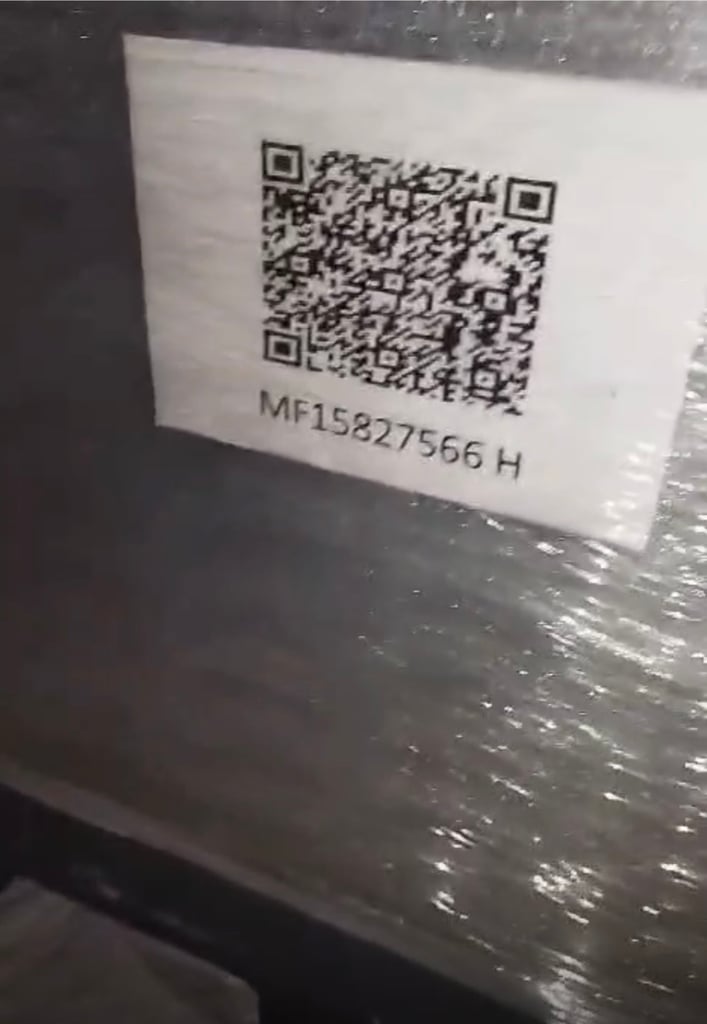
The presentation is often theatrical. The cash is said to be secured by electronic devices, QR codes, numbered seals, barcodes, vault receipts, custody certificates, armed security and bank-side logistics. The promised transaction is usually swift: the cash will allegedly be inspected, accepted and converted into USDT, EUR, AED or another liquid settlement asset.
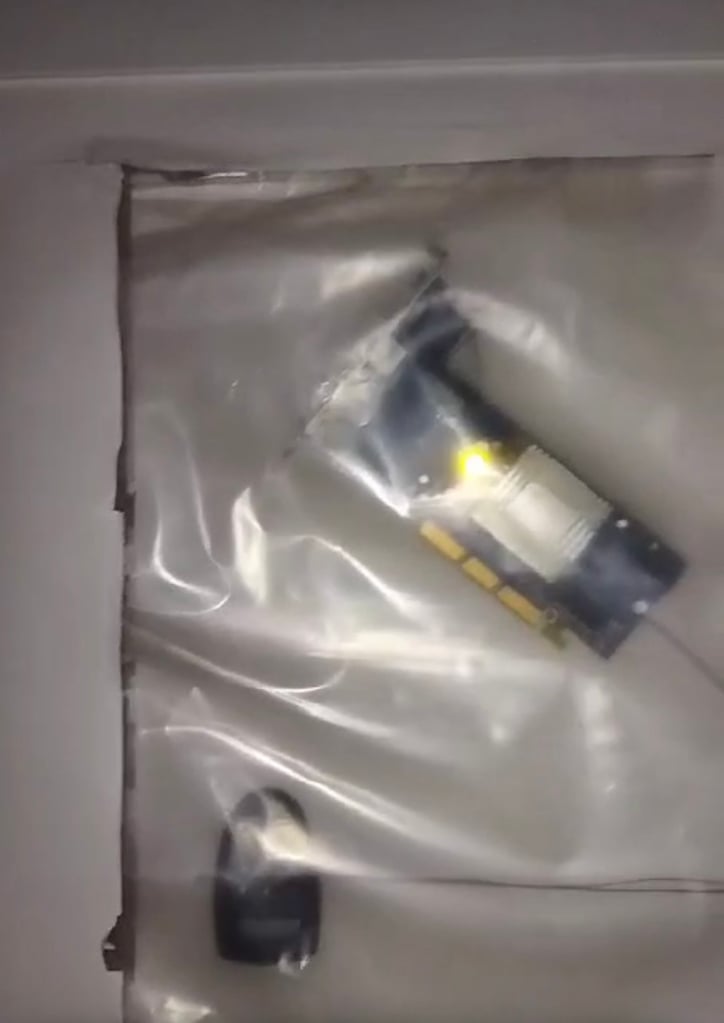
The reality is different. A QR code does not prove cash ownership. A plastic seal does not establish legal provenance. An electronic device does not create bankability. A photograph of wrapped pallets does not prove that the notes are genuine, clean, declared, transferable or lawfully owned.
In regulated finance, visual evidence is not evidence. Institutional verification is evidence.
The standard narrative
The typical cash-pallet approach follows a recognisable pattern:
- A broker introduces a principal who allegedly owns large amounts of physical USD cash.
- The funds are described as packed in pallets, boxes or trunks.
- Each pallet is said to contain USD 50 million, USD 100 million or more.
- The cash is allegedly inside a bank, vault or secured facility.
- The presenter claims the pallets are protected by QR codes, electronic seals or tracking devices.
- The owner allegedly wants immediate conversion into USDT or another digital asset.
- The broker asks whether one, two, three or more pallets can be processed per day.
- The beneficial owner is not immediately disclosed.
- The source of funds is explained vaguely.
- The current bank or custodian does not process the transaction itself, without a satisfactory explanation.
This combination is a major warning signal.
It does not automatically prove fraud. It does, however, place the transaction in a high-risk category requiring full banking, legal, customs, AML, tax and custody verification before any serious institution can consider involvement.
QR codes do not authenticate cash
A QR code attached to a pallet is a weak and easily misunderstood form of evidence.
It may lead to:
- a genuine official website, such as the Federal Reserve’s, used only as a decoy;
- a fabricated tracking page;
- a self-generated document repository;
- a fake verification portal;
- a logistics reference unrelated to the cash;
- a malicious phishing website;
- no meaningful verification source at all.
A QR code does not prove:
- the existence of the cash;
- the amount of the cash;
- the denomination structure;
- the authenticity of the notes;
- lawful ownership;
- source of funds;
- source of wealth;
- customs declaration;
- bank acceptance;
- absence of sanctions risk;
- transferability;
- convertibility into USDT.
A QR code is merely a machine-readable pointer. It is not a bank confirmation, not a custody confirmation, not a legal title document and not a substitute for due diligence.
There is also a cybersecurity dimension. Unknown QR codes should not be scanned casually by staff, bankers, compliance officers or introducers. QR codes can redirect users to malicious websites, phishing pages or credential-harvesting infrastructure. Where a QR code forms part of a financial transaction presentation, it should be treated as untrusted until examined in a controlled technical environment.
Electronic devices and security seals are theatre, not provenance
Fraudulent or unreliable cash-pallet presentations frequently use the visual grammar of security:
- shrink-wrapped pallets;
- metallic trunks;
- electronic locks;
- adhesive QR labels;
- serialised stickers;
- plastic seals;
- blinking devices;
- security guards;
- vault doors;
- counting machines;
- staged videos;
- photographs of bundled notes.
These elements are persuasive to laypersons because they imitate institutional custody. They are not, however, probative in banking terms.
An electronic device attached to a pallet may show that someone attached a device to a pallet. Nothing more.
It does not prove that the contents are genuine banknotes. It does not prove that the cash was lawfully acquired. It does not prove that the cash passed customs. It does not prove that the current holder has authority to transact. It does not prove that the cash is not frozen, disputed, stolen, counterfeit, pledged or already rejected by a bank.
Security theatre should not be confused with legal proof.
The decisive question: if the cash is in a bank, why is the bank not processing it?
One of the most important questions in every alleged cash-pallet case is the simplest:
If the pallets are already inside a bank, why does that bank not process the funds?
A regulated bank that lawfully holds clean cash for a legitimate client should ordinarily be capable of:
- identifying the account holder or beneficial owner;
- conducting KYC and AML checks;
- accepting funds into account custody;
- issuing formal custody confirmation;
- arranging exchange, remittance or settlement;
- explaining any refusal to process the transaction.
If the bank allegedly holds the cash but refuses to process it, a serious compliance concern arises.
Possible explanations include:
- the cash is not actually in a regulated bank;
- the funds are in private vault custody, not bank custody;
- the documentation is defective;
- the beneficial owner cannot pass KYC;
- the source of funds is not credible;
- customs declarations are missing;
- the notes are counterfeit or suspected counterfeit;
- the funds are blocked, disputed or subject to investigation;
- the intermediary has no legal authority;
- the alleged custody confirmation is false;
- the bank has already rejected the transaction.
This is why the phrase “inside a bank” is insufficient. The relevant issue is not where the boxes are physically located. The relevant issue is whether the funds are legally accepted, documented, verified and transferable through the regulated financial system.
Physical feasibility is not the same as banking feasibility
A claim that one pallet contains USD 100 million is not physically impossible if the cash consists entirely of USD 100 notes.
A United States banknote weighs approximately one gram. USD 100 million in USD 100 notes therefore represents one million banknotes, weighing approximately one metric tonne before packaging, boxes, straps, security wrapping and pallet materials.
The problem is therefore not primarily mechanical. The problem is institutional.
The real questions are:
- Where did one million USD 100 notes come from?
- From which bank were they withdrawn?
- Who owns them?
- Why are they still physical?
- Why were they moved rather than wired?
- Through which customs channel did they enter the jurisdiction?
- What tax, accounting and commercial records support them?
- Has every note been authenticated?
- Why are they being converted into a virtual asset rather than deposited conventionally?
A pallet may be physically plausible and still be commercially non-bankable.
Cash-to-USDT is a high-risk conversion pathway
The proposed conversion of bulk physical cash into USDT or another stablecoin materially increases the risk profile.
Such a transaction combines several high-risk elements:
- bulk physical currency;
- possible cross-border cash movement;
- bearer-style possession claims;
- broker or intermediary introduction;
- unclear custody;
- unclear beneficial ownership;
- rapid conversion into a transferable virtual asset;
- possible movement outside conventional banking rails.
That does not mean every cash-to-USDT transaction is illegitimate. It means that every such transaction must be treated as enhanced due diligence from the outset.
No responsible institution should confirm rate, volume, timing, settlement or commitment before the client, cash, custody, source of funds, source of wealth, customs trail and virtual-asset settlement channel have been independently verified.
Common red flags
The following indicators are especially serious:
- The transaction is introduced by a broker rather than the beneficial owner.
- The beneficial owner is not disclosed immediately.
- The amount is very large but the documentation is thin.
- The funds are described as “pallets”, “boxes”, “trunks”, “blocked cash” or “secured cargo”.
- The presenter relies on photographs, videos, QR codes or seals.
- The current bank or vault does not process the cash itself.
- The claimed custody location is vague.
- The bank name is withheld.
- The cash is said to be in Dubai, Turkey, West Africa or a free-zone environment without proper customs records.
- The presenter asks first about rate, volume, timing or commission.
- The source of funds is described in generic language.
- No bank withdrawal record is provided.
- No customs declaration is provided.
- No tax or accounting trail is provided.
- No independent note-authentication protocol is offered.
- The notes are allegedly “old series”, “special issue”, “blocked”, “diplomatic”, “humanitarian” or “secured”.
- The intermediary chain is long and opaque.
- The owner allegedly cannot appear directly.
- The proposed settlement is in USDT or another quickly transferable asset.
- The transaction is presented as urgent.
A single red flag may be explainable. A cluster of red flags is not.
The false comfort of “bank receipts” and “vault certificates”
Many cash-pallet presentations include documents styled as:
- safekeeping receipts;
- vault certificates;
- deposit confirmations;
- warehouse receipts;
- custody letters;
- clearance certificates;
- anti-terrorist certificates;
- origin certificates;
- QR verification sheets;
- insurance certificates;
- logistics documents.
These documents may look formal. They are frequently not bank-grade evidence.
The crucial distinction is between a document shown by an intermediary and a confirmation received directly from an authorised institution through a verifiable channel.
A serious institution will not rely on PDFs forwarded through WhatsApp or email. It will require direct confirmation from the issuing bank, licensed custodian, customs authority, insurer, auditor or relevant regulated entity.
What real verification requires
A credible cash-pallet case requires at least the following:
- Full identity of the principal beneficial owner.
- Corporate documents if the owner is a company.
- Source-of-funds evidence.
- Source-of-wealth evidence.
- Bank withdrawal records.
- Customs export and import declarations.
- Exact current custody location.
- Name and regulatory status of the bank or licensed custodian.
- Direct custody confirmation from the bank or custodian.
- Confirmation that the cash is counted, genuine, available and not blocked.
- Denomination schedule.
- Serial-number or batch-control methodology where applicable.
- Evidence that the instructing party has legal authority.
- Full intermediary chain.
- Commission structure.
- Sanctions-screening data for all parties.
- Tax and accounting records.
- Independent authentication procedure.
- Explanation why the existing bank or custodian is not processing the cash itself.
- Legal analysis of the proposed conversion into USDT or another virtual asset.
Without these documents, the matter is not mature enough for pricing, logistics or execution discussion.
Every banknote serial number must be checked
In any alleged USD cash-pallet transaction, sample inspection is insufficient. The verification cannot be limited to photographs, videos, a few randomly selected bundles, a QR code, a packing list or a vault officer’s verbal assurance.
Where physical USD cash is presented in bulk, every note must be counted, authenticated and serial-number checked.
This process should include:
- machine reading or manual capture of each banknote serial number;
- reconciliation of the number of notes against the declared amount;
- denomination-by-denomination verification;
- detection of duplicate serial numbers within the same batch;
- detection of impossible, malformed or inconsistent serial-number formats;
- comparison of serial numbers against available counterfeit-note alerts;
- comparison against stolen-cash, robbery, seizure, sanctions, law-enforcement or adverse-reference lists where legally accessible;
- review of suspicious sequencing patterns, repeated ranges or artificially assembled batches;
- confirmation that the series year, Federal Reserve Bank identifier, denomination and security features are consistent;
- generation of a complete audit trail showing who counted, scanned, verified and approved the notes.
A genuine pallet of USD cash must survive note-level verification. It is not enough to say that the pallet is sealed, labelled, electronically tagged or QR-coded. The question is not whether the package looks secure. The question is whether each note inside the package is genuine, lawful, clean, counted, traceable and acceptable to the regulated financial system.
It must also be understood that there is no magical public database that instantly legitimises cash. Some adverse-reference data may be held by banks, central banks, cash processors, law-enforcement bodies, insurers or security-service providers and may not be publicly accessible. Therefore, a proper verification process must be conducted by an authorised bank, licensed cash processor, regulated custodian or competent authority, not by a broker, intermediary or private “verification agent”.
If the serial numbers cannot be captured and checked, the cash should not be treated as bankable. If the holder refuses note-level verification, the transaction should be rejected.
Why intermediaries are frequently the weak point
Many cash-pallet cases collapse because the intermediary does not control the transaction.
The intermediary may have:
- no direct relationship with the owner;
- no power of attorney;
- no verified mandate;
- no access to the custodian;
- no control over the documents;
- no authority to negotiate;
- no understanding of the source of funds;
- no ability to answer basic compliance questions.
In banking, proximity to a rumour is not a mandate. A chain of introductions is not authority. A commission expectation is not title to funds.
Where the principal cannot be disclosed, the transaction should not proceed.
Institutional conclusion
Alleged USD cash-pallet transactions sit at the intersection of bulk cash risk, custody risk, counterfeit risk, broker risk, customs risk, AML risk and virtual-asset risk.
QR codes, electronic locks, seals, vault videos and photographs do not reduce these risks. In many cases they increase suspicion, because they indicate an attempt to substitute visual theatre for institutional evidence.
The correct institutional position is therefore strict:
- no reliance on QR codes;
- no reliance on videos;
- no reliance on broker assurances;
- no reliance on self-issued custody documents;
- no rate before compliance;
- no volume commitment before verification;
- no conversion before beneficial ownership, source of funds, custody, authenticity and legality are proven.
A genuine transaction can withstand documentary scrutiny.
A fraudulent or non-bankable transaction usually collapses when asked for direct bank confirmation, beneficial-owner disclosure, customs records, source-of-funds evidence and an explanation of why the current bank will not process the cash itself.
The old rule remains correct: in banking, money is not real because it is shown. Money is real when it is lawful, owned, documented, transferable, compliant and accepted by the regulated financial system.
Sources
[1] FATF, Money Laundering Through the Physical Transportation of Cash, for bulk-cash transport and red-flag typologies.
[2] FATF, Virtual Assets Red Flag Indicators, for crypto and virtual-asset AML risk indicators.
[3] UAE Government and Dubai Customs guidance on declaring cash or bearer instruments exceeding AED 60,000.
[4] U.S. Currency Education Program, stating that a U.S. banknote weighs approximately one gram.
[5] FBI IC3 warning on malicious QR codes redirecting victims to fraudulent sites.
[6] FTC consumer warning that QR codes can lead to phishing sites or malware.



Next step
Request an introduction
Tell us in a few lines who you are and what you have in mind. Your enquiry goes directly to the bank and is treated in confidence.
Prefer to talk? Book a 30-minute videoconference.