
Trading
Funds
Fund investment advice
IFB assists investors in crafting and refining their fund strategies to meet personal or institutional investment goals.
Customized Investment Solutions
IFB develops tailored investment strategies that align with the investor’s financial objectives, risk tolerance, and time horizon. By understanding the precise differences among various fund types, from mutual funds and ETFs to hedge and index funds, IFB can curate a portfolio that balances potential returns with appropriate risk levels.
Expert Guidance and Advisory Services
Drawing on a team of seasoned investment professionals, IFB offers deep insights into market dynamics, fund performance, and strategic allocation. This expert guidance is crucial for navigating the complexities of the investment environment, ensuring investors are well-informed to make decisions that optimize their portfolio’s performance.
Access to Exclusive Investment Opportunities
Through IFB, investors gain access to a wide array of investment opportunities, including exclusive hedge funds and specialized investment vehicles not readily available to the general public. This access can significantly enhance portfolio diversification and potential for higher returns.
Advanced Risk Management Strategies
Understanding and mitigating risk is essential in any investment strategy. IFB employs sophisticated risk assessment tools and strategies to manage exposure across different fund types. Whether through hedging strategies in hedge funds or diversification in mutual and index funds, IFB aims to position portfolios to withstand market volatility while pursuing growth.
Operational Efficiency and Support
IFB provides full operational support, including simplified account management, transaction processing, and performance reporting. This operational efficiency allows investors to focus on their strategic objectives without being bogged down by administrative tasks.
Ongoing Education and Resources
Investor education is a cornerstone of IFB’s client service. By offering seminars, reports, and one-on-one consultations, IFB ensures investors are equipped with the knowledge to understand their investment choices and the rationale behind strategic decisions.
Strategic Rebalancing
Portfolios require periodic rebalancing to remain aligned with strategic goals, especially in response to market changes. IFB proactively monitors portfolios, making adjustments as necessary to maintain the desired asset allocation, thereby optimizing performance and managing risk.
Regulatory Compliance and Transparency
Investors benefit from IFB’s adherence to stringent regulatory standards, ensuring transparency and integrity in all operations. This compliance is crucial for investor confidence, particularly in the complex and tightly regulated environment of fund investments.
In summary, IFB can play a decisive role in helping investors navigate the intricate world of fund investments, offering bespoke solutions, expert advice, and full support to achieve their investment goals. With a focus on long-term client relationships, IFB is committed to delivering value in every aspect of its investment services.
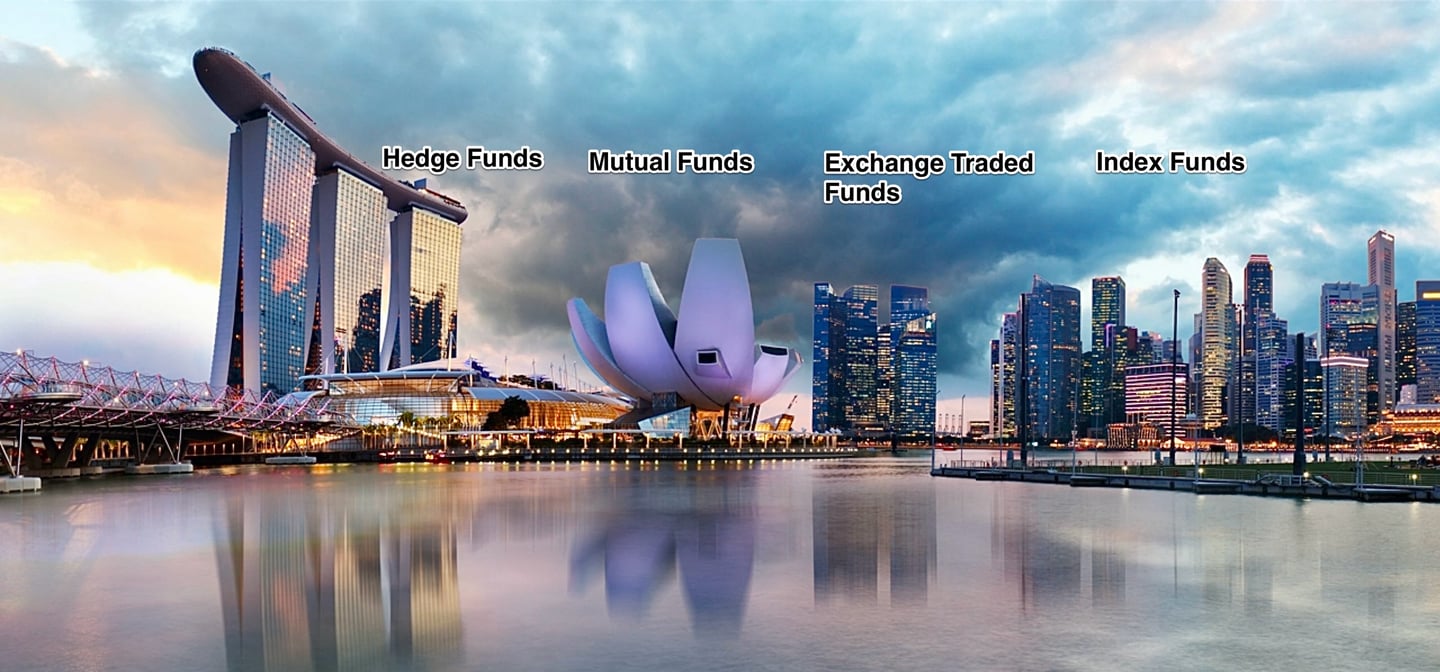
Types of Funds, Pros & Cons
A. Mutual Funds
Operational Dynamics:
Mutual funds pool resources from multiple investors to invest in a diversified portfolio, under the stewardship of professional fund managers. They operate within a strict regulatory framework, ensuring transparency and investor protection.
Strategic Orientation:
Their strategic aim is to offer diversification and professional management, with strategies ranging from conservative to aggressive, tailored to different investor risk profiles.
Pros:
- Diversification: Spreads risk across various assets, reducing the impact of poor performance in any single investment.
- Professional Management: Expert fund managers handle research, selection, and portfolio management.
- Regulatory Oversight: Ensures transparency and investor protection.
- Liquidity: Shares can typically be bought or sold at the end of each trading day.
- Accessibility: Low minimum investment thresholds make mutual funds accessible to a wide audience.
Cons:
- Management Fees: Costs, including management fees, can erode investment returns.
- Performance Risk: Dependent on the skill of fund managers, with no guarantee of superior returns.
- Dilution: High diversification can dilute potential returns.
- Capital Gains Taxes: Investors may face tax liabilities for fund activities.
- Limited Control: Investors have no say in individual investment choices within the fund.
B. Exchange-Traded Funds (ETFs)
Operational Dynamics:
ETFs are traded on stock exchanges and can be bought and sold like individual stocks, offering real-time pricing and intraday trading.
Strategic Orientation:
They aim to track the performance of specific indices, sectors, or commodities, offering both passive investment opportunities and the flexibility of stock trading.
Pros:
- Lower Fees: Generally lower expense ratios than mutual funds.
- Flexibility: Can be traded throughout the trading day at market prices.
- Tax Efficiency: Structural mechanisms typically result in fewer capital gains tax events.
- Diversification: Provides exposure to wide segments of the market or specific sectors.
- Transparency: Holdings are disclosed daily.
Cons:
- Brokerage Fees: Buying and selling ETFs incurs brokerage fees.
- Market Risk: Subject to the same risks as the underlying assets.
- Tracking Error: May not perfectly replicate the performance of the index.
- Liquidity Variation: Some ETFs, especially niche or new ones, may have lower liquidity.
- Potential for Significant Volatility: Particularly in market downturns.
C. Hedge Funds
Operational Dynamics:
Hedge funds are investment pools that use a wide range of strategies to generate returns, often employing leverage, derivatives, and short selling.
Strategic Orientation:
They seek absolute returns through aggressive strategies, focusing on capital appreciation and risk management.
Pros:
- High Return Potential: Use of leverage and sophisticated strategies can lead to significant gains.
- Flexibility: Less regulatory oversight allows for a broader range of investment strategies.
- Risk Management: Strategies such as short selling can provide hedge against market downturns.
- Exclusive Investment Opportunities: Access to advanced and diverse investment strategies.
- Alignment of Interests: Performance fee aligns fund manager’s interests with those of the investors.
Cons:
- High Fees: Typically charge a management fee plus a performance fee.
- Complexity and Risk: Strategies can be complex and highly risky.
- Limited Transparency: Often operate with less disclosure.
- Liquidity Constraints: May have lock-up periods restricting withdrawals.
- Minimum Investment Requirements: Often high, limiting access to affluent investors.
D. Index Funds
Operational Dynamics:
Index funds passively track the performance of a specific index, seeking to replicate its composition and performance.
Strategic Orientation:
The strategy is passive, aiming to match the index’s performance, minimizing costs and turnover.
Pros:
- Cost Efficiency: Low management fees due to passive management.
- Simplicity: Easy to understand and predict investment outcomes.
- Broad Market Exposure: Invests across the entire index, reducing unsystematic risk.
- Low Turnover: Minimizes transaction costs and capital gains distributions.
- Transparency: Holdings mirror the index.
Cons:
- No Downside Protection: Directly tied to market fluctuations.
- Performance Limitation: Cannot outperform the market; capped at index performance.
- Concentration Risk: Market-cap weighted indices may be heavily weighted towards larger companies.
- Rebalancing Impact: Automatic rebalancing can lead to buying high and selling low.
- Passive Management: Misses potential gains from active management insights.

Hedge Funds
Hedge funds, often perceived as the apex predators of the financial world, operate on the fringes of traditional investment, weaving strategies that are as diverse as they are complex. These private investment vehicles are designed for the sophisticated investor, offering the allure of substantial returns that are uncorrelated with the broader market indices. In this exploration, we examine the intricacies of hedge funds, shedding light on their strategies, benefits, risks, and the evolving regulatory environment that shapes their operations.
The Essence of Hedge Funds
At their core, hedge funds are pooled investment funds that employ various strategies to earn active returns for their investors. Unlike mutual funds, hedge funds are not confined to stocks or bonds but may venture into derivatives, leverage, and short selling to achieve their objectives. The term “hedge,” historically meant to reduce risk exposure, has evolved to encompass a broad spectrum of strategies aimed at capitalizing on market inefficiencies.
Diverse Strategies for Diverse Goals
Hedge funds employ an array of strategies, each with unique risk and return profiles. Among the most prevalent are:
- Long/Short Equity: Funds invest in equities they expect to rise in value and short those they anticipate will fall.
- Global Macro: These funds bet on macroeconomic trends across various asset classes, including currencies, bonds, and commodities.
- Event-Driven: Investment decisions are based on corporate events such as mergers, acquisitions, or bankruptcy restructurings.
- Arbitrage: Seeks to exploit price discrepancies between related financial instruments or markets.
This diversity allows hedge funds to aim for positive returns in both rising and falling markets, providing investors with a tool for portfolio diversification and risk management.
The Attraction of Hedge Funds
The primary allure of hedge funds lies in their potential to generate “alpha,” or excess returns above the market average, through active management and sophisticated strategies. Their relatively low correlation with traditional investments can help smooth out portfolio volatility and protect against market downturns.
Caveats and Considerations
However, hedge funds are not without their pitfalls. The complex strategies and use of leverage can lead to significant losses, as evidenced by high-profile hedge fund failures. The fees charged by hedge funds, typically a management fee and a performance fee, can also erode returns. The illiquid nature of many hedge fund investments means investors often must commit their capital for extended periods.
Regulatory Environment and Transparency
The regulatory environment for hedge funds has evolved in the wake of the 2008 financial crisis, with increased scrutiny and demands for transparency. In the United States, the Dodd-Frank Wall Street Reform and Consumer Protection Act imposed stricter oversight, while the European Union’s Alternative Investment Fund Managers Directive (AIFMD) set out to regulate hedge fund managers operating within the EU.
Despite these regulations, hedge funds remain relatively opaque compared to public mutual funds, with less requirement to disclose holdings or investment strategies. This opacity necessitates that potential investors perform thorough due diligence and align themselves with reputable managers.
The Future of Hedge Funds
As financial markets evolve, so too do hedge funds, adapting to new challenges and opportunities. Technological advancements, such as machine learning and big data analytics, are beginning to play a role in strategy development, while the increasing focus on sustainability has given rise to “green” hedge funds that emphasize ethical and environmental considerations in their investment choices.
In short
Hedge funds represent a double-edged sword in the investment world, offering the potential for high returns at the cost of higher risk and complexity. They cater to the sophisticated investor, requiring a precise understanding of their strategies, risks, and the regulatory environment. As the financial world continues to shift, hedge funds will undoubtedly remain a significant, though enigmatic, player, offering opportunities for those willing to navigate their complexities.

Exchange-Traded Funds (ETFs): Revolutionizing Investment Strategies for Diverse Portfolios
Exchange-Traded Funds (ETFs) have emerged as a decisive innovation in the investment environment, offering both novice and seasoned investors a versatile tool for portfolio diversification, cost efficiency, and ease of access to global markets. As financial instruments that track indexes, commodities, bonds, or baskets of assets, ETFs combine the trading flexibility of stocks with the diversified exposure of mutual funds, but with distinct advantages that have fueled their meteoric rise in popularity.
The Anatomy of ETFs
An ETF is essentially a type of fund that owns the underlying assets (such as shares of stock, bonds, oil futures, gold bars, foreign currency, etc.) and divides ownership of those assets into shares. These shares are traded on major stock exchanges, similar to ordinary stock, making it easy to buy and sell ETFs throughout the trading day at market price, which can fluctuate based on the underlying assets’ value.
Key Advantages of ETFs
- Diversification: ETFs provide investors with an efficient means to diversify their portfolios across a wide range of asset classes, sectors, or geographic regions within a single transaction. This diversification can help reduce portfolio risk and volatility.
- Cost Efficiency: Generally, ETFs have lower expense ratios compared to mutual funds. They are also more tax-efficient due to their unique structure and the way transactions are executed, potentially leading to fewer capital gains tax liabilities.
- Transparency: Unlike mutual funds, which disclose their holdings quarterly or monthly, ETFs offer daily transparency, allowing investors to see exactly what they own at any given time.
- Flexibility: ETFs can be bought and sold during market hours at market price like any stock. This provides investors with the flexibility to execute a range of trading strategies, such as using stop orders, limit orders, and even trading on margin.
- Accessibility: ETFs grant investors access to a broad array of markets and strategies that might be difficult to access otherwise, including foreign markets, specific industries, or thematic investments like ESG (Environmental, Social, and Governance) criteria.
Considerations Before Investing
While ETFs offer numerous benefits, investors should consider their investment goals, risk tolerance, and the ETF’s expense ratio and trading costs. It’s also crucial to understand the underlying assets or index an ETF tracks and the potential risks associated with those assets.
The Future of ETFs
The ETF market has seen exponential growth over the past two decades, a trend that is expected to continue as investors seek efficient, cost-effective ways to gain exposure to diversified assets. Innovations such as actively managed ETFs, which aim to outperform benchmark indexes rather than simply track them, and thematic ETFs, focusing on sectors like technology, healthcare innovation, or sustainable energy, are expanding the universe of investment opportunities.
Regulatory Environment
The regulatory framework surrounding ETFs aims to protect investors while promoting innovation and market growth. Key regulatory bodies, such as the U.S. Securities and Exchange Commission (SEC) and the Financial Conduct Authority (FCA) in the UK, provide guidelines on the operation and transparency of ETFs, ensuring a level playing field for all market participants.
In short
ETFs represent a significant advancement in investment strategy, offering efficiency, flexibility, and broad market access in a single, tradeable package. Whether you’re looking to hedge against inflation, invest in global markets, or simply diversify your portfolio, ETFs offer a compelling solution that aligns with a wide range of investment objectives.
As the ETF market continues to evolve, it’s essential for investors to stay informed about the latest developments and consider how these versatile instruments can fit into their broader investment strategy. With their growing popularity and continuous innovation, ETFs are set to remain at the forefront of investment solutions for years to come.

Long-term investments for retail investors: ELTIF 2.0
A significant shift is under way in finance, heralding a new era for retail investors. The European Long-Term Investment Fund (ELTIF), while not a newcomer on the scene, has undergone a transformative regulatory overhaul, opening access to investment opportunities that were once largely reserved for wealthy and institutional investors.
The Genesis of ELTIF
Originally introduced with the intention of opening the gates to alternative investments for the average investor, ELTIFs sought to channel private capital into long-term projects crucial for achieving climate neutrality and refurbishing Europe’s aging infrastructure. Despite its noble aspirations, the initial iteration of ELTIF was marred by complexity and restrictive regulations that stifled its adoption and efficacy.
ELTIF 2.0: A Revolutionary Reform
The revised framework, Regulation (EU) 2023/606, applicable since 10 January 2024, marks a significant departure from its predecessor. It has simplified the rules, effectively lowering the barriers for financial institutions to create and market these funds. Notably, the former EUR 10,000 minimum investment for retail investors was removed and the investment restrictions were relaxed.
This regulatory liberalization paves the way for retail investors to explore alternative investments across private equity, private debt, and infrastructure: asset classes with their own return and risk profiles; past returns of private-market indices are not a reliable guide to the results of an individual fund.
The Appeal of Alternative Investments
Alternative investments offer a tantalizing proposition: the potential for higher yields coupled with diversification beyond the volatile equities market. Infrastructure projects, for example, provide stable, long-term returns, insulated from the short-term fluctuations that characterize stock markets. Similarly, private equity and private debt investments in carefully selected companies offer the possibility of outsized gains.
The allure of these investments lies not only in their return profiles but also in their capacity to act as a hedge against inflation and market downturns, thanks to their lower correlation with traditional financial markets.
Navigating the ELTIF Environment
Despite the enthusiasm surrounding ELTIF 2.0, prospective investors should tread cautiously. The illiquid nature of these investments, a double-edged sword, demands a strategic approach to portfolio allocation. Industry practitioners advise limiting exposure to a manageable portion of one’s investment portfolio, emphasizing the long-term horizon required to reap the benefits of these funds.
Consumer advocates, such as the German consumer centres (Verbraucherzentralen), caution against the potential conflicts of interest posed by commission-driven sales. They underscore the importance of due diligence and advocate for a critical assessment of the funds’ structures, strategies, and underlying assets.
Looking Ahead
Since the new rules took effect, the number of ELTIFs on offer has grown markedly. This development holds the promise of reshaping the investment environment, offering retail investors a gateway to the high-reward world of alternative investments.
ELTIF 2.0 broadens retail access to long-term private-market investments. While it beckons with the promise of enhanced returns, it also necessitates a measured and informed approach to investment. As the market for these funds matures, investors equipped with the right knowledge and strategy stand to benefit from the vast potential of alternative investments, charting a course towards diversified and resilient portfolios.

Money Market Funds
In our continuous quest to diversify and enrich your portfolio, we present to you an opportunity to explore money market funds: an investment avenue that combines liquidity with income and aims to preserve the principal.
At IFB, we recognize the foremost importance of crafting an investment strategy that not only aligns with your financial goals but also adheres to your risk tolerance. It is with this ethos that we introduce Money Market Funds, a sophisticated financial instrument designed for the discerning investor who seeks to blend the security of their capital with the potential for income generation.
Money Market Funds invest in a meticulously curated selection of high-quality, short-term debt securities, including sovereign treasury instruments, corporate commercial papers, and certificates of deposit, among others. These funds aim to preserve the value of capital; some (in the U.S., government money market funds; in the EU, public-debt constant-NAV funds) maintain a stable price per share, while others have a variable net asset value. Money market funds are not guaranteed and can lose value – in 2008, the Reserve Primary Fund “broke the buck”.
Why should you consider allocating a portion of your portfolio to Money Market Funds through IFB?
- Liquidity: Money Market Funds offer exceptional access to your funds, allowing you to meet your short-term financial obligations or opportunities without the encumbrance of significant withdrawal penalties or delays.
- Income Generation: These funds endeavour to deliver returns that are generally more favorable than those offered by traditional savings accounts, thereby serving as a prudent choice for idle cash.
- Diversification: In the grand tapestry of investment opportunities, Money Market Funds contribute a layer of diversification, reducing overall portfolio risk through exposure to low-volatility assets.
- Safety: Backed by high-quality, short-term debt instruments, these funds aim to offer a secure investment environment and are closely regulated (in the EU under the Money Market Funds Regulation (EU) 2017/1131, in the U.S. under SEC Rule 2a-7).
- Ease of Access: With IFB, investing in Money Market Funds is smooth, integrating effortlessly into your broader financial portfolio, managed and monitored under our expert stewardship.
Money Market Funds represent a judicious investment choice for those who value the confluence of liquidity, income, and security. At IFB, we are committed to providing you with investment solutions that are not only innovative but also aligned with your financial aspirations.

Decision-Making Flowchart:
Fund Investment Strategy
- Objective Determination:
- Wealth Preservation: If your foremost concern is safeguarding the capital with minimal risk, proceed to step 2.
- Wealth Accumulation: Should your intent gravitate towards augmenting your capital, prioritizing growth over immediate income, proceed to step 3.
- Income Generation: If generating a consistent income stream supersedes capital growth, proceed to step 4.
- Wealth Preservation:
- Invest in Money Market Funds or Fixed Income Funds with a low-risk profile. These funds focus on preserving capital and offering liquidity, suitable for conservative investors.
- Wealth Accumulation:
A. Risk Tolerance Assessment:- Low Risk: Consider Balanced Funds or Debt Funds, which offer a mix of fixed income and equity to mitigate volatility.
- Moderate Risk: Index Funds or Large Cap Equity Funds could be apropos, balancing risk with the potential for moderate growth.
- High Risk: If your tolerance for risk is considerable, Equity Growth Funds focusing on sectors with high growth potential or Small/Mid Cap Funds might be optimal.
- Income Generation:
- Age Consideration:
- Pre-Retirement (More than 10 years away): Dividend-Paying Equity Funds or Balanced Funds with a focus on income-generating equities.
- Approaching Retirement or In Retirement: Income Funds or Bond Ladders designed to deliver regular income, with an emphasis on capital preservation.
- Age Consideration:
- Market Conditions and Economic Outlook:
- Bull Market: Leverage opportunities in Equity Funds, particularly in sectors expected to outperform.
- Bear Market: Focus on Defensive Funds (utilities, consumer staples) or Fixed Income Funds to hedge against volatility.
- Inflationary Environment: Real Estate Investment Trusts (REITs) or Commodity Funds could serve as a hedge against inflation.
- Reassessment and Adjustment:
- Regularly evaluate your portfolio’s performance relative to your objectives. Market dynamics and personal circumstances evolve, necessitating periodic reassessment to ensure alignment with your goals.
To explore how Money Market Funds can be integrated into your investment strategy, we invite you to contact your dedicated relationship manager.