The Bank
Currency Controls
How banks, international bodies such as the FATF and MONEYVAL, and national authorities regulate, control and scrutinise currency transfers
1. Regulatory compliance by banks
Know your customer (KYC)
- Customer identification. Collecting and verifying legal name, date of birth, address and identification number.
- Customer due diligence (CDD). Understanding the nature and purpose of each relationship in order to build a risk profile.
- Enhanced due diligence (EDD). Detailed background checks and continuous transaction monitoring for higher-risk clients.
Anti-money laundering (AML)
- Suspicious activity reports. Institutions must report unusual or suspicious transactions to the authorities.
- Currency transaction reports. Mandatory reports of cash transactions above a threshold, for example USD 10,000 in the United States.
- Record-keeping. Transaction records kept for a set period, usually five to seven years, and available to supervisors.
Sanctions screening
Every transaction is screened against the sanctions lists of the United Nations, the US Office of Foreign Assets Control (OFAC), the European Union and other authorities:
- Automated screening. Software checks the names of all parties against the lists.
- Manual review. Compliance officers examine every potential match.
2. Risk management systems
Transaction monitoring
- Pattern recognition. Algorithms identify activity that departs from a client’s usual behaviour.
- Anomaly detection. Large transactions, rapid movement of funds and transfers to high-risk jurisdictions are flagged.
- Alerts. Flagged transactions are passed to compliance teams for investigation.
The risk-based approach
- Client risk assessment. Clients are classified by geography, industry, transaction types and length of relationship.
- Ongoing monitoring. Risk profiles are kept current and transactions measured against them.
- Enhanced measures. Additional scrutiny and approval for higher-risk clients and jurisdictions.
3. Technology
- Distributed ledgers. An immutable record of transactions makes transfers transparent and traceable; smart contracts execute automatically when agreed conditions are met.
- Artificial intelligence and machine learning. Predictive models identify likely fraud early, and learn from historical data to improve detection.
- Encryption and cybersecurity. Transaction data is encrypted, and layered defences, including firewalls, intrusion detection and regular audits, protect against attack.
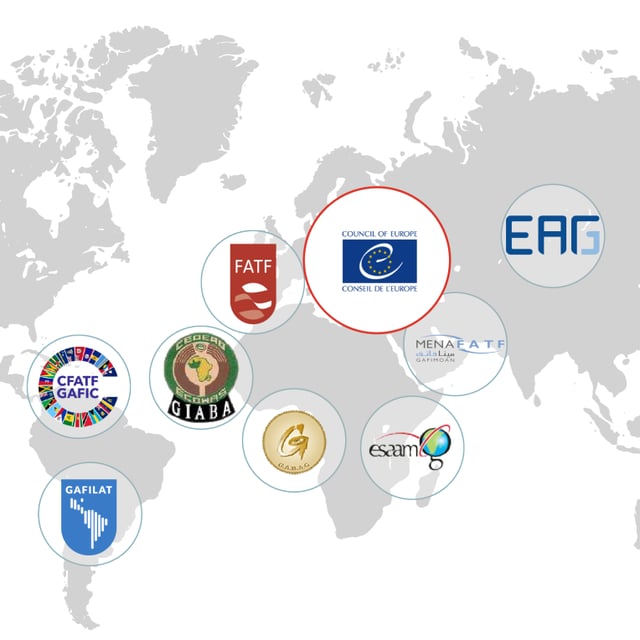
4. International bodies: the FATF and MONEYVAL
Financial Action Task Force (FATF)
- Standards. Forty Recommendations form the global framework for AML and CFT measures.
- Mutual evaluations. Periodic assessments of each country’s compliance, published in detailed reports.
- Public lists. Jurisdictions with strategic deficiencies are placed under increased monitoring (the “grey list”) or subjected to a call for action (the “black list”), with real economic and financial consequences.
MONEYVAL
- Assessments. In-depth evaluations of the AML and CFT frameworks of its member states, with a focus on effectiveness.
- Follow-up. Regular reports on whether identified deficiencies have been remedied.
- Technical assistance. Support and training for member states.
5. National rules
- Prohibitions and restrictions on certain transactions, countries or entities.
- Licensing. Financial institutions require a licence and are subject to audits and inspections.
- AML and CFT legislation with severe penalties for breaches.
6. Central databases
- Financial intelligence units (FIUs). National agencies that collect and analyse transaction data to combat money laundering and terrorist financing.
- Reporting systems. Platforms through which institutions report large or suspicious transactions, allowing authorities to monitor in close to real time.
7. Exchange controls
- Capital controls. Limits on the amount of currency that may leave a country, intended to prevent capital flight and preserve stability.
- Reporting duties. International transactions above a threshold must be reported to the central bank or another authority.
8. International cooperation
- Information-sharing agreements, bilateral and multilateral.
- Joint task forces of countries and international organisations against cross-border financial crime.
In short
The control of currency transfers is a layered process. It combines regulatory compliance, risk management systems and monitoring technology, and no single layer is sufficient on its own. The FATF and MONEYVAL set standards, evaluate countries and promote cooperation; national authorities add their own rules, central monitoring and exchange controls. Together these layers protect the integrity and stability of the global financial system against illicit finance.