
Alternative Transfer Methods
Ledger-to-Ledger (L2L)
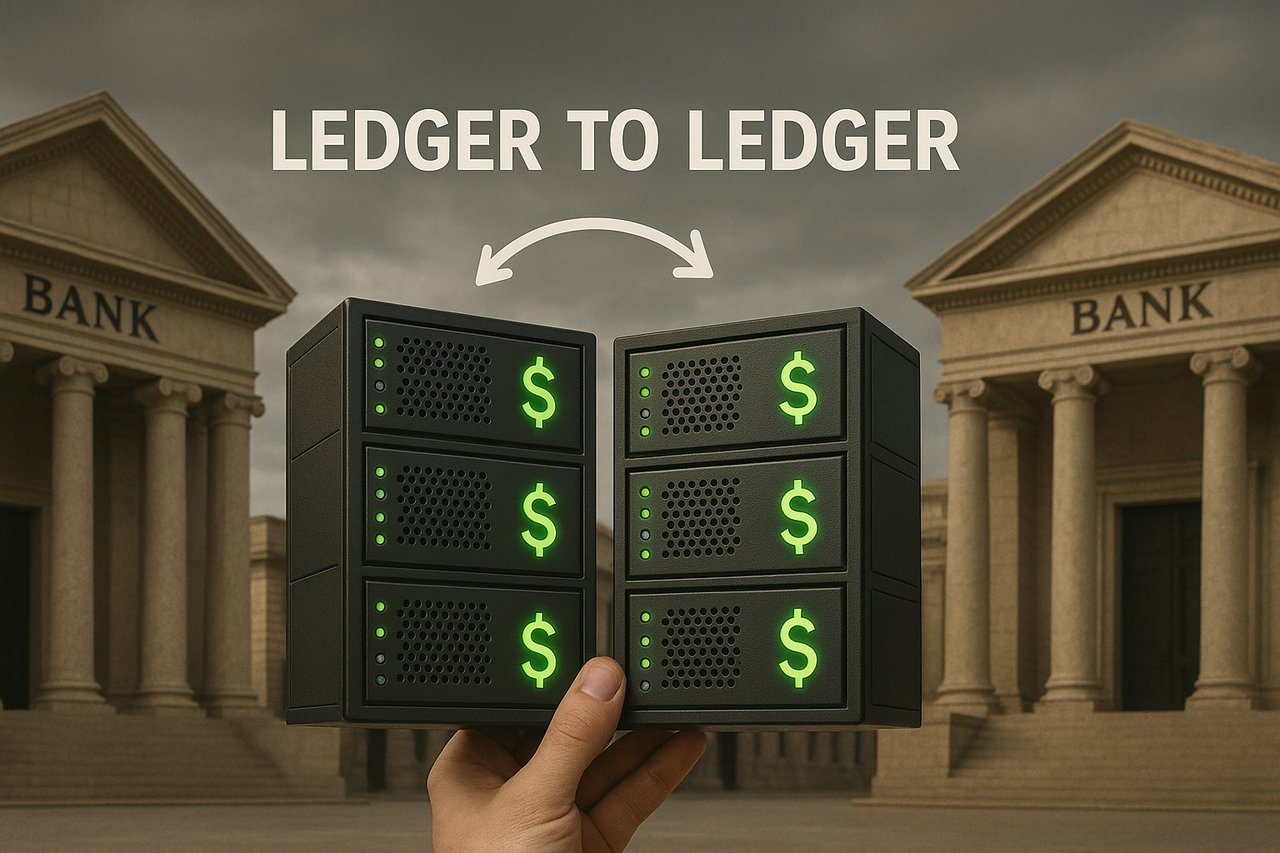
Ledger to Ledger Transfers (L2L)
We have to distinguish between two distinct types of ledger-to-ledger (L2L) transfers that warrant examination: one in the traditional banking sector and the other in the field of blockchain technology.
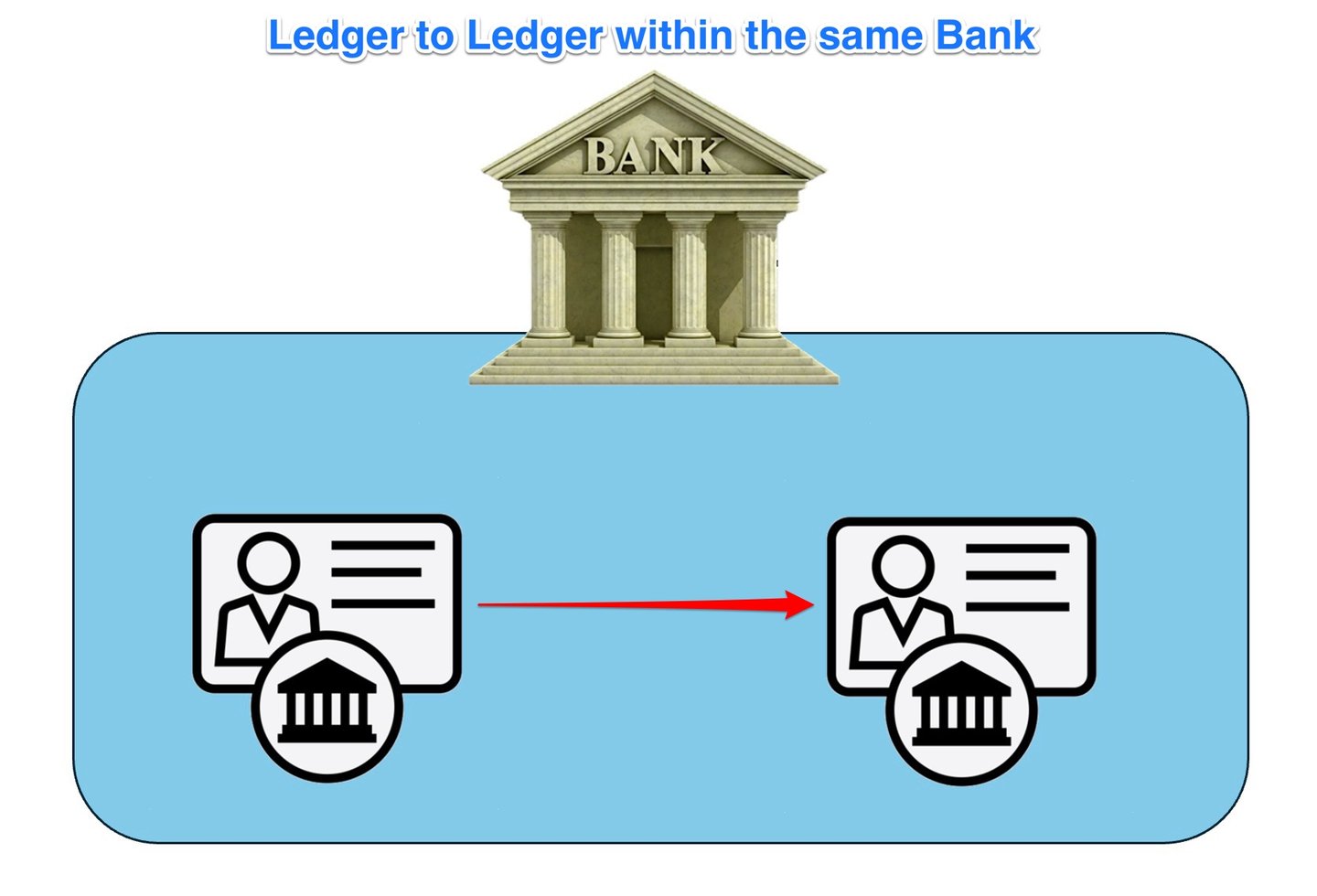
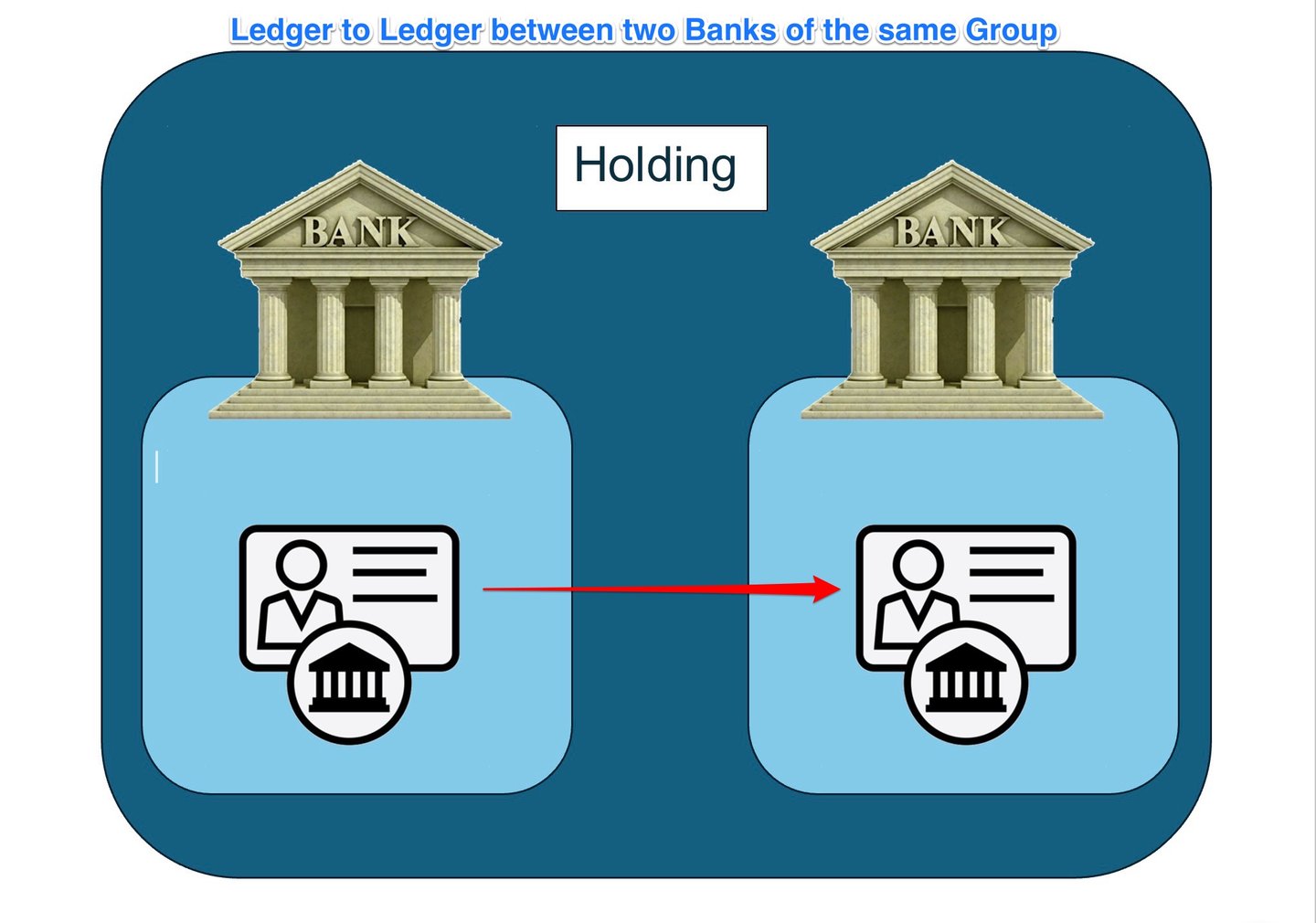
In the context of traditional banking, L2L transfers involve the movement of assets, liabilities or equities between separate ledgers maintained by financial institutions, such as banks or payment service providers. These transfers can occur between accounts within the same institution or across different institutions and are crucial for facilitating secure and efficient transactions within the global financial system.
Conversely, L2L transfers within the blockchain sphere refer to the process of transferring value or assets between distinct distributed ledgers, such as different blockchain networks. This type of transfer often necessitates the utilization of specialized protocols, intermediaries, or techniques, such as atomic swaps or cross-chain bridges, to ensure interoperability and maintain the integrity of both ledgers involved.
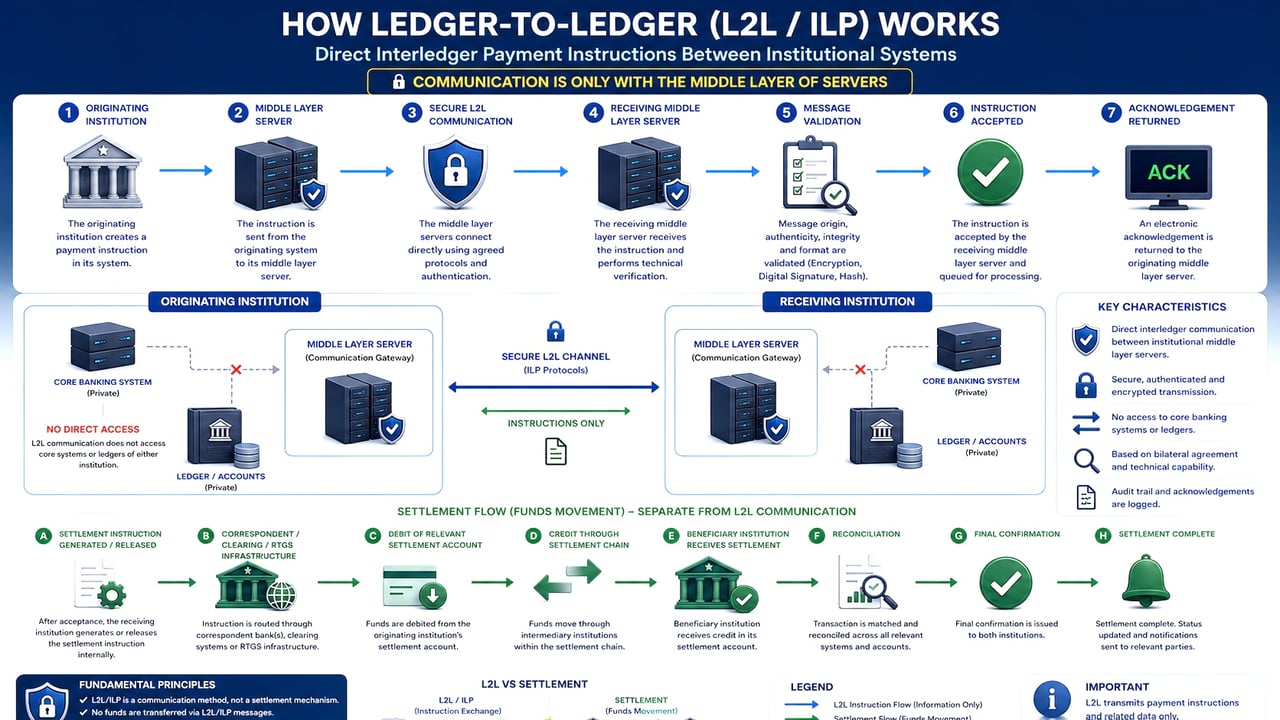
A message is not money
Why no SWIFT message, telex or server moves funds without settlement, in 90 seconds.
Verify a document with VL1 →Received a payment message, slip or confirmation? Have it checked before you rely on it.

L2L Services Activation at IFB
L2L facilities will be activated upon the client’s request once their account is in good standing:
- It maintains the minimum balance,
- exhibits a consistent financial track record, and
- aligns with legitimate business activities.
Additionally, the account must have
- no outstanding compliance issues, and
- all transactions must adhere to international financial regulations.
Final activation is subject to internal review and approval by our compliance and risk management team.
The Main Differences Between Communication, Middle Layer, Core /Settlement and Ledger/Account Servers in Banks
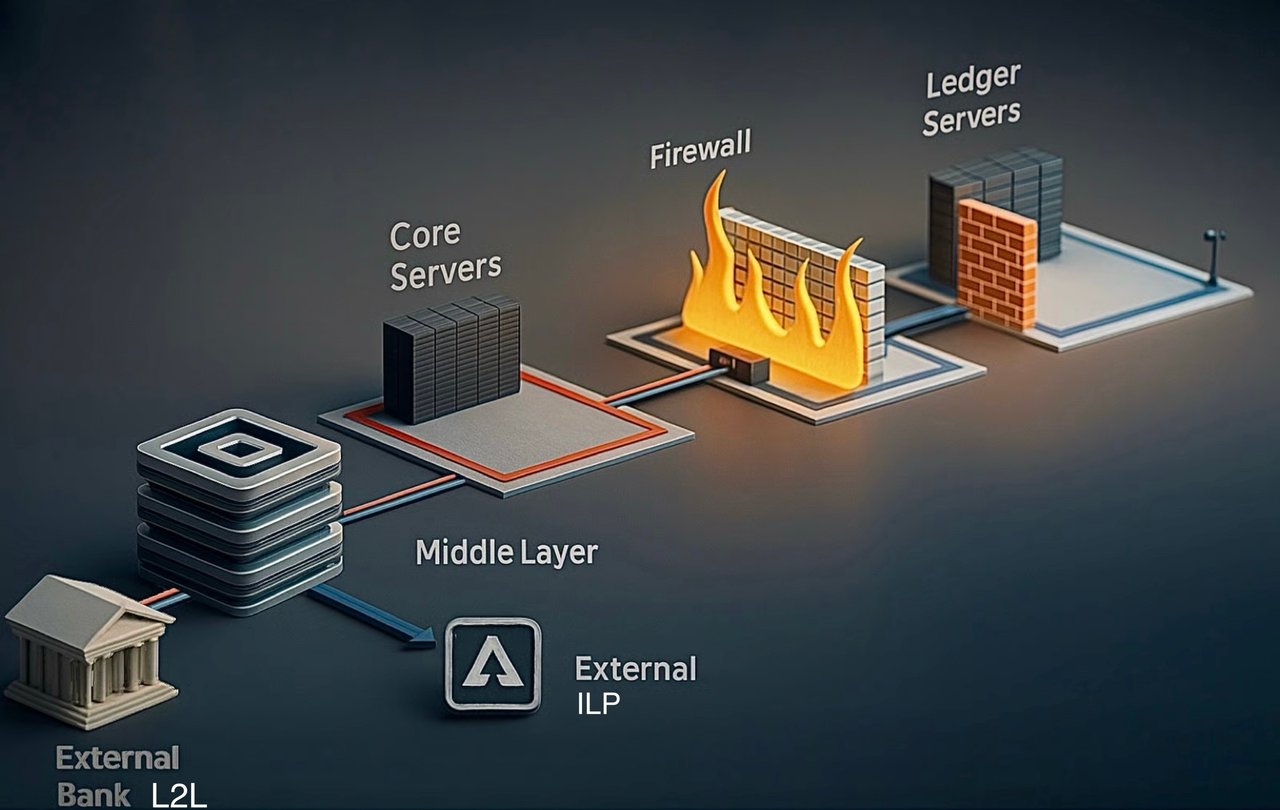
In banking technology, servers play a decisive role in ensuring the smooth operation of financial transactions and record-keeping. Two primary types of servers that banks rely on are communication servers and ledger/account servers. Despite both being crucial, they serve distinct purposes and handle different types of data.
Communication Servers
Communication servers are the backbone of secure data exchange between banks and financial institutions. Here are the key functions and features of communication servers:
- Secure Data Exchange: These servers facilitate secure data exchange, ensuring that sensitive financial information can be transmitted between institutions without compromise.
- Protocols and Standards: They utilize standardized protocols such as SWIFT, Sepa or ACH, etc. for interbank communication, ensuring uniformity and reliability across different platforms.
- Encryption and Authentication: To maintain security, communication servers employ advanced encryption methods and stringent authentication protocols, safeguarding data during transmission.
- Transaction Handling: Primarily, they handle transaction requests, messages, and instructions, acting as intermediaries that pass along the necessary information for transactions.
- No Fund Movement: Importantly, these servers do not move funds or update account balances directly; they only facilitate the communication required for such actions.
Core Banking Servers
Core banking servers form the digital backbone of financial institutions, orchestrating the precise execution, verification, and settlement of monetary transactions. They securely process incoming transaction instructions (e.g., SWIFT messages), maintain detailed client and internal accounts, reconcile these transactions against actual fund settlements confirmed by correspondent and intermediary banks, and accurately update client balances accordingly.
Beyond mere transactional functions, core servers manage regulatory compliance, perform automated reconciliations and AML/KYC validations, ensure risk management protocols, and generate full audit trails, thus safeguarding operational integrity, financial accuracy, and regulatory adherence across the institution’s banking operations.
Ledger/Account Servers
Ledger/account servers, on the other hand, are the custodians of a bank’s financial records. Here are their main characteristics:
- Financial Record Maintenance: These servers store and maintain the core financial records of the bank, ensuring every transaction is accurately recorded.
- Transaction Recording: They record all transactions, including debits and credits, and are responsible for updating and storing current account balances.
- General Ledger Management: Ledger servers manage the bank’s general ledger along with individual customer accounts, providing a full view of financial health.
- Data Integrity: Ensuring data consistency and integrity is essential, as these records are essential for accurate financial reporting and compliance.
- Strong Security Measures: Given the sensitivity of the data, ledger servers typically employ more stringent security measures, including additional layers of encryption and rigorous access controls.
The communication server initiates and facilitates transactions, but the ledger server ultimately records and reflects those transactions after validation in the bank’s books.
In contemporary banking systems, these functions are often integrated, with secure intra-bank communication protocols working in tandem with ledger management systems. This integration ensures real-time updates and consistency across the bank’s entire financial ecosystem, enhancing both efficiency and security.
Our L2L Services
We provide L2L services to our select clientele of high-net-worth individuals and well-established corporate entities, with particular emphasis on discretion, confidentiality, and institutional integrity.
All L2L transactions are conducted exclusively between banks that are fully integrated into the international banking system, ensuring not only the secure exchange of authenticated L2L messages but also the effective and timely settlement of funds. Counterparties lacking such integration may be capable of message transmission, yet are inherently unable to complete financial settlement.
In L2L transfers, funds cannot be “downloaded” from a bank’s ledger or core servers, as these systems are always entirely isolated from external access. Unlike digital files stored in the cloud or on any normal server or computer, funds must always be transmitted through the secure and regulated framework of the global banking system, ensuring both their integrity and the compliance of every transaction.
Empirically, more than 48% of L2L transactions presented to us emanate from non-bank entities or from banks without the capability to send funds.
By contrast, we are positioned to transact without limitation as to amount, subject solely to rigorous verification of the originating institution and its demonstrable ability to effect settlement.

Transactions as Adjustments in Ledgers in Banking
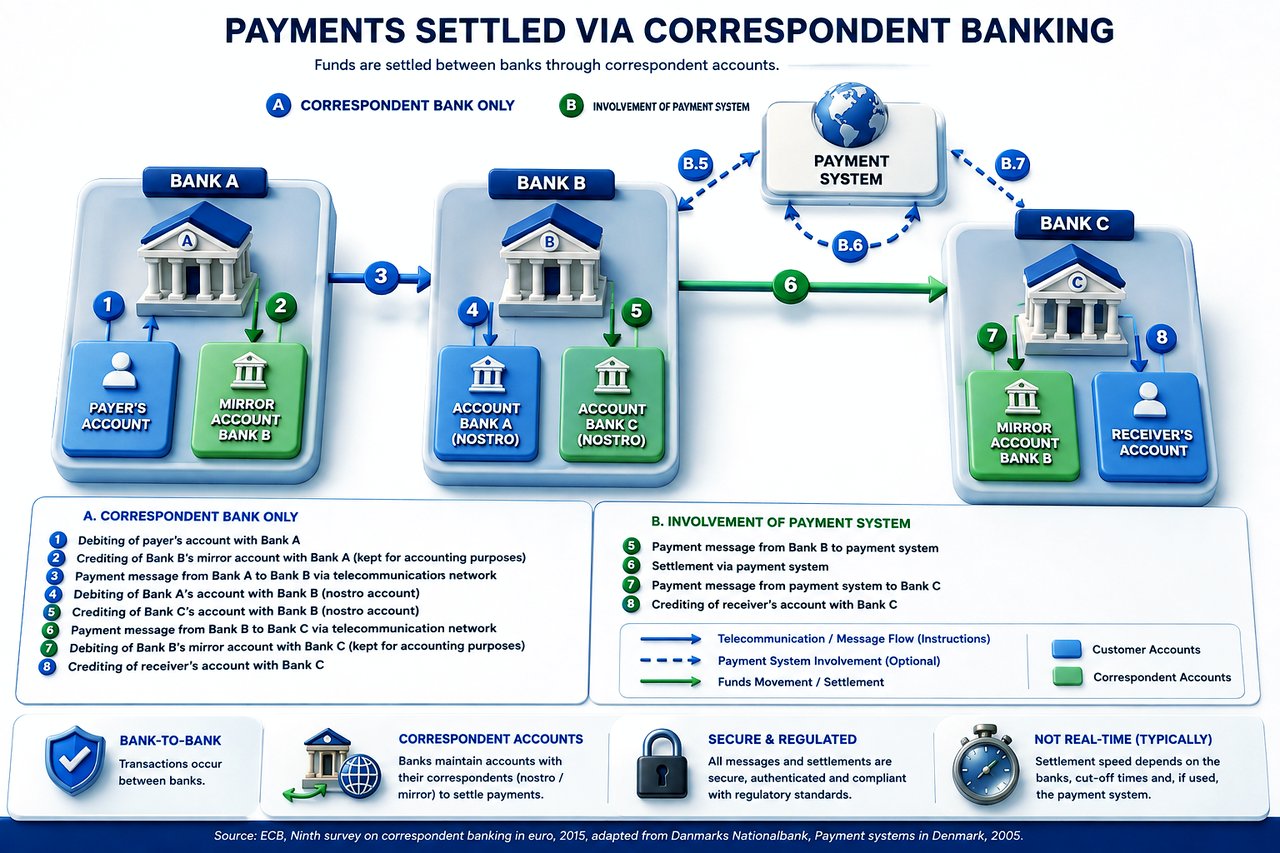
When a financial transaction occurs, such as a transfer of currency from one account to another, no physical movement of money takes place. Instead, the transaction is executed by adjusting the ledger entries in the respective accounts of correspondent banks, the central bank(s) or RTP clearing systems. The banking system decreases the balance in one account and increases the balance in another, reflecting the transfer of value to be settled separately.
Reconciliation and Final Settlement: The banks involved reconcile the transaction to ensure accuracy. In cases where intermediary banks are used, each bank settles its part of the transaction through their correspondent banking relationships.
Reporting and Record-Keeping: Banks maintain records of all transactions for compliance, auditing, and reporting purposes.
How do Core Banking System (CBS) operate
I. Crucial Distinction: Instructions vs. Actual Settlement
A SWIFT message, such as a pacs.008 (Customer Transfer) or pacs.009 (Financial Institution Transfer), is fundamentally a secure communication or instruction. It informs the receiving bank that funds are expected, specifying beneficiary details, transaction amount, and routing instructions, but does not inherently transfer funds by itself. Actual fund transfers occur only when the instructed amount is settled through interbank mechanisms involving correspondent or intermediary banks, verified by actual changes in account balances at each respective institution.
II. Definitions and Roles of Correspondent and Intermediary Banks
A. Correspondent Banks
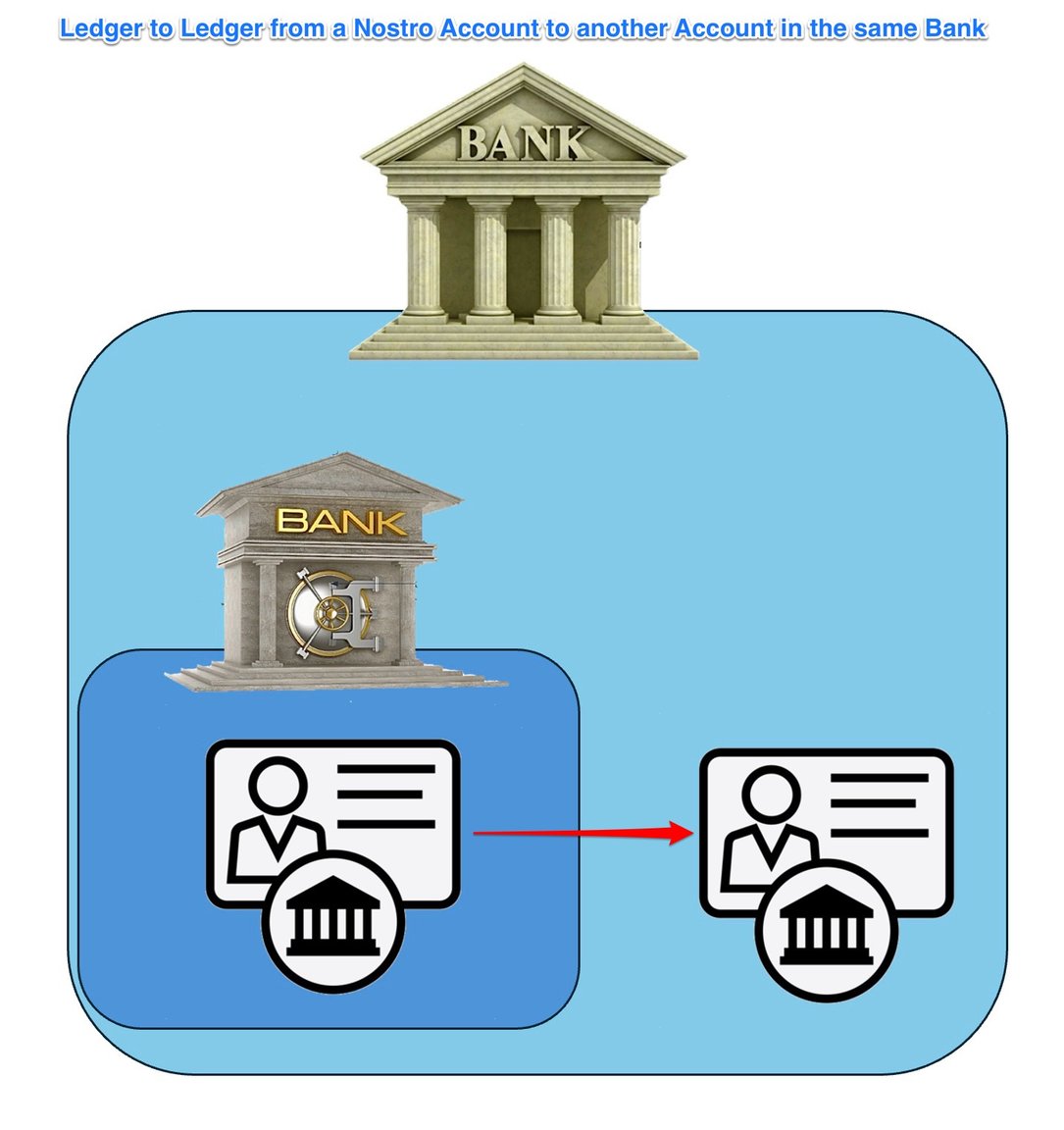
- A correspondent bank maintains direct bilateral accounts (nostro/vostro accounts) with other banks.
- These accounts reflect actual cash balances held at another financial institution, facilitating cross-border payments and settlements.
B. Intermediary Banks
- An intermediary bank acts as a transit point in the payment chain when direct correspondent relationships are not available between sending and beneficiary banks.
- It bridges gaps between non-correspondent banks, handling currency conversions, international payments, and routing complexities.
III. How Core Banking Systems Confirm Actual Receipt of Funds
The Core Banking System employs a strong reconciliation and confirmation process, differentiated for both correspondent and intermediary bank scenarios, as follows:
A. Verification Through Correspondent Banks
When transactions involve direct correspondent accounts (Nostro Accounts):
Detailed workflow:
- Instruction Arrival (pacs.008/pacs.009): CBS receives and stores the SWIFT instruction temporarily.
- Provisional Booking: Funds may temporarily appear in an internal suspense or settlement ledger, pending verification.
- Nostro Statement Reconciliation: The receiving bank receives automated account statements (camt.053, or the legacy MT 940/950, or electronic APIs) from its correspondent banks, reflecting actual account balances and credit entries. CBS reconciles these statements automatically against SWIFT instructions using unique identifiers (UETR – Unique End-to-End Transaction Reference).
- Final Account Credit: Only after matching the SWIFT instruction precisely with the correspondent bank’s confirmed credit entry does the CBS credit the funds definitively to the beneficiary’s client account.
B. Verification Through Intermediary Banks
When funds pass through an intermediary bank (multi-tiered routing), the verification process is slightly more intricate:
Detailed workflow:
- Instruction Arrival (pacs.008): CBS initially records the incoming instruction message.
- Intermediary Settlement Verification: Funds sent through intermediary banks typically result in multiple SWIFT confirmations, including credit notifications (camt.054, formerly MT 910) or subsequent pacs.009 messages indicating that funds were transferred onward. The intermediary bank issues a credit notification confirming funds have been successfully credited to the receiving bank’s correspondent nostro account. CBS receives these confirmations from intermediary institutions, enabling stepwise reconciliation.
- Correspondent Bank Final Verification: The final statement (camt.053, or the legacy MT 940/950) from the correspondent bank confirms actual cash settlement into the receiving bank’s nostro account.
- Final Client Allocation: Only after receiving and verifying the actual settlement confirmation from the correspondent bank (post intermediary confirmation), CBS definitively credits the beneficiary’s account.
IV. Technologies and Systems Utilised by Core Banking Systems
- Automated Reconciliation Software: (e.g., SmartStream TLM, Temenos, Oracle FLEXCUBE)
- Real-Time Monitoring Tools: API integrations and digital bank statements for immediate verification.
- Messaging Gateways: SWIFT Alliance Access, SWIFT gpi trackers, confirming transaction status in real-time.
- Unique Transaction Reference (UETR), Mandated by SWIFT to ensure each message is uniquely identifiable through the entire payment lifecycle.
- Dual-Layer Reconciliation Checks. Automated electronic reconciliation supplemented by manual verification by dedicated operations teams.
- AML/KYC & Compliance Controls. Each payment instruction is screened and validated before any credit is given, ensuring adherence to regulatory obligations (FATF, AML Directives, OFAC, EU/UN sanctions).
- Audit Trails & Reporting. Full electronic audit trails maintained for regulatory compliance and audits.
A Core Banking System does not rely on mere receipt of SWIFT instruction messages as evidence of fund settlement. Instead, it methodically verifies actual monetary movements through reconciliation with confirmed statements received from both correspondent banks (final clearing institutions holding nostro accounts) and intermediary banks (transaction-routing banks confirming onward transfers via credit notifications or subsequent confirmations).
Only when actual monetary balances change at the correspondent level and confirmed credits appear in bank statements from both intermediary and correspondent banks will the CBS definitively recognise and allocate funds to the beneficiary client’s account, thus ensuring the precise distinction between payment instructions and genuine cash settlements.
Banking
Ledger-to-ledger (L2L) transfers in banking refer to the process of transferring assets, liabilities or equity between two separate ledgers maintained by financial institutions, such as banks or other payment service providers. These transfers can occur between accounts held within the same institution or across different institutions. In the context of banking, ledgers are centralized databases or record-keeping systems that track the ownership and transaction history of customer accounts and assets.
L2L transfers in banking are crucial for facilitating efficient and secure transactions between different financial entities and their customers. Here are some key aspects and examples of L2L transfers in banking:
- Interbank Transfers: Interbank transfers are a common form of L2L transfers in banking, where funds are moved between accounts held at different banks. These transfers can be facilitated through various mechanisms, such as wire transfers (e.g., SWIFT), Automated Clearing House (ACH) transactions, and Real-Time Gross Settlement (RTGS) systems.
- Intra-bank Transfers: Intra-bank transfers occur when funds are moved between accounts held within the same financial institution. These L2L transfers are typically faster and may have lower fees compared to interbank transfers since they only involve updating the bank’s internal ledgers.
- Central Bank Ledgers: Central banks maintain their own ledgers that track the reserve balances of commercial banks within their jurisdiction. L2L transfers between central bank ledgers and commercial bank ledgers are critical for managing reserve requirements, executing monetary policy, and facilitating interbank transactions.
- Cross-border Transfers: L2L transfers in banking also play a crucial role in cross-border transactions, where funds are moved between banks or financial institutions located in different countries. These transfers often involve currency conversion and may require the involvement of correspondent banks or international payment networks to facilitate the transaction.
- Digital Asset Transfers: With the growing adoption of digital assets and blockchain technology, some banks and financial institutions have started to explore L2L transfers involving digital assets or cryptocurrencies. These transfers may require the use of specialized protocols, such as the Interledger Protocol (ILP), or the development of new infrastructure, such as central bank digital currencies (CBDCs) or bank-backed stablecoins.

What can be transferred from Bank to Bank?
Bank Assets:
- Cash & Cash Equivalents: These are funds that can be accessed immediately or almost immediately. They include physical cash, deposits with other banks, and highly liquid securities like Treasury bills.
- Investments/Securities: These are financial instruments that the bank invests in to earn a return, such as government and corporate bonds, stocks, and other securities.
- Loans and Advances: These are the funds that a bank lends to its customers, and they generate interest income. They can include personal loans, mortgages, commercial loans, credit card balances, and overdrafts.
- Fixed Assets: These are physical properties owned by the bank, such as buildings, land, equipment, and furniture.
- Intangible Assets: These include non-physical assets like software, patents, trademarks, and goodwill.
- Other Assets: These can include accrued interest receivable, deferred tax assets, and derivative financial instruments among others.
Bank Liabilities:
- Deposits: These are funds that individuals and businesses keep in the bank. They include checking accounts, savings accounts, and time deposits. They are liabilities because the bank has an obligation to return these funds to the depositors on demand or at a specific maturity date.
- Borrowed Funds: These are funds that the bank borrows from other financial institutions, the central bank, or through issuing debt securities.
- Debt Securities: These are bonds or other forms of debt issued by the bank to raise funds. The bank is obligated to pay back the principal and interest to the bondholders.
- Other Liabilities: These include items like accrued expenses, accounts payable, deferred tax liabilities, provisions for loan losses, and derivative financial instruments.
- Subordinated Liabilities: These are debts that will only be paid after all other debts if the bank goes bankrupt.
Bank Equity:
- Common Stock: This is the equity that owners of the bank hold. They have voting rights and may receive dividends.
- Preferred Stock: This type of equity has a higher claim on earnings and assets than common stock but usually doesn’t come with voting rights.
- Retained Earnings: These are the net earnings a bank has accumulated over the years and chosen to reinvest in the business rather than distribute as dividends.
- Treasury Stock: These are the bank’s own shares that it has repurchased from the market.
- Other Complete Income: These are gains and losses from various investments and derivatives that haven’t been realized yet.
- Minority Interest: This is the part of the net assets of a subsidiary attributable to equity interests that are not owned, directly or indirectly through subsidiaries, by the parent.

Off-ledger to On-ledger
Transactions between banks, including off-ledger to on-ledger transactions, require additional steps to ensure the proper transfer of assets or liabilities, adherence to regulations, and proper accounting.
The process is as follows:
- Identification of Transaction/Asset: The process begins with identifying the specific transaction or asset that needs to be moved from off-ledger to on-ledger. Both banks involved in the transaction must agree on the asset or liability to be transferred.
- Risk Assessment and Financial Analysis: Both banks will conduct their independent risk assessments and financial analysis. This is to ensure that the transaction aligns with their individual risk management policies and financial strategies.
- Interbank Agreement: Before the transaction can proceed, the banks must agree on the terms of the transfer. This may involve negotiation on the price of the asset or liability, the timing of the transfer, and other details. This agreement is often legally binding and must comply with local and international banking regulations.
- Regulatory Compliance: The transaction must comply with relevant banking regulations, including those related to capital adequacy, liquidity, and risk management. The compliance teams from both banks will work to ensure that the transaction meets these requirements. Compliance Frameworks: SOX (Sarbanes-Oxley Act): Ensures accuracy and integrity of corporate disclosures (U.S. specific) or GDPR (General Data Protection Regulation): Ensures the protection and privacy of client data, especially in the EU (Europe specific).
- Clearing and Settlement: Once the agreement is made and compliance is checked, the transaction proceeds to the clearing and settlement phase. This involves the actual transfer of the asset or liability from one bank’s ledger to the other’s. This process is often facilitated by a third-party clearing house, especially for large or complex transactions.
- Recording the Transaction: After the clearing and settlement process, each bank records the transaction on its own ledger. For the selling bank, the asset moves from on-ledger to off-ledger, and for the buying bank, the asset moves from off-ledger to on-ledger.
- Ongoing Management and Reporting: Both banks must manage and report the transaction on an ongoing basis. This involves tracking any changes in the value of the asset or liability, reporting these changes to the relevant regulatory authorities, and updating their individual financial statements accordingly.
- Continuous Monitoring: Finally, the banks continue to monitor the asset or liability on a regular basis to ensure that it remains in compliance with all relevant regulations and that its risk profile remains within each bank’s risk tolerance.
The process of converting off-ledger funds to on-ledger funds involves transitioning assets that are not recorded on the bank’s primary financial ledger into positions that are officially recognized on its books. This practice is primarily relevant in the context of shadow banking, asset management, or certain types of financial transactions that initially do not appear on the bank’s main balance sheet. The intricate nuances of this procedure and the associated costs depend on regulatory frameworks, the nature of the assets involved, and the specific policies of the financial institution. Herein, we shall delineate the procedural steps typically entailed and expound upon the inherent costs.

Converting Off-Ledger Funds into On-Ledger Funds in Banks and Central Banks
Converting off-ledger sheet funds into on-ledger sheet funds involves integrating financial activities previously not recorded on the official balance sheet into the main accounting system. This is crucial for accurate financial reporting, transparency, and regulatory compliance. Below is a detailed breakdown of this process for both commercial banks and central banks, covering identification, verification, reconciliation, recording, and auditing.
A. Commercial Banks
1. Identification of Off-Balance Funds
Sources of Off-Ledger Funds:
- Special Purpose Entities (SPEs): Legal entities created for specific transactions, such as securitization, that can hold assets and liabilities off the bank’s main balance sheet. These may include structured investment vehicles (SIVs) and conduits.
- Securitised Assets: Loans or receivables sold to investors but still serviced by the bank. Examples include mortgage-backed securities (MBS) and asset-backed securities (ABS).
- Lease Obligations: Operating leases previously not capitalized under older accounting standards, but required to be included under new standards like IFRS 16.
- Derivatives and Contingent Liabilities: Financial instruments such as swaps, futures, and options, as well as potential liabilities from guarantees and letters of credit.
2. Verification and Validation
Verification Steps:
- Assessment of Financial Instruments: Detailed analysis to determine the nature, risk, and value of off-balance sheet items.
- Valuation Models: Utilizing discounted cash flow (DCF) analysis, mark-to-market (MTM) valuations, and other financial models to assess the fair value of derivatives and securitized assets.
- Credit Risk Analysis: Evaluating the creditworthiness of underlying assets and counterparties involved in OBS transactions.
- Regulatory Review: Ensuring compliance with relevant accounting and regulatory standards.
- IFRS 9 and IFRS 16: Governing the recognition and measurement of financial instruments and leases, respectively.
- Basel III Framework: Risk-weighted assets (RWA) calculations and leverage ratios impacting the treatment of OBS exposures.
Protocols and Standards:
- IFRS and GAAP: Ensuring consistent application of International Financial Reporting Standards (IFRS) and Generally Accepted Accounting Principles (GAAP) for accurate financial reporting.
- AML and KYC Compliance: Adhering to Anti-Money Laundering (AML) and Know Your Customer (KYC) requirements to prevent illicit activities.
3. Reconciliation Process
Reconciliation Methodologies:
- Detailed Transaction Review: Thorough examination and matching of off-balance sheet transactions with internal records.
- Transaction-Level Matching: Ensuring each OBS item is accurately reflected and reconciled with corresponding on-balance sheet entries.
- Exception Reporting: Identifying and resolving discrepancies through automated systems or manual intervention.
Tools and Software:
- ERP Systems: Enterprise Resource Planning systems like SAP and Oracle Financials to automate reconciliation processes.
- Specialized Reconciliation Software: Tools such as BlackLine and SmartStream for high-volume transaction matching and anomaly detection.
4. Recording in the General Ledger
Recording Methods:
- Journal Entries: Detailed entries to incorporate OBS items into the general ledger, ensuring all relevant details are captured.
- Automated Posting: Utilizing core banking systems to automate the recording of transactions, minimizing manual input errors.
- Intercompany and Intrabank Entries: Ensuring proper accounting for transactions involving multiple entities within the banking group.
Protocols and Standards:
- Double-Entry Accounting: Ensuring each transaction affects at least two accounts to maintain the accounting equation (Assets = Liabilities + Equity).
- IFRS/GAAP Compliance: Adhering to international and national accounting standards to ensure transparency and consistency in financial reporting.
5. Audit and Compliance
Audit Processes:
- Internal Audits: Regular internal reviews to ensure adherence to policies, procedures, and accuracy in financial reporting.
- Continuous Monitoring: Implementing real-time audit systems to detect anomalies and ensure compliance continuously.
- Risk-Based Audits: Focusing on high-risk areas such as derivatives and SPEs to ensure strong oversight.
- External Audits: Independent verification by external auditors to ensure compliance with accounting standards and regulations.
- Audit Trail Maintenance: Keeping full records of all transactions and adjustments to provide a clear audit trail.
Compliance Frameworks:
- Sarbanes-Oxley Act (SOX): Ensuring accuracy and integrity of corporate disclosures (U.S. specific).
- EU Audit Regulation: Ensuring accuracy and transparency of financial reporting in Europe.
Protocols and Technologies:
- Regulatory Reporting Tools: Software like AxiomSL and Wolters Kluwer for preparing and submitting regulatory reports
- Blockchain and DLT: Using Distributed Ledger Technology (DLT) for immutable records and transparency in financial transactions.
B. Central Banks
1. Identification of Off-Balance Funds
Sources of Off-Balance Funds:
- Foreign Exchange Swap Lines: Committed but undrawn swap lines, and the forward legs of swaps, which appear only as commitments.
- Contingent Liabilities: Guarantees and other potential obligations not recorded on the balance sheet.
- Custody Holdings: Gold and securities held in custody for other central banks, which never enter the custodian’s balance sheet.
2. Verification and Validation
Verification Steps:
- Valuation of Reserves: Assessing the market value of foreign exchange reserves and other off-balance assets.
- Market Prices and Exchange Rates: Using current market data to value reserves accurately.
- Risk Assessment: Evaluating the credit and market risk associated with holding these reserves.
- Regulatory Review: Ensuring compliance with international standards such as those set by the IMF.
- IMF Guidelines: Adhering to the IMF’s Data Template on International Reserves and Foreign Currency Liquidity.
Protocols and Standards:
- IMF Standards: International Monetary Fund guidelines for reporting foreign exchange reserves and other monetary statistics.
- Central Bank Accounting Standards: Specific standards and practices for central bank accounting and financial reporting.
3. Reconciliation Process
Reconciliation Methodologies:
- Detailed Review of Holdings: Comparing records of foreign reserves and other off-balance items with actual holdings.
- Ledger-to-Actual Matching: Ensuring the recorded data matches the physical or account balances.
- Currency Reconciliation: Regularly reconciling foreign currency holdings against market rates and transactions.
Tools and Software:
- Central Banking Systems: Customized software solutions for managing central bank transactions and holdings.
- Specialized Reconciliation Tools: Tools designed for reconciling large volumes of foreign exchange transactions and reserves.
4. Recording in the General Ledger
Recording Methods:
- Journal Entries: Detailed entries to reflect the integration of off-balance items into the general ledger.
- Automated Systems: Utilizing central banking systems to automate the recording and updating of the general ledger.
- Multi-Currency Accounting: Ensuring accurate accounting for transactions and holdings in multiple currencies.
Protocols and Standards:
- Double-Entry Accounting: Maintaining balanced financial records through double-entry accounting.
- IMF and Central Bank Standards: Adhering to international guidelines and specific central bank accounting standards.
5. Audit and Compliance
Audit Processes:
- Internal Audits: Regular reviews to ensure accuracy and policy compliance within the central bank.
- Real-Time Monitoring: Implementing systems for continuous monitoring and real-time audit capabilities.
- Risk-Based Approaches: Focusing on areas with significant risk exposure, such as foreign reserves and contingent liabilities.
- External Audits: Independent audits to ensure adherence to international standards and transparency in reporting.
- Complete Documentation: Maintaining detailed records of all transactions and adjustments for audit purposes.
Compliance Frameworks:
- IMF Guidelines: Ensuring transparency and accuracy in reporting international reserves and foreign currency liquidity.
- Central Bank Regulations: Adhering to the statutory and accounting rules that govern the central bank itself.
Protocols and Technologies:
- Blockchain and DLT: Enhancing transparency and accuracy through immutable records and distributed ledger technologies.
- Regulatory Reporting Tools: Facilitating accurate and timely preparation and submission of regulatory reports.
In short
The conversion of off-ledger funds into on-ledger funds is a detailed and many-sided process requiring careful identification, verification, reconciliation, recording, and auditing. Both commercial banks and central banks must adhere to rigorous standards and protocols to ensure the accuracy, transparency, and regulatory compliance of their financial statements. By leveraging advanced tools and adhering to international standards, these institutions can effectively manage the integration of off-balance sheet items into their main accounting systems, ensuring the integrity of their financial reporting.
Inherent Costs
The cost of bringing off-ledger positions onto the balance sheet depends on the asset, the jurisdiction and the institution’s own systems. It falls into five categories:
- Compliance and legal: due diligence on the asset and the parties (AML, KYC, sanctions), legal opinions on title and enforceability, and ongoing monitoring and reporting.
- Valuation and audit: independent valuation where no market price exists, and the audit work needed to recognise the asset in the financial statements.
- Risk management: models and limits for the new exposure, and their ongoing monitoring.
- Capital: once on the balance sheet, the position adds to risk-weighted assets. Under Basel III a bank must hold total capital of at least 8% of risk-weighted assets, plus a capital conservation buffer of 2.5% and any applicable countercyclical or systemic buffers.
- Operations: system changes, process redesign and staff training.
Costs therefore vary from case to case and can only be estimated once the asset, the counterparties and the regulatory treatment are known.
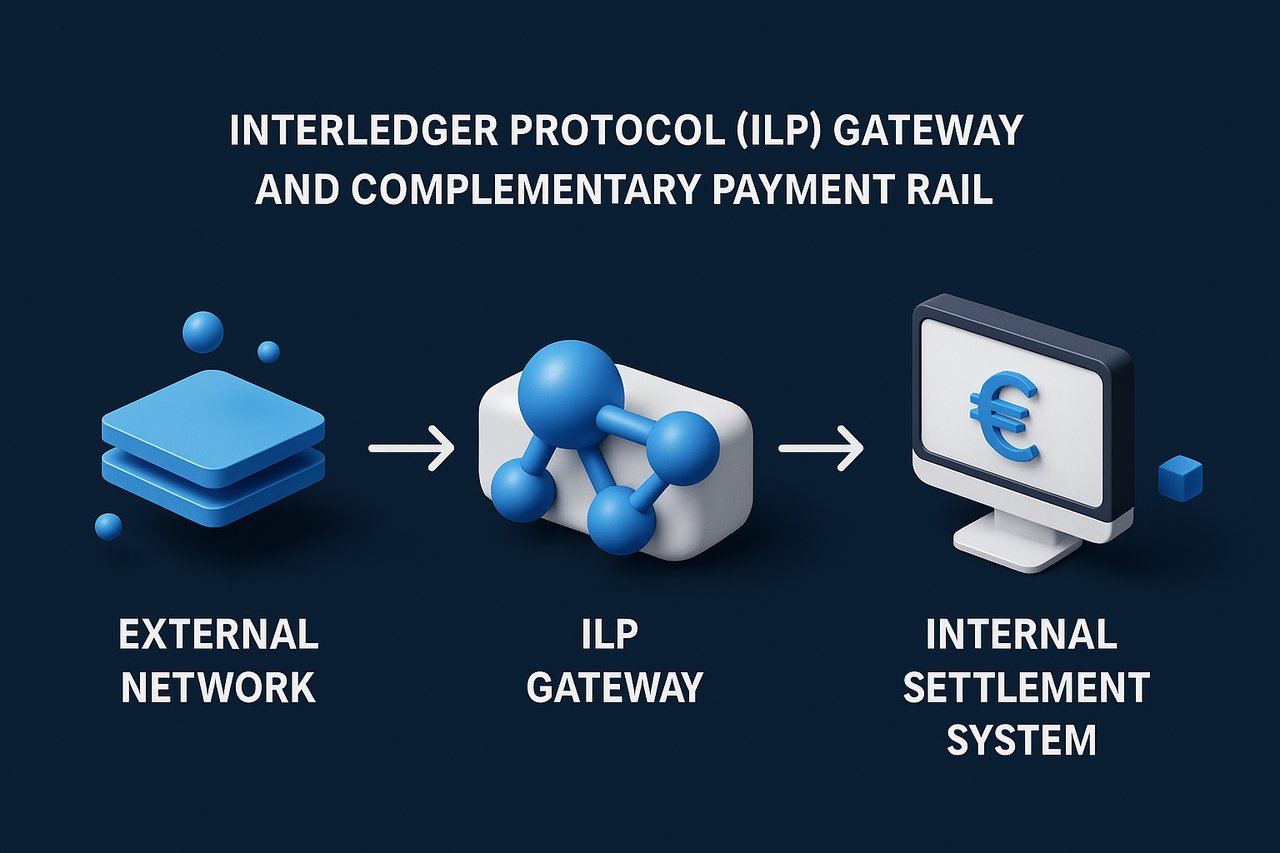
IFB – Interledger Protocol (ILP) Gateway and Complementary Payment Rail
Purpose and Positioning
ILP is the core of IFB’s cross-ledger strategy: it furnishes conditional, cryptographically bound transfers that complete in seconds at the messaging level, while honouring the segregation of our DMZ connector from the core ISO 20022 ledger. Yet the modern payments environment is polyglot. Clients may require rails optimised for specific corridors, liquidity profiles or regulatory jurisdictions. Below we set out the ILP specifications that clients must follow, and the principal alternative rails with the prudential or technical rationale for each.
1 Interledger Protocol – Canonical Specification
- Connector Tier – Rafiki v 1.3 + or Interledger.rs in a hardened middle layer; external traffic is BTP/STREAM over TLS 1.3; internal conversion to ISO 20022 PACS.008/009. This topology follows NIST SP 800-53 Rev 5, control SC-7 “Boundary Protection”.
- Credential Hygiene – Tokenised BTP credentials rotate every ninety days and are revocable within twenty-four hours, in line with the credential-management requirements of the OWASP Application Security Verification Standard.
- Proof-of-Path Testing – Three €0.01 micropayments (≤1 s RTT) followed by a €1 STREAM burst (<0.5 % loss, <750 ms latency) validate throughput without breaching reporting thresholds.
- Settlement Finality – Each fulfilled packet triggers a pacs.009 instruction into T2 (formerly TARGET2) or a correspondent nostro account; beneficiary credit is withheld until irrevocable confirmation arrives, thereby satisfying Principle 8 “Settlement Finality” of the CPMI-IOSCO Principles for Financial Market Infrastructures (Basel/BIS, April 2012).
2 Swift instant cross-border payments – conventional rail
- Profile – Swift links domestic instant-payment schemes for cross-border payments, so that the beneficiary can be credited in seconds where both domestic systems support it, using ISO 20022 pacs.008 messaging.
- Why IFB uses it – It relies on existing correspondent accounts, needs no new token infrastructure and has global bank coverage.
- Regulatory Edge – Because settlement continues to occur on traditional RTGS rails, capital and liquidity treatment follow Basel III’s established framework without ILP’s conditional-escrow nuances.
3 SEPA Instant Credit Transfer – Pan-European Euro Rail
- Profile – The European Payments Council’s SCT Inst scheme makes euro credit transfers available to the beneficiary within ten seconds, 24 hours a day, every day of the year. Since the 2025 rulebook (October 2025) the scheme no longer sets a maximum amount; each PSP sets its own limits.
- Why it matters – For pure-euro corridors, SEPA Instant avoids FX spreads and settles in central bank money via TARGET Instant Payment Settlement (TIPS) or other clearing mechanisms.
- Regulatory Edge – Under the Instant Payments Regulation (EU) 2024/886, PSPs in the euro area must send and receive instant payments and may not charge more for them than for standard credit transfers.
4 RTGS.global – Atomic Payment-versus-Payment (PvP) Network
- Profile – RTGS.global is building a network for atomic payment-versus-payment settlement of cross-border, multi-currency payments between participating banks.
- Why it matters – PvP eliminates principal risk in FX settlement; where ILP still requires post-fulfilment Nostro reconciliation, RTGS.global bonds both legs in a single atomic instruction.
- Regulatory Edge – PvP settlement is what the Basel Committee’s supervisory guidance on FX settlement risk recommends wherever practicable.
5 Ripple Payments (formerly RippleNet) – API-based ledger bridge
- Profile – Ripple Payments provides messaging, FX quoting and settlement orchestration between participating institutions, optionally using XRP or stablecoins for liquidity.
- Why it matters – Some counterparties already operate on Ripple’s network; connecting to it avoids duplicate integration.
- Regulatory note – Where settlement uses a crypto-asset, the crypto-asset rules of each jurisdiction apply in addition to payment regulation.
6 Mojaloop – Inclusive Instant Payments System (IIPS)
- Profile – Mojaloop is an open-source reference model for interoperable, low-value mobile payments. It incorporates ILP internally and adds directory and quoting services designed for financial inclusion.
- Why it matters – Low-value remittances can be routed between Mojaloop-based national schemes without correspondent-banking fees.
- Policy context – It supports UN Sustainable Development Goal target 8.10 on access to financial services.
7 Road-Mapped Possibilities
- Wholesale CBDC PvP corridors – Multi-CBDC platforms tested by central banks could offer DvP and PvP atomicity in central bank money.
- Tokenised deposit networks – Projects such as Swift’s shared ledger (pilot since July 2026) and the Regulated Liability Network explore bank deposits as tokens on a shared ledger, with final settlement through existing systems.
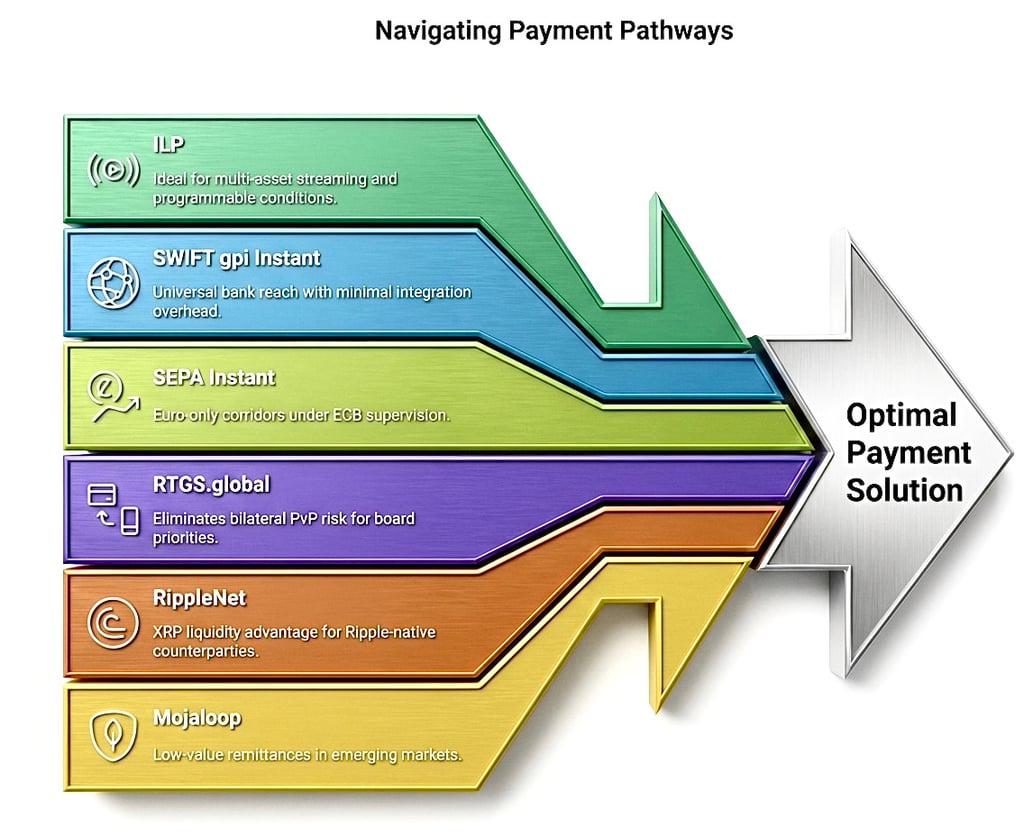
8 Decision Matrix – Which Rail When?
- Choose ILP when multi-asset streaming, micropayments, or programmable conditionality are foremost.
- Choose Swift instant cross-border payments for universal bank reach with minimal integration overhead.
- Choose SEPA Instant for euro-only corridors under ECB supervision.
- Choose RTGS.global when bilateral PvP risk elimination is the board’s priority.
- Choose Ripple Payments when counterparties already operate on Ripple’s network.
- Choose Mojaloop for low-value, inclusion-oriented remittances in emerging markets.
9 Conclusion
By supplementing ILP with Swift instant payments, SEPA Instant, RTGS.global, Ripple Payments and Mojaloop – and, in time, CBDC and tokenised-deposit rails – IFB furnishes clients with a menu of rigorously governed pathways. Each rail is matched to explicit prudential references, ensuring that whichever option you select, the underlying settlement mechanics remain consonant with global regulatory doctrine and IFB’s own commitment to operational resilience.
Protocol (ILP) Connectivity at IFB – Specifications, Governance, and Strategic Rationale
1 Executive Overview
IFB has adopted the Interledger Protocol (ILP) as a near-real-time bridge between external payment networks and our internal ISO 20022 settlement infrastructure. ILP enables conditional, cryptographically verified transfers that terminate at a middle-layer connector rather than the core banking ledger, preserving network segmentation; legal settlement follows through the settlement rails described below. The following specifications codify how ILP is implemented, why each control exists, and which legal or prudential instrument underpins the requirement.
2 Network Architecture and Segregation
- Three-Tier Topology. ILP traffic is accepted exclusively by a hardened connector deployed in a demilitarised middle layer. The connector speaks BTP/STREAM over TLS 1.3 externally and converts each fulfilled packet into an ISO 20022 PACS.008 or PACS.009 message that transits an internal integration bus to the core ledger. No ILP socket is permitted on the core-ledger VLAN. Why? This design follows NIST SP 800-53 Rev 5, control SC-7 “Boundary Protection”, and the network-segmentation expectations of PCI DSS.
- Connector Stack. IFB standardises on Rafiki v 1.3 or higher (which bundles its own BTP implementation). Interledger.rs is maintained as an approved equivalent. Deprecated libraries such as ilp-plugin-btp are proscribed to avoid supply-chain risk and orphaned dependencies.
- Transport Security. All external connections enforce TLS 1.3 with Perfect Forward Secrecy; cipher suites are restricted to those approved by the German Federal Office for Information Security (BSI TR-02102-2, 2025 edition).
3 Connectivity Modes and Credential Hygiene
- Preferred Mode – Open Payments / HTTPS Payment Pointer. The receiver publishes a well-known endpoint (/.well-known/pay/*) returning ILDCP-compliant JSON (ILP address, assetCode, assetScale, STREAM credentials). Discovery is automatic and self-documenting.
- Fallback Mode – Static BTP Peering. Static credentials are exchanged via PGP-encrypted channels, rotate every ninety days, and must be revocable within twenty-four hours.
- Rate-Limiting. The connector throttles inbound requests at 500 packets min⁻¹, returning HTTP 429 on excess. Why? This supports the monitoring and abuse-detection controls of ISO/IEC 27002:2022 and the OWASP Application Security Verification Standard.
4 Proof-of-Path Validation
Before commercial traffic is permitted, the counterparty must:
- Execute three micropayments of €0.01; each must be fulfilled in ≤1000 ms.
- Trigger a throughput burst of €1 (chunked via STREAM); packet-loss must remain <0.5 % and mean round-trip latency <750 ms.
- Rotate the BTP token and repeat step 1 to prove credential rollover.
Why? Micropayments exercise STREAM’s conditional-escrow logic without breaching regulatory reporting thresholds, while token rollover tests credential life-cycle controls mandated by OWASP and ISO 27002.
5 Settlement Finality and Prudential Compliance
- Conditional Fulfilment vs. Legal Settlement. ILP fulfilment releases the packet, yet statutory finality only arises when a Financial Market Infrastructure (FMI) settles irrevocably. Consequently, each fulfilled packet triggers an ISO 20022 PACS.009 FI-to-FI instruction routed to T2 (EUR) or an approved correspondent nostro account. The core ledger credits the beneficiary only after settlement in T2 or on the nostro account is confirmed. This dual-step model complies with CPMI-IOSCO Principles for Financial Market Infrastructures (April 2012), Principle 8 “Settlement Finality”, and Basel III’s operational-risk framework (final text, December 2017).
- Failure Handling. Should finality not be achieved on the value date (T+0), the ILP escrow auto-reverts and the incident is logged per Basel III operational-risk guidelines; an exception report is escalated to the Chief Risk Officer.
6 Compliance and Monitoring Controls
- KYC/KYB and Sanctions Screening. Prior to onboarding, counterparties deliver full KYC/KYB packs, ultimate-beneficial-ownership charts and up-to-date proof-of-funds. Every ILP destination tag undergoes real-time screening against EU Council Consolidated Financial Sanctions lists and OFAC SDN lists, in line with the EU sanctions regulations, Regulation (EU) 2024/1624 (the EU Anti-Money Laundering Regulation) and FATF Recommendation 16 as revised in June 2025.
- AML Transaction Monitoring. ILP packet flows feed an anomaly-detection engine; any suspicious pattern is escalated and, where required, reported promptly to the competent financial intelligence unit; payer and payee information travels with each transfer as required by Regulation (EU) 2023/1113 (Transfer of Funds Regulation).
- Digital Operational Resilience. The connector tier is treated as a critical ICT component, following the standards of the EU’s DORA, Regulation (EU) 2022/2554. Annual penetration tests, quarterly vulnerability scans and incident notification within DORA-aligned timelines are mandatory.
- Log Retention. All ILP packet logs, ISO 20022 messages and compliance artefacts are preserved for seven years, in line with record-keeping practice aligned with ISO/IEC 27001.
7 Security & Confidentiality Clause (Unified)
Transport encrypted via TLS 1.3; BTP tokens stored encrypted at rest with AES-256; breach notification window twenty-four hours. This consolidated clause replaces all duplicated “Security & Confidentiality” statements in earlier drafts, simplifying governance and easing future revisions.
8 Contractual Milestones and Tranche Release
- After successful validation both parties sign a readiness certificate and the Master Services Agreement (settlement window twenty-four hours; dispute window forty-eight hours).
- The inaugural tranche: stipulated in the commercial term-sheet, e.g. EUR 100 000: is released through the validated ILP channel.
- Quarterly re-validation and annual penetration testing preserve ongoing technical integrity.
9 Strategic Payoff
By situating ILP at a segregated middle layer, embracing modern connector tooling, imposing strict credential hygiene, and yoking each procedural step to authoritative instruments (NIST SP 800-53, ISO 27002, CPMI-IOSCO PFMI, Basel III, DORA, FATF 16 and EU sanctions law) IFB offers clients a cross-ledger transfer capability that is simultaneously state-of-the-art, regulator-compliant and operationally resilient. Messaging runs in near real time, while settlement remains anchored in regulated rails. In short, ILP at IFB fuses speed with certainty – delivering value at the pace of innovation while grounded in the disciplines of global banking regulation.
Terminology associated with alternative or legacy transfer methods should be interpreted within the context of banking infrastructure. Such terms may describe communication channels, internal processing methods, or historical practices, but they do not replace the requirement for regulated institutions, recognised payment systems, and formal settlement procedures.
Any transfer, regardless of terminology, must ultimately be processed, cleared, and reconciled within the established financial system.



Next step
Request an introduction
Tell us in a few lines who you are and what you have in mind. Your enquiry goes directly to the bank and is treated in confidence.
Prefer to talk? Book a 30-minute videoconference.
Key Exchange for ILP
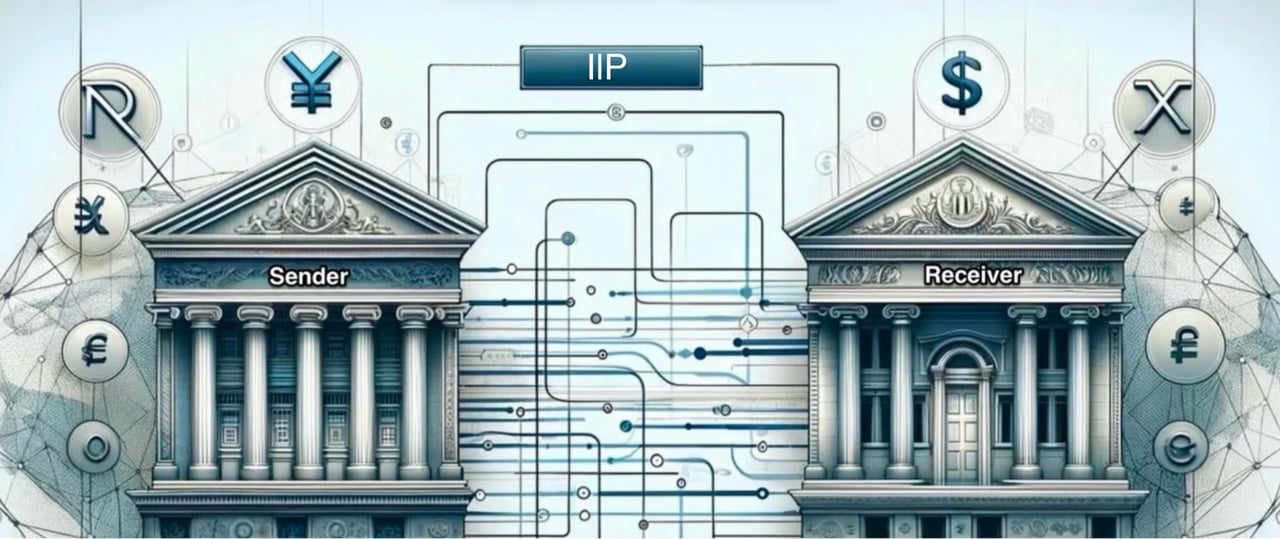
ILP Inter-Ledger Protocol Key Exchange Procedure for Financial Institutions
- Should your esteemed financial institution intend to transmit an ILP to us, we kindly invite you to download our presentation and meticulously observe the guidelines outlined in the ILP Validation Procedure.
- To generate the dynamic Output AES Code (Key) for your ILP please click here.

If you want to know more about how to transfer funds to your accounts with us, please get in contact with Marie Mayer.