
Crypto & Digital Assets
Crypto Off-Ramping
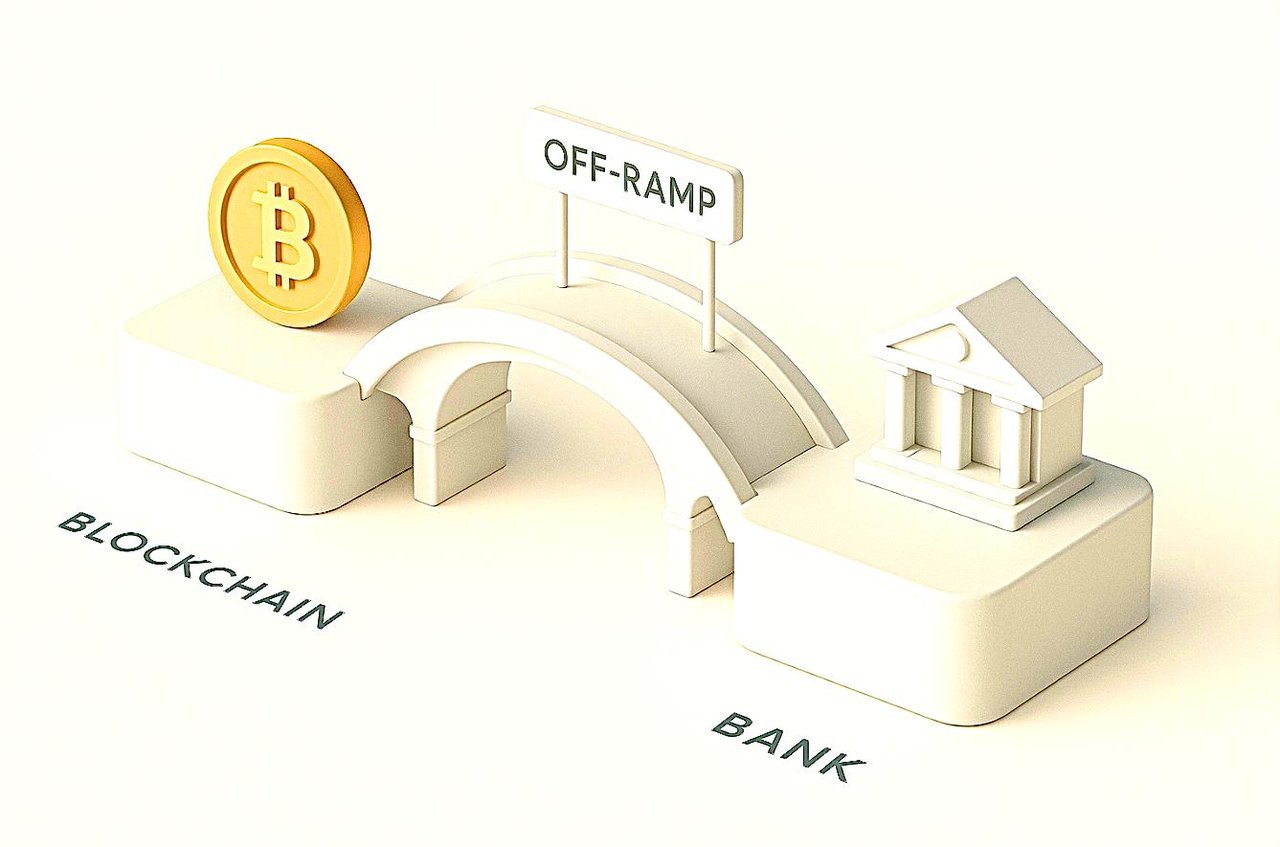
Crypto off-ramp and on-ramp structures
are critical components of the cryptocurrency ecosystem that facilitate the smooth conversion of digital assets like Bitcoin, Ethereum, and stablecoins into traditional currencies such as USD, EUR, or GBP and vice versa . These systems operate through various mechanisms including centralized exchanges, payment processors, and automated conversion protocols that handle the complex process of asset validation, regulatory compliance, and settlement into traditional bank account.
What we do not do
IFB does not design or operate structures whose purpose is to obscure the beneficial owner or the origin of crypto assets. Layering through shell companies, “hidden” partners or nominee chains is a recognised money-laundering typology, not a service.
Every conversion we handle is identified to its beneficial owner, supported by evidence of the source of funds and wealth, screened against sanctions lists and reported where the law requires. Offshore entities, funds and trusts can serve legitimate ends; they never replace transparency towards the bank.
On-Shore Crypto Off- (and On-)Ramp Methods in Europe and the USA
Europe: Legal Off- and On-Ramp Methods
1. Centralized Regulated Exchanges
- Leading European exchanges authorised under MiCA, for example Bitpanda, Kraken and Bitstamp
- Process: Create an account, complete Know Your Customer (KYC) verification, transfer crypto, sell for EUR (or other fiat), and withdraw via SEPA or wire transfer
- All major exchanges report user activity to local authorities, especially under EU’s tax and AML regulations.
2. MiCAR-Compliant Service Providers
- The EU’s Markets in Crypto-Assets Regulation (MiCAR) (effective since December 2024) requires off-ramp platforms to be licensed and meet strict operational, risk management, and consumer protection requirements
- Passporting: A provider licensed in one member state can operate EU-wide, ensuring uniform consumer protections and legal certainty.
- Service providers must enforce full KYC/AML measures and provide documentation for all transactions.
3. Payment Processors and Banking Solutions
- Services like Nuvei and others allow direct crypto-to-fiat off-ramping to bank accounts or cards, often integrated with major EU banks and e-money services
- Requires KYC; regulated under MiCAR and local banking laws.
4. Stablecoin Solutions
- Using regulated platforms to exchange stablecoins (e.g., USDT, EURS) for local fiat and withdraw to a bank or payment card.
- Always through platforms that are registered and compliant with AML laws
5. OTC Desks and Institutional Off-Ramps
- For large transactions, businesses and high-net-worth individuals may use over-the-counter (OTC) desks: such as those run by Binance, Kraken, or regionally licensed providers.
- These desks offer bespoke KYC, direct bank settlement, and compliance support for substantial sums.
6. Legal and Tax Requirements
Every legal off-ramp must:
- Conduct strong KYC/AML checks.
- File or report large or suspicious transactions.
- Provide documentation for the origin of crypto funds.
- Facilitate capital gains reporting for taxes
USA: Legal Off-Ramp Methods
1. Centralized US-Based Exchanges
- Main platforms: Coinbase, Gemini, Kraken, Binance US, and others
- Requires user registration, KYC, and AML checks aligned with federal and state law.
- Converts crypto to USD, wired to domestic bank accounts or payment networks (ACH, RTP)
2. Fintech Platforms and Payment Processors
- Companies such as OneSafe and Ramp Network offer smooth off-ramping to US bank accounts, cards, or sometimes even bill payment services
- Full regulatory compliance with FinCEN (Financial Crimes Enforcement Network) and money service business registration.
3. Crypto Debit Cards
- Some providers issue prepaid or debit cards funded via crypto sale, with real-time conversion to USD at the point of sale.
- Issuers (e.g., through Mastercard/Visa) require strict KYC/AML.
4. Institutional Off-Ramps and OTC Desks
- Used by businesses or institutional clients, providing personalized service, settlements, and large-volume liquidity under regulatory surveillance
5. Legal Compliance and Tax Reporting
- Platforms require KYC, 1099 reporting, and all transactions are traceable for IRS scrutiny
- The USA has stricter crypto tax enforcement and reporting standards than most regions.
The conversion between fiat and digital assets, known as on-ramping and off-ramping, remains one of the most formidable structural bottlenecks in the cryptocurrency ecosystem. Both institutional investors and retail participants face an array of operational, regulatory, and counterparty challenges that impede smooth capital flow between traditional financial systems and the decentralised domain.
1. Structural Difficulties in Crypto On- and Off-Ramping
a. Regulatory Fragmentation
Financial regulation for digital assets remains inconsistent across jurisdictions. Institutions must manage an intricate mosaic of AML, KYC, FATF, and MiCA frameworks, each imposing divergent documentation and monitoring requirements. This complexity deters institutional adoption and slows down transactional throughput. Retail users, in turn, often face protracted verification procedures and unpredictable account freezes when attempting fiat conversions.
b. Banking Reluctance and Counterparty Risk
Traditional banks remain risk-averse toward digital asset exposure, largely due to perceived volatility, reputational risk, and incomplete regulatory clarity. Institutional investors thus struggle to secure stable banking relationships capable of handling crypto-related settlements. Retail users, particularly those using smaller exchanges, frequently encounter blocked transfers, delayed settlements, and high withdrawal fees.
c. Liquidity and Settlement Friction
Institutional investors demand deep liquidity and near-instant settlement: a standard rarely met by current crypto-fiat gateways. Conversion paths are fragmented across multiple intermediaries, resulting in execution risk, slippage, and compliance friction. Retail platforms, meanwhile, rely on third-party processors that impose exorbitant spreads, diminishing transaction efficiency and user trust.
d. Custodial and Compliance Incompatibilities
Institutions require strong custodial solutions that integrate smoothly with fiat settlement systems, yet most crypto exchanges are technologically or procedurally incompatible with institutional-grade infrastructure. Retail platforms lack the sophistication to ensure smooth transaction monitoring or auditability: critical prerequisites for large-scale adoption and regulatory comfort.
2. The IFB Solution
a. Institutional-Grade Fiat Access
IFB bridges the structural divide between traditional finance and digital asset ecosystems. As a fully regulated banking institution with digital asset expertise, it provides compliant fiat gateways that meet institutional-grade standards. This includes segregated accounts, multi-jurisdictional settlement networks, and direct integration with approved crypto exchanges and custodians.
b. Unified Compliance Architecture
Through harmonised AML/KYC frameworks and automated transaction monitoring, IFB eliminates redundant verification layers for institutional and retail clients alike. Its compliance infrastructure is built to align with EU MiCA, FATF Travel Rule, and Basel III directives, ensuring full transparency and regulatory security without transactional delay.
c. Liquidity and Settlement Infrastructure
By maintaining real-time connections with top-tier liquidity providers and exchange partners, IFB facilitates near-instant fiat settlements and reduces slippage risk for institutional participants. Retail clients benefit from optimised conversion routes that minimise spreads and settlement costs.
d. Risk Mitigation and Custodial Integration
IFB’s custodial partnerships ensure that both fiat and digital assets are held in secure, auditable environments. This mitigates counterparty risk and enhances capital efficiency for both institutional and retail users seeking compliant exposure to digital assets.
3. Strategic Impact
IFB’s infrastructure effectively transforms the crypto-fiat interface from a fragmented, opaque bottleneck into a transparent, regulated, and efficient financial corridor. For institutional investors, it enables full capital mobility and fiduciary compliance. For retailers, it restores confidence, predictability, and cost-efficiency in digital asset transactions.
In essence, IFB institutionalises the crypto on- and off-ramp process: replacing friction with trust, opacity with compliance, and delay with precision.
1. EU – the new hard perimeter
- MiCA – licensing, conduct, custody. MiCA (Reg. (EU) 2023/1114) establishes a full authorisation regime for Crypto-Asset Service Providers (CASPs): trading, exchange, execution, custody, placement, advice, etc. Result: no “light-touch” access to EU consumers; cross-border “passporting” only after full authorisation and ongoing supervision. Practical constraint: onboarding stalls until a CASP (or its EU intermediary) is licensed; cross-border marketing without authorisation is prohibited.
- Transfer of Funds Regulation (TFR) – the crypto “Travel Rule” with teeth. Reg. (EU) 2023/1113 requires originator–beneficiary data to “travel” with every crypto transfer that involves an EU-established PSP or CASP. For self-hosted addresses (“unhosted wallets”), CASPs must collect full counterparty information and (above €1,000) verify whether the customer owns/controls the self-hosted wallet. This adds verification steps, creates hold queues, and raises false-positive risk.
- Germany – BaFin’s strict overlay. Since 30 December 2024, crypto custody and other crypto services in Germany fall under MiCA, supervised by BaFin under the Crypto Markets Supervision Act (KMAG). BaFin expects enhanced due diligence for transfers involving self-hosted wallets, including proof-of-control methods (eg reference transactions or message-signing). Operational impact: additional checks, longer settlement cycles, and higher KYC/KYT cost per transfer.
- France – transition to MiCA, no shortcuts. Pre-MiCA DASP registrations continue only on a time-limited basis; new entrants must obtain a full MiCA authorisation. Passporting is politically sensitive; supervisors are already signalling tougher scrutiny of cross-border licences. Constraint: timing risk and regulatory fragmentation during transition.
- Prudential choke-point for banks – Basel crypto standard. From 1 January 2026, the Basel Committee’s standard applies punitive capital to “Group 2” crypto exposures (1250% risk weight, with exposure limits of 1% and 2% of Tier 1 capital). Effect: most banks avoid principal exposure, curtail settlement windows, or force agency-only models, constricting fiat liquidity into ramps.
2. United Kingdom – promotions gate + Travel Rule
- Financial promotions: section 21 FSMA (as extended to qualifying cryptoassets). Since 8 Oct 2023, any communication capable of influencing UK consumers must be by an authorised firm, by an MLR-registered firm communicating its own promotions, or approved by a s21-gateway approver. Mandatory risk warnings, cooling-off, appropriateness tests apply. Consequence: on-ramps/off-ramps marketed into the UK from abroad routinely get blocked; banks decline payments to unregistered promoters.
- UK Travel Rule. From 1 Sep 2023, UK crypto businesses must collect, verify and share counterparty data on transfers, aligning with FATF. Cross-border mismatches generate delays and rejections.
3. United States – BSA/FinCEN, state MSB rules, accounting drag
- BSA/FinCEN Travel Rule. U.S. “transmittals of funds” require originator/beneficiary info (traditionally ≥$3,000) applied to convertible virtual currency (CVC) MSBs. For international wires, regulators proposed lower thresholds; enforcement is strict. Result: VASPs and banks pause or reject when counterparties cannot furnish compliant data paths.
- Fragmented state licensing and federal supervision. Money transmitter licensing, OFAC sanctions screening, and securities/commodities perimeter uncertainty constrain fiat rails, especially for new exchanges or OTC desks lacking a clean 50-state footprint. (General BSA/FinCEN guidance context.)
- Accounting headwind (US GAAP). From 2025, ASU 2023-08 requires most in-scope cryptoasset holdings to be measured at fair value through net income. For corporates, this can introduce P&L volatility, discouraging treasury participation and compressing ramp volumes during earnings windows.
4. Singapore – stablecoin and payments perimeter
- MAS stablecoin framework + PSA enhancements. MAS finalised a regime for single-currency stablecoins (SGD/G10), plus PSA enhancements and DPT protections. Issuer reserve, redemption, and segregation rules raise the quality bar but restrict which tokens can be used as fiat proxies in ramps.
5. What these rules concretely break in ramps
- Counterparty-data gaps – EU/UK Travel-Rule messages must be exchanged in-band before/with settlement; missing data forces manual review, freezes, or returns.
- Self-hosted wallet frictions – for amounts >€1,000, proof-of-control is required; screenshots are insufficient, pushing users to sign messages or execute reference transactions, delaying retail withdrawals.
- Promotions perimeter – UK marketing without the right s21 route triggers bank de-risking and consumer payment blocks.
- Bank balance-sheet constraints – Basel treatment makes principal liquidity scarce; many banks restrict to agency models and shorter settlement windows.
- Accounting optics – U.S. GAAP fair-value-through-P&L discourages treasuries from holding ramp inventory around reporting dates.
6. What a compliant ramp requires
Regulatory posture
- Serve each market only through the licences it requires: a MiCA CASP authorisation for the EU, with passporting, and FCA registration plus an s21 approval route for UK promotions. Where IFB does not hold such a licence, it works through authorised partners and does not market to that market.
Data-path compliance by design
- Deploy an EBA-aligned Travel-Rule gateway that auto-routes originator/beneficiary data across EU/UK/US schemas, with fallbacks for counterparties lacking a compatible VASP endpoint. Integrate self-hosted-wallet verification workflows (message-signing/reference-TX), with BaFin-acceptable evidence capture.
Bank-grade settlement rails without Basel drag
- Operate agency-only fiat settlement for client crypto flows, avoiding Group-2 principal exposure while preserving instant fiat liquidity via SEPA Instant, T2 and SWIFT gpi. Maintain pre-funded nostro/PM accounts and real-time treasury to compress fiat leg settlement to T+0 within EU/UK hours. Basel exposure impact: negligible; operational liquidity impact: high.
Custody and segregation
- Integrate with regulated custodians for warm/cold segregation and programmable withdrawal policies. Enforce Travel-Rule and self-hosted verification at the policy layer (eg, thresholds, geo-fencing, sanctions lists). BaFin-compliant records under GwG §8 retained ≥5 years.
Promotions and client acceptance
- For UK retail, run FCA-compliant journeys: standardised warnings, 24-hour cooling-off, appropriateness tests, and s21 approvals. For EU retail, restrict access to markets where MiCA passport is active; for France, respect transitional constraints until local approval is confirmed. Result: materially lower payment declines and fewer chargeback disputes.
Treasury-friendly liquidity options
- Offer instant off-ramp to bank money and, where relevant, to MAS-recognised single-currency stablecoins (for non-EU corridors), hedged at the fiat leg with no open principal crypto exposure. Outcome: lower P&L volatility for corporates sensitive to ASU 2023-08.
Controls and auditability
- Full AML/KYT stack: sanctions/PEP screening, address-risk scoring, source-of-funds analytics, and Travel-Rule evidence linking TXIDs to identity artefacts. Provide regulator-grade audit trails covering decisioning and wallet-control proofs.
7. Practical impacts for client segments
Institutional investors
- MiCA/TFR + Basel constraints mean liquidity must flow through agency rails with deterministic compliance. An agency model avoids principal-risk capital charges while meeting data-sharing obligations.
Retail platforms
- UK promotions and EU TFR checks are the chief failure modes. Standardised disclosures, s21 approval routing and wallet verification reduce first-time withdrawal delays and bank payment blocks.
8. Summary – the constraint is legal, the solution is architectural
The restrictions are statute-driven: MiCA licensing and conduct, TFR data-sharing and self-hosted-wallet verification, BaFin’s enhanced due diligence, the UK promotions gate, U.S. BSA/Travel-Rule duties, and Basel capital. These do not merely “raise the bar”; they re-architect how ramps must operate. The remedy is equally structural: work under the right licences, operate agency-only fiat settlement, industrialise Travel-Rule and self-hosted verification, embed promotions compliance, and integrate regulated custody. That design restores throughput without breaching the perimeter.
Sources: EU MiCA and TFR primary texts; BaFin KWG/GwG guidance; FCA promotions and Travel-Rule statements; Basel cryptoasset standards; MAS stablecoin framework; U.S. ASU 2023-08.



Next step
Request an introduction
Tell us in a few lines who you are and what you have in mind. Your enquiry goes directly to the bank and is treated in confidence.
Prefer to talk? Book a 30-minute videoconference.