
Payments & Transfers
Alternative Transfer Methods
Key Tested Telex, ledger-to-ledger, server-to-server and API transfers: how they work, and where they stop.
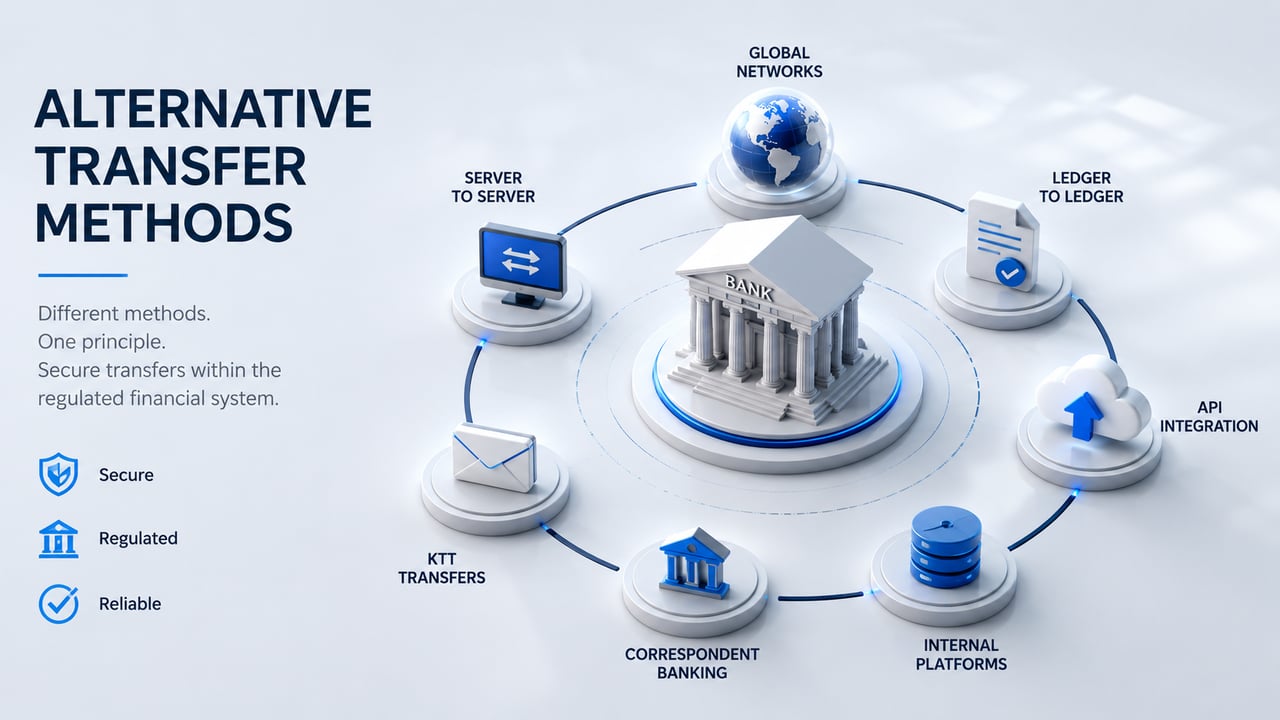
In addition to established payment systems such as SWIFT, SEPA, and RTGS, the financial industry has historically employed a range of alternative or specialised transfer methods. These methods are often referenced using terminology that reflects legacy practices, internal banking processes, or specific technological implementations.
It is essential to understand that such methods do not constitute independent financial systems. They exist within, and remain dependent upon, the same institutional framework that governs all legitimate currency transfers.
Regardless of terminology, every valid transaction must ultimately be processed, cleared, and settled through regulated financial institutions and recognised payment infrastructure.
Context and Classification
Alternative transfer methods typically arise in one of three contexts.
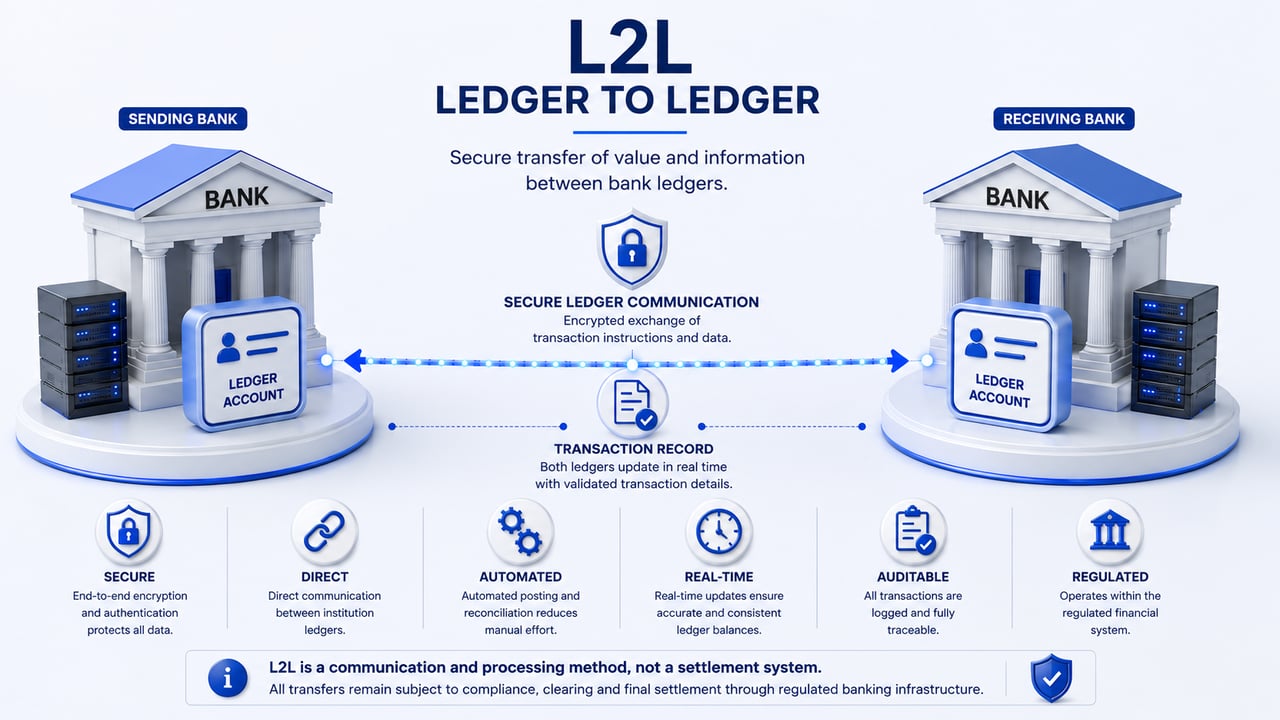
First, they may refer to internal or interbank communication processes, where institutions exchange instructions or reconcile positions outside of standard retail payment channels. These processes may be highly specialised, but they remain part of the broader banking system.
Second, certain terms originate from legacy banking practices, reflecting historical methods of instruction transmission or account coordination. While the terminology persists, the underlying mechanics have often evolved or been integrated into modern infrastructure.
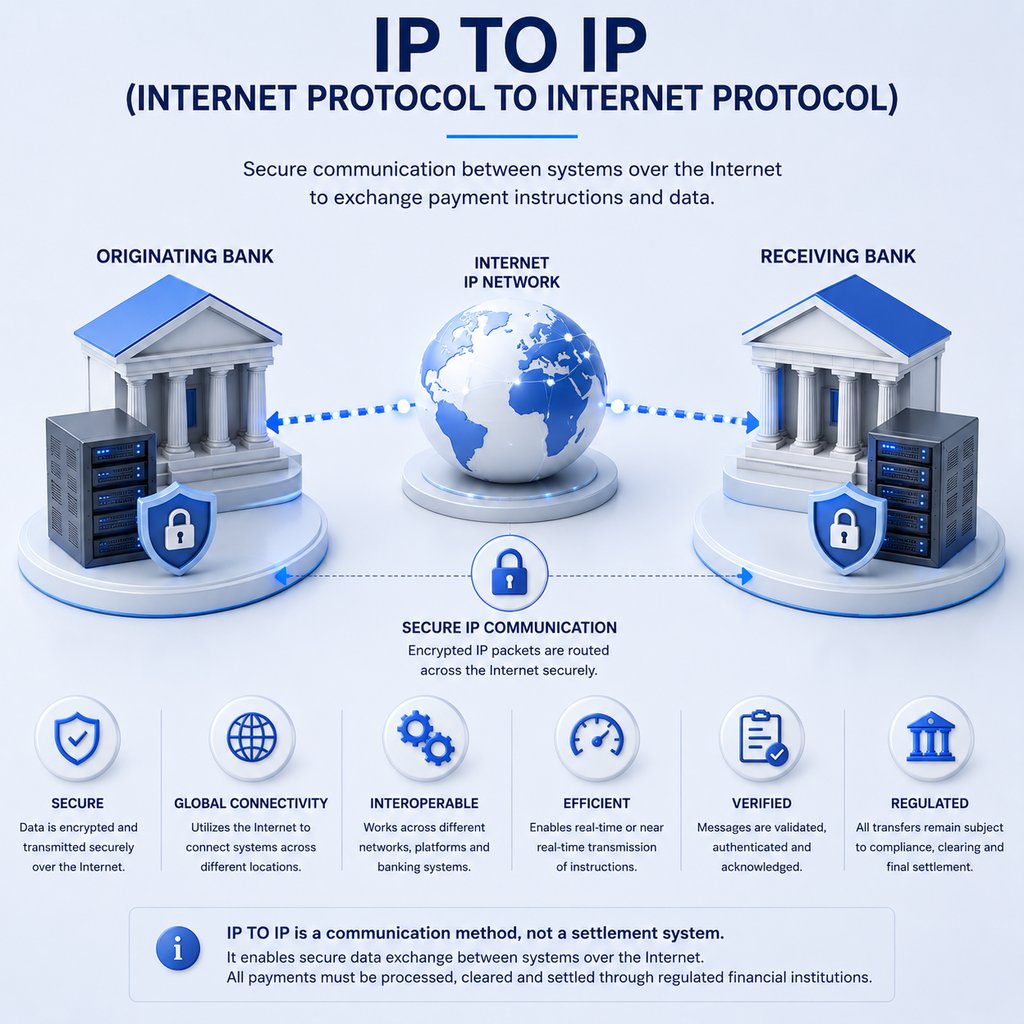
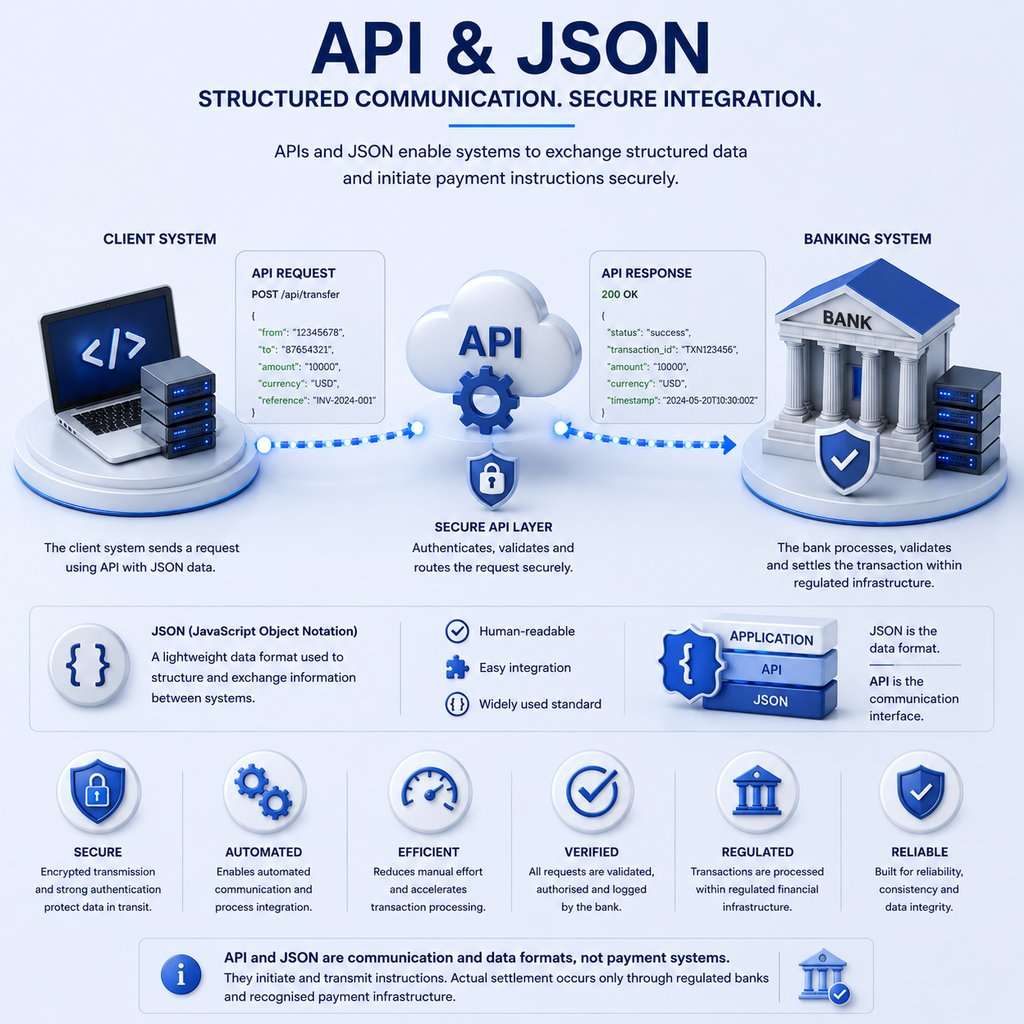
Third, some references relate to technical or system-level communication, including API-based interaction, structured data exchange, or system-to-system messaging. These mechanisms facilitate the transmission of information but do not independently execute settlement.
Understanding this distinction is critical. A method may describe how information is transmitted or processed, but it does not replace the requirement for institutional execution.
A message is not money
Why no SWIFT message, telex or server moves funds without settlement, in 90 seconds.
Verify a document with VL1 →Received a payment message, slip or confirmation? Have it checked before you rely on it.
Relationship to Established Payment Systems
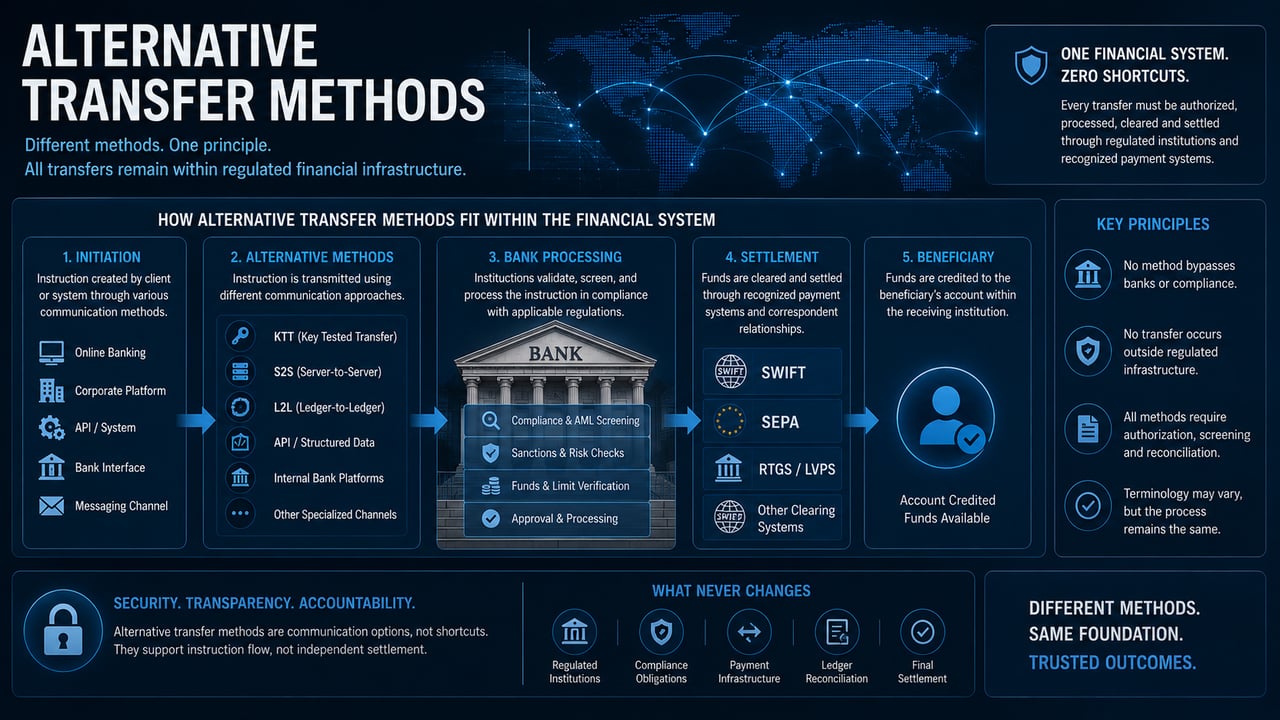
All alternative methods operate in relation to recognised payment systems. Even where a transfer is initiated through a specialised process, the underlying movement of funds must be completed through established rails.
This means that:
- funds are held within regulated accounts
- institutions must authorise and process the transaction
- settlement occurs through recognised clearing systems
- balances are reconciled within institutional ledgers
There is no mechanism by which funds can be transferred independently of this structure. Any method that claims to bypass banks, eliminate settlement systems, or operate outside regulatory frameworks is not an alternative. It is a misrepresentation.
Terminology and Interpretation
A number of terms are commonly associated with alternative transfer methods. These include expressions such as:
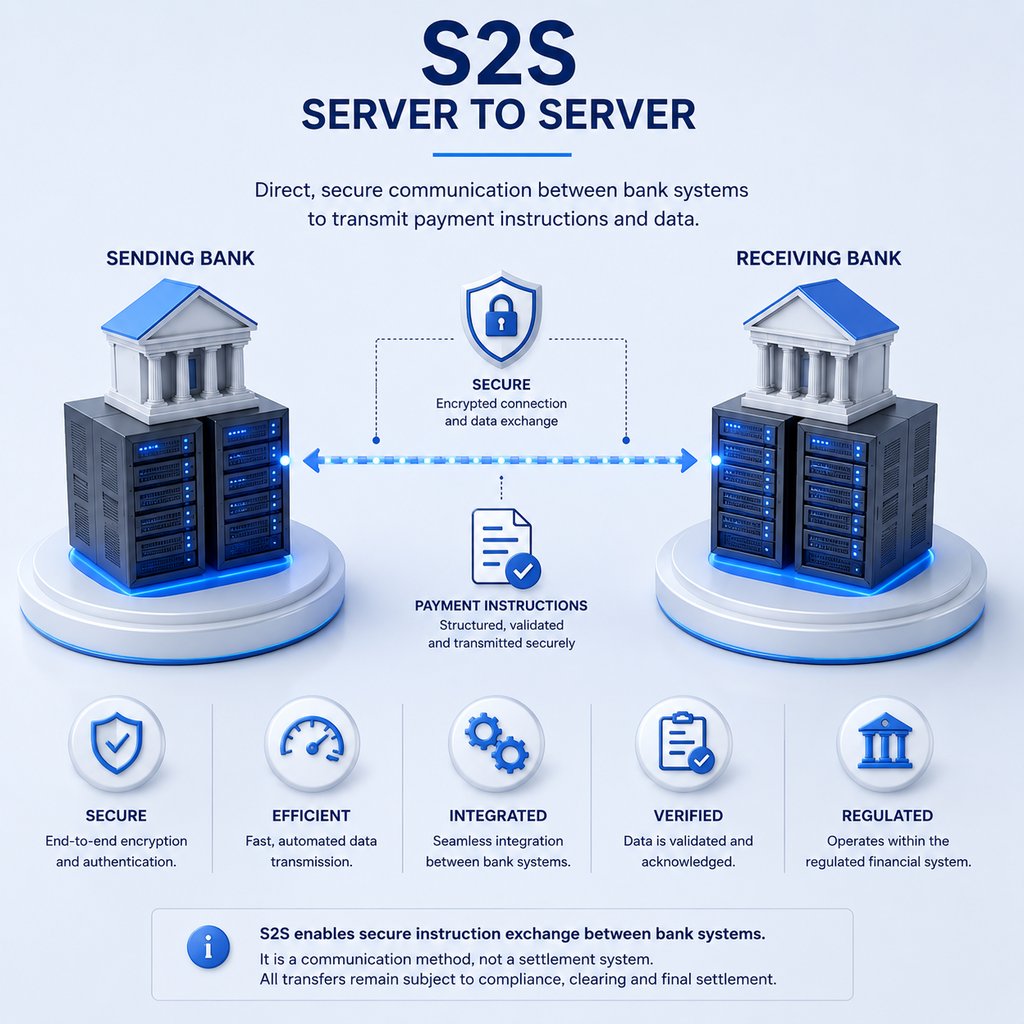
- server-to-server communication
- ledger-to-ledger processing
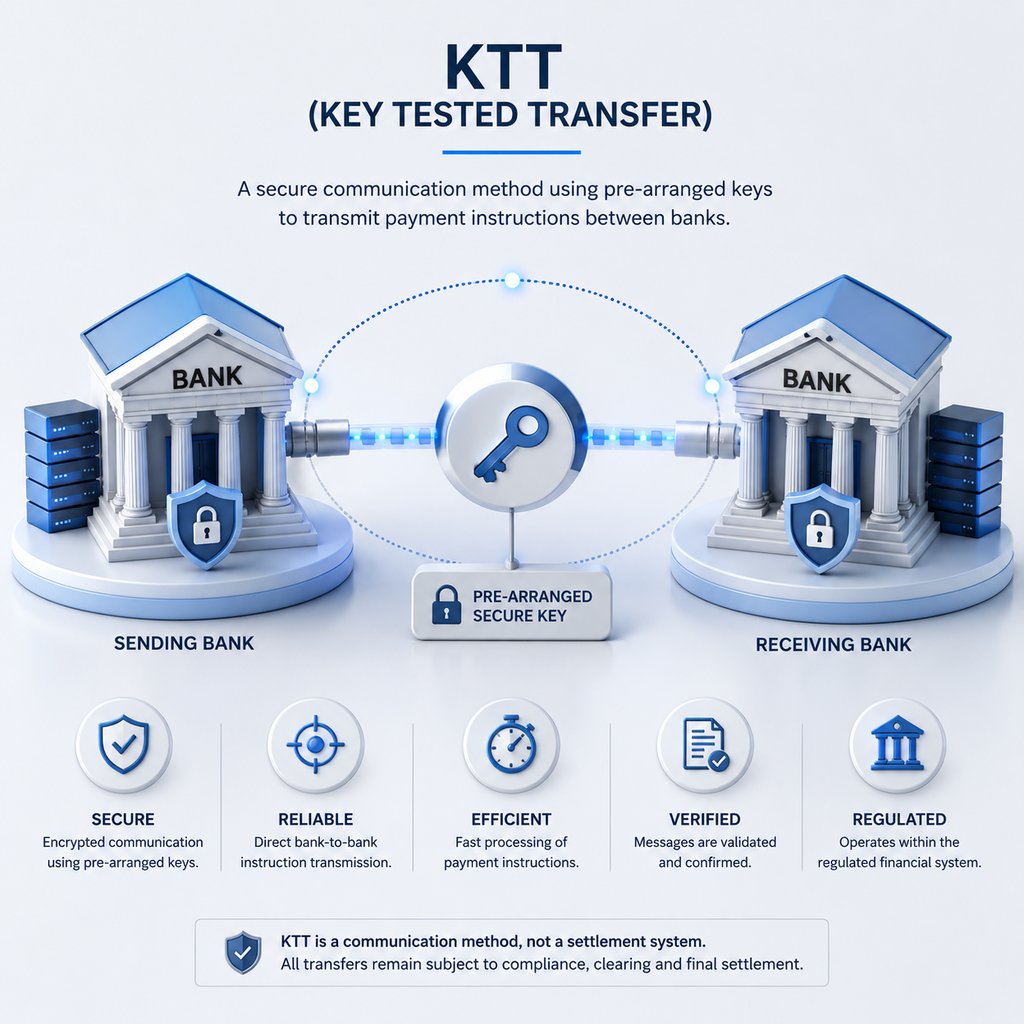
- key-tested transfers
- internal platform execution
- API-based transfer initiation
These terms should be interpreted with precision. In most cases, they describe how instructions are transmitted or how systems interact internally. They do not define a standalone transfer mechanism.
For example, a server-to-server process may refer to the automated exchange of data between systems. A ledger-to-ledger process may describe internal account movements within a controlled environment. An API-based interaction may initiate a transaction request. None of these processes, in isolation, constitutes settlement.
Operational Constraints
Alternative methods are subject to the same constraints as all financial transactions. These include:
- regulatory compliance, including AML and sanctions controls
- verification of counterparties and account ownership
- availability of funds within authorised accounts
- institutional approval and processing
- reconciliation within recognised settlement systems
The presence of specialised terminology does not alter these requirements. It does not accelerate settlement beyond what is technically possible, nor does it remove the need for verification.
Misinterpretation and Risk Exposure
Alternative transfer terminology is frequently misunderstood, particularly in contexts where technical language is used to imply the existence of advanced or exclusive financial capabilities. Communication methods or internal processes are then presented as if they were independent financial systems.
The risk arises when data transmission, system interaction, or internal processing is mistaken for the actual movement of funds. This confusion can lead to reliance on representations that are not supported by institutional verification.
For a structured overview of these risks: Transfer Risk Fraud Awareness
Integration with Modern Banking Infrastructure
In contemporary banking, alternative methods are increasingly integrated into broader digital frameworks. API-based systems, automated processing environments, and real-time data exchange mechanisms have improved efficiency and reduced latency in transaction handling.
However, these developments do not alter the fundamental structure of financial transfers. They enhance communication and processing, but settlement remains anchored in the same institutional and regulatory framework.
The distinction between communication efficiency and settlement execution must be maintained at all times.
Institutional Position
IFB recognises the existence of alternative and specialised transfer terminology within banking practice. These terms are interpreted within the context of regulated financial infrastructure and do not represent independent or parallel systems.
All transfers, regardless of how they are initiated or described, must be:
- processed by authorised financial institutions
- executed through recognised payment systems
- subject to compliance and verification procedures
- reconciled within institutional ledgers
Any claim that contradicts these principles should be treated as invalid.
Functional Role of This Section
This section provides contextual clarification for terminology encountered in specialised or non-standard transfer discussions. Its purpose is to ensure that such terminology is understood within the correct operational framework and not misinterpreted as evidence of alternative financial systems.
Final Position
Alternative transfer methods describe variations in communication, processing, or internal banking practice. They do not redefine how funds move within the financial system.
All currency transfers, without exception, remain dependent on regulated institutions, recognised infrastructure, and verifiable settlement processes.



Next step
Request an introduction
Tell us in a few lines who you are and what you have in mind. Your enquiry goes directly to the bank and is treated in confidence.
Prefer to talk? Book a 30-minute videoconference.