
International Finance Bank
is a specialised investment bank serving private wealth, corporate platforms and sovereign strategic finance. Its work centres on capital structuring, long-tenor financing and cross-border financial coordination under the monetary and geopolitical constraints of the present.
IFB is owned by IFB Holdings LLC, part of IFC Group, and by its management. No external group holds a special interest. Our attention belongs to you, as a domestic or foreign institutional client, and we meet that obligation through excellence and our experience in Asset Management and in Corporate Banking & Advisory.
International Finance Bank LTD – Banque Financière Internationale LTD moves, lends, invests and protects money for clients worldwide, from large businesses to personal account holders. Together with its subsidiaries and affiliates, it offers a broad portfolio of products and services to individuals and businesses, and today serves clients in 37 countries.
Our banking licence, License A, a full offshore banking licence, number L1149, was granted on 13 October 2004 and has remained in force without interruption ever since. Our regulator is the AOFA, Anjouan, Union of the Comoros.
IFB is a subsidiary of IFB Holdings LLC and, through it, of International Finance Corporation Group and International Finance Corporation LLC.
Why we are different
Finance at this level is rarely simple. Business owners, professionals, humanitarian organisations, investors, governments, banks and the managers of hedge and pension funds each need solutions built around their own strategy. This is where International Finance Bank makes the difference.
IFB designs solutions for high-net-worth individuals, corporations and organisations. Every client has a particular vision and particular goals, so our recommendations are bespoke: they help you build, manage, preserve and transfer your wealth. The approach serves especially well where financial engineering for corporations and organisations, or the transfer of wealth across generations, is in question.
Through its contracted entities, IFB creates, structures and issues financial instruments. These can be traded, carrying capital efficiently across borders, or used to secure the financing of a project. For corporate, humanitarian or personal purposes we also design products to order, whether a new bond issue, a certificate of deposit, equities or derivatives, so that you receive the best instrument available at the risk and return you set.
Our corporate services complete the offering, and we regard them as what sets IFB apart in the industry. For business owners, we bring business and personal objectives together: wealth planning, valuation, sale and transfer planning, and tax planning for the business within the law. For successful professionals, we simplify their finances and recommend a comprehensive wealth plan, which may cover stock options, restricted stock and strategies for concentrated positions.
For humanitarian organisations, we provide solutions for project requirements. For investors, we offer a modern approach to investment, with flexible solutions, broader opportunities and advanced technology. Governments facing the fiscal effects of global events such as COVID-19 can counter them with innovative financial engineering. Banks can draw on our Bank2Bank and Bank4Bank services. Hedge and pension funds can rely on dedicated fund services that cover the entire investment process, across the full range of strategies, domiciles and structures.
Whatever your financial needs or challenges, International Finance Bank stands ready with personalised, strategic solutions. Speak to us and see how IFB can help you move forward with confidence.

Built through two decades of cross-border banking
Since 2004, IFB has served clients whose affairs extend beyond a single jurisdiction, currency or banking framework. Throughout, we have built the institution on continuity, regulatory discipline, operational resilience and service founded on relationships.
Our history is evidence of endurance, not ornament. In international banking longevity matters, because it shows that an institution can adapt to new regulation, new client requirements and new market conditions without losing its strategic direction.
Over the years we have refined our operating model to meet the realities of modern cross-border banking: higher compliance standards, faster execution, broader digital expectations and more complex client structures. Our development has been one of institutional strengthening, the steady improvement of governance, process and service, rather than expansion for its own sake.
That experience now shapes how we serve internationally active private clients, entrepreneurs, family offices and corporates. We remain focused on what matters most: institutional reliability, clear process, access in several languages, disciplined onboarding and direct relationship management.
For IFB, history is a present-tense proof, not a retrospective marketing claim. It speaks for continuity, judgement and stewardship, qualities that remain essential in cross-border banking.

What we are
1. Private investment and wealth preservation banks
Definition and mandate. Investment and wealth preservation banks, of which IFB is an example, exist to safeguard, grow and administer substantial assets for affluent individuals, family offices, foundations and institutional investors. Their focus is long-term asset protection, preservation of capital, prudent portfolio management and discreet advice.
How we operate: the gross omnibus structure. Cash and securities transfers pass through gross omnibus nostro accounts, in which each client’s assets are segregated within a consolidated account held with a correspondent bank or in settlement accounts.
- For cash transfers, the institution debits the client’s own sub-account within the omnibus account and sends the transfer through standard payment systems such as SWIFT or SEPA.
- For securities transfers, the institution settles through established clearing systems such as Euroclear or DTC, on a delivery-versus-payment (DVP) basis. Each transaction is recorded separately under a unique client identifier, which provides transparency and protects the assets.
Because each client’s positions are recorded on a gross basis, assets are segregated in the bank’s books and reconciliation is exact. Clear identification of client assets strengthens risk management, above all if a counterparty defaults or becomes insolvent. In the EU, frameworks such as MiFID II and EMIR require client-level reporting; IFB applies comparable standards, so every movement of cash and securities is tracked.
“Omnibus account structures are explicitly recognised under MiFID II, CASS, SEC Rule 15c3-3, CSDR, and equivalent global regulatory regimes. They constitute the standard operational model for global custody, prime brokerage, and clearing. Beneficial ownership is maintained through internal books and records rather than through individual IBAN designation, consistent with international settlement infrastructure and regulatory expectations.”
Core activities and characteristics
- Capital preservation and risk management. The first aim is to keep the purchasing power of capital intact across generations, through conservative allocation to carefully balanced portfolios of cash, gold, bonds, prime real estate, equities in stable jurisdictions and selected alternative investments.
- Privacy and confidentiality. These banks hold client confidentiality to a higher standard, operate discreetly, and often do so in jurisdictions whose legal frameworks firmly protect ownership and privacy.
- Personal advice. Advice is closely tailored and often extends to estate planning, tax mitigation, fiduciary services, the transfer of wealth between generations and bespoke family office management.
- Choice of stable jurisdictions. They are typically domiciled in countries known for political neutrality, legislative stability, sophisticated legal systems and regulatory clarity, such as Switzerland, Liechtenstein, Luxembourg or Singapore.
- Conservative profit model. Revenue comes mainly from management, advisory and custody fees and asset-based remuneration, not from speculative trading or aggressive lending.
2. Private banks
Definition and mandate. Private banks provide personalised financial services and wealth management to high-net-worth and ultra-high-net-worth individuals (HNWI and UHNWI). They resemble wealth preservation banks, but usually pursue growth alongside preservation and may offer a broader, sometimes riskier, range of asset management products.
Core activities and characteristics
- Holistic wealth management. Comprehensive financial planning, wealth accumulation, discretionary asset management, tax advice and sophisticated investment opportunities.
- A balanced approach to risk. Preservation remains vital, but a greater willingness to take risk for capital growth distinguishes them from pure wealth preservation institutions.
- Personal relationship management. A dedicated private banker is responsible for each client’s portfolio.
3. Investment banks (corporate finance)
Definition and mandate. Investment banks, as distinct from wealth preservation banks, raise capital for corporations, governments and institutions, advise on mergers and acquisitions (M&A), underwrite issues of securities and trade financial instruments in primary and secondary markets.
Core activities and characteristics
- Corporate finance and advisory. Mergers, acquisitions, restructurings and initial public offerings (IPOs).
- Trading and brokerage. Active trading in equities, bonds, commodities and derivatives, and prime brokerage services.
- A high-risk, high-reward model. Revenue depends heavily on market movements, trading profits, advisory fees and underwriting commissions.
What we are not
4. Traditional commercial and retail banks
Definition and mandate. Commercial and retail banks serve the mass market of private and business customers, with transaction accounts, credit and everyday banking. Their primary goal is short- to medium-term profit from interest margins, fees and commissions on lending and deposits.
Core activities and characteristics
- Mass retail focus. Basic products such as current and savings accounts, personal loans, mortgages, credit cards and consumer finance.
- A volume-driven revenue model. Income comes mainly from the difference between lending and deposit rates (net interest margin), together with fees such as transaction and overdraft charges.
- Branches and digital channels. A wide branch network, complemented by digital banking designed for mass access and convenience.
- Moderate risk exposure. Risk management concentrates on credit assessment and liquidity, with less emphasis on sophisticated wealth management or asset preservation.
5. Universal banks
Definition and mandate. Universal banks combine retail, commercial, investment and private banking in a single organisation, serving everyone from mass-market consumers to large corporations and wealthy private clients.
Core activities and characteristics
- Diverse revenue. Income from lending, deposits, fees, capital market operations, wealth management and investment advice.
- A comprehensive offering. A wide range of services for many segments, drawing on economies of scale and scope.
- Complex risk management. The variety of activities demands advanced risk frameworks that balance retail, investment and wealth management risks at once.
Get to know us

IFB Investment Bank: the choice for complex financial operations
In global finance, the choice of investment bank can decide whether a complex operation succeeds. International Finance Bank is a natural choice for demanding financial undertakings, for seven reasons.
1. Global reach, local expertise
IFB gives clients access to the major financial markets of the world, and combines that reach with local knowledge. Our teams know regional market dynamics, regulation and culture, so the advice you receive fits your own context.
2. A complete range of services
From M&A advisory to asset management and structured finance, IFB covers the whole spectrum. Clients find one coherent set of solutions and do not need several banks for different needs.
3. Innovative financial solutions
Global finance does not stand still. IFB continuously develops new financial products and solutions that answer the specific challenges and opportunities of today’s markets.
4. Disciplined risk management
Complex operations carry risk by nature. Our risk framework identifies those risks and mitigates them, using analytical tools and models.
5. Experience
Since 2004, IFB has worked on cross-border transactions across sectors and regions. Experience is no guarantee of future results, but it shapes judgement, diligence and commitment to the client’s success.
6. The client at the centre
Every solution is built around the specific needs and objectives of the client. Personal attention is combined with international expertise.
7. Ethics and integrity
In an industry that runs on trust, IFB holds firmly to ethical standards. Clients can rely on dealings marked by transparency, integrity and the highest professional conduct.
In short
For complex financial operations, the choice of investment bank makes all the difference. With its global reach, its range of services, its innovation and its reputation, International Finance Bank is the right choice for discerning clients, who reach their objectives with confidence and security.

IFB Private Bank: the choice for high-net-worth individuals
High-net-worth individuals (HNWI) need expertise and a trusted partner who understands their particular needs and aspirations. International Finance Bank meets that need, for seven reasons.
1. Bespoke financial solutions
HNWI portfolios are often complex and call for tailored answers. Whether estate planning, lawful tax planning or investment strategy, IFB designs solutions that match each client’s goals and tolerance for risk.
2. Global diversification
Our international presence lets clients diversify across asset classes and geographies, which can improve the balance of risk and return and make the portfolio more resilient.
3. Exclusive access to investments
Our network opens investment opportunities that are rarely available to the general public, from private equity transactions to real estate in prime locations, and gives clients an edge in building wealth.
4. Wealth preservation and legacy planning
For many clients, preserving wealth and planning their legacy matter as much as creating it. IFB offers trust formation, estate planning and philanthropic advice, so that wealth passes to the next generations efficiently and with purpose.
5. Discretion and privacy
We handle all client information and transactions in the strictest confidence, and strong cybersecurity protects both assets and data.
6. Dedicated relationship managers
Each client has a dedicated relationship manager as a single point of contact for every financial matter. Our managers are financial experts trained in the particular requirements of high-net-worth individuals, and the service they provide is personal and uninterrupted.
7. Ethical and transparent practice
Where financial malpractice erodes trust, IFB’s commitment to ethics and transparency stands out. Investments are managed with integrity, in line with the law and with ethical norms.
In short
For high-net-worth individuals who want a partner that understands their needs, aspirations and concerns, International Finance Bank is the right choice. Its bespoke services, global reach and ethical conduct make it a place where wealth can grow, be preserved and pass on with meaning.
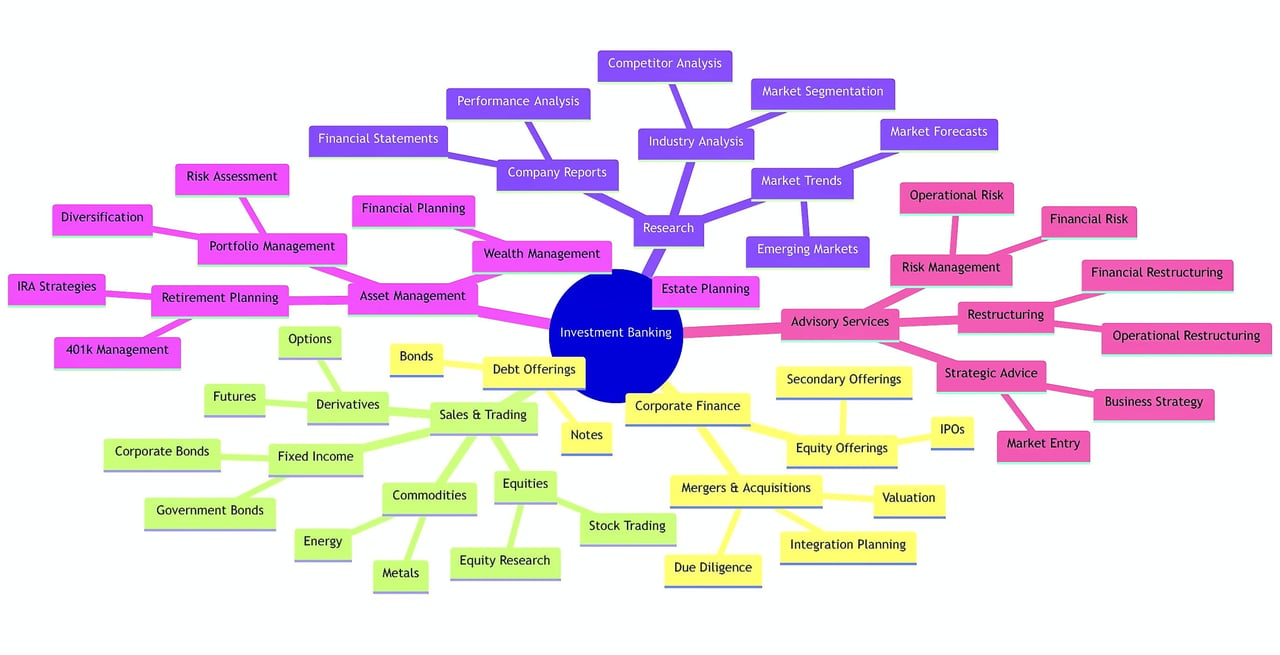
Investment banking and commercial banking: two pillars of global finance
Investment banks and commercial banks have long been the two pillars of the global financial system. Both are banks, yet their roles, clients and regulation differ markedly. This essay sets out those differences from an international standpoint and shows how each serves the global economy.
Historical roots
The separation of investment and commercial banking is a global phenomenon, not the feature of one country. In many jurisdictions the two were kept apart to protect public savings from the higher risks of securities trading and other speculative activity. Deregulation and universal banking have blurred the line in recent years, but the core differences remain.
Core functions
Investment banks are the architects of finance. They arrange complex transactions such as mergers and acquisitions, initial public offerings (IPOs) and other forms of corporate restructuring, and they are the institutions to which large corporations, governments and high-net-worth individuals turn in global markets.
Commercial banks are the workhorses of the everyday economy. They take deposits, lend in many forms and run payment systems, and so channel funds from savers to borrowers in local and international economies alike.
Clients and revenue
Investment banks serve a narrower market of corporate clients and high-net-worth individuals, and earn mainly from advisory fees, underwriting commissions and trading profits. Commercial banks serve a broad base of individuals, small businesses and large corporations, and earn mainly from the spread between loans and deposits and from fees for services such as transfers and account maintenance.
Regulation
Regulation varies from country to country but generally reflects the different risk profiles. Commercial banks hold public deposits and are therefore subject to strict rules and supervision, including capital adequacy requirements and deposit insurance schemes, which differ in detail but share one purpose: to protect the consumer.
Investment banks are regulated too, but usually with more latitude. Authorities such as the Financial Conduct Authority (FCA) in the UK, or national authorities in the EU coordinated by the European Securities and Markets Authority (ESMA), supervise them with a focus on market integrity and investor protection rather than on the security of deposits.
The era of universal banking
Universal banking, which combines investment and commercial banking in one institution, has gained ground worldwide. It offers financial services from a single source, but raises concerns about conflicts of interest and systemic risk, especially for global financial stability.
In short
Investment banks and commercial banks are distinct yet complementary. Their differences in function, clients and regulation are essential to the stability and efficiency of international markets. In an ever more connected world, understanding them is the key to working in the global economy.