
Wealth Management
Wealth Preservation
Offshore Banking and Asset Protection
What works, and what does not
Visible wealth attracts claims. Doctors, developers, founders and senior executives can find themselves facing a lawsuit and a court order to freeze or repatriate assets.
An offshore bank account on its own is not protection. A court can order the account holder to bring the money back and hold him in contempt if he does not.
Protection comes from a structure that is set up before any claim arises, in which an independent trustee in another jurisdiction holds the assets, and which is fully declared for tax. Built that way, it is lawful. Built in a hurry once a claim is on the horizon, it is a fraudulent transfer and invites contempt proceedings.
The best-known combination is a Cook Islands trust, an LLC beneath it and a bank account in a carefully chosen jurisdiction. What follows sets out what each layer does, with the cases that show its limits.

The Cook Islands Trust
The Cook Islands International Trusts Act 1984 makes an international trust hard to reach for foreign creditors:
- Foreign judgments against the trust are not enforced; a creditor must sue again before the Cook Islands High Court.
- The creditor must prove beyond reasonable doubt that the settlor’s principal intent was to defraud that creditor.
- Short time limits apply: a transfer made more than two years after the creditor’s cause of action arose is not fraudulent, and claims must be brought within one to two years.
Case: FTC v. Affordable Media, 179 F.3d 1228 (9th Cir. 1999)
The settlors had moved investor money into a Cook Islands trust. The US court ordered repatriation; the trustee refused. The Ninth Circuit upheld civil contempt against the settlors, who were jailed: an inability they had created themselves was no defence. The funds stayed in the Cook Islands, and the matter ended in a settlement.
The lesson cuts both ways. The trust held; the people who funded it after the claim arose went to prison.

The LLC Beneath the Trust
A limited liability company owned by the trust holds the operating assets, such as accounts and portfolios. In ordinary times the client manages the LLC. When a claim arises, the trustee replaces him as manager, so that he no longer has the power to move the assets.
US courts look hard at this switch. Where a settlor kept control, or handed it over only once a claim appeared, they treat him as still able to comply and hold him in contempt, as in In re Lawrence (Bankr. S.D. Fla.). The structure therefore works only if control is genuinely in independent hands well before any dispute.
The Bank Account
The third layer is the bank account. The jurisdiction matters for three reasons:
- Whether a foreign money judgment needs new local proceedings before it can be enforced.
- Whether banking confidentiality is protected by statute, while tax reporting continues to apply.
- How strong the supervision of its banks is.
Banking jurisdictions compared
Switzerland. Banking confidentiality is protected under criminal law (article 47 Banking Act). Foreign judgments are recognised under the Private International Law Act (articles 25 ff.) where its conditions are met; a creditor does not have to relitigate the merits, but must bring recognition proceedings.
Liechtenstein. Foreign judgments are enforced only where a treaty or reciprocity provides for it, which is not the case for US money judgments; a creditor has to sue afresh in Liechtenstein.
Dubai (DIFC). The DIFC Courts apply the DIFC’s own common-law-based legislation. A foreign judgment has to be brought before the DIFC Courts before it can be enforced there.
Singapore. US judgments fall outside the Reciprocal Enforcement of Foreign Judgments Act and must be enforced by a fresh action at common law. Opening an account as a non-resident is demanding.
Comoros. The bank’s home jurisdiction; offshore banks in Anjouan are licensed and supervised by the AOFA.
Recap
- The Cook Islands trust protects the assets from foreign judgments, within the statutory time limits.
- The LLC gives day-to-day flexibility, provided control passes to independent hands in time.
- The bank jurisdiction decides how much work a creditor faces before reaching the account.
- None of it protects a structure set up after the claim, or a client who keeps control.
Is it lawful?
Yes, when set up before any claim, for legitimate reasons, and fully declared. Offshore does not mean off tax. US persons file FBAR and Form 8938; every client keeps clean books, uses licensed trustees and lawyers, and hides nothing from tax authorities. The structure protects against civil claims, not against the tax authority.
What you can do now
- Speak with your IFB adviser or an experienced asset-protection lawyer.
- Design the structure around the asset type: real estate, businesses, portfolios, digital assets or collections.
- Choose the banking jurisdiction.
- Review the structure once a year against new case law and your own circumstances.
- Stay compliant.
A structure has to be in place before the dispute. Built afterwards, it protects nothing and creates risks of its own.
Download our presentation (here)
Mastering Wealth Preservation: Beyond Ownership to Control
Wealth preservation among the ultra-wealthy transcends mere asset accumulation, evolving into a strategic art form that ensures longevity and growth across generations. The crux of this approach lies in a paradigm shift: from the pursuit of ownership to the finesse of control. This precise strategy not only safeguards wealth from the typical erosive forces of taxation, litigation, and mismanagement but also ensures its effective transmission through generations.
The Philosophy of Control Over Ownership
The ultra-wealthy have long recognized that direct ownership of assets comes with inherent drawbacks: liability, taxation, and unwanted public scrutiny. Instead, they focus on controlling assets without the burdens that ownership entails. This strategy allows them to enjoy the utility of assets like luxury real estate, yachts, and art collections, while minimizing the legal and financial vulnerabilities associated with owning these assets outright.
Trusts: The Foundation of Wealth Control
Trusts are instrumental in the wealth preservation playbook. Serving as a legal framework, they allow individuals to transfer ownership of their assets into a trust, a separate legal entity. This separation shields the assets from personal legal troubles, facilitates tax planning, and provides a structured way to manage and distribute wealth according to the grantor’s wishes. By relinquishing ownership but retaining control, the grantor ensures that the wealth is managed according to their vision, even posthumously.
Life Insurance: A Strategic Asset
Life insurance, often perceived merely as a tool for financial protection, assumes a decisive role in the sophisticated wealth management strategies of the affluent. Over-funded life insurance policies, in particular, offer a dual advantage: they act as a vehicle for tax-advantaged asset growth and a means for secure wealth transfer. These policies can be structured to grow wealth within a favorable tax environment, and when strategically utilized, can finance investments or provide liquidity, all while ensuring the policyholder’s legacy through a death benefit that bypasses conventional estate taxes.
Family Foundations: Philanthropy with Purpose
The establishment of family foundations represents another tier of strategic wealth preservation. These entities not only underscore a family’s philanthropic vision but also serve as an effective tool for wealth management and legacy building. By allocating assets into a family foundation, the ultra-wealthy can achieve significant tax benefits, exert control over philanthropic endeavors, and engage family members in governance, ensuring the family’s values are perpetuated through charitable activities.
Family Offices: Architecting Wealth Management
Central to orchestrating these complex strategies is the family office, a bespoke entity that caters to the precise needs of affluent families. Family offices provide a full suite of services, from investment management and estate planning to tax strategy and philanthropic advising. By centralizing these functions, family offices ensure a cohesive approach to wealth preservation, aligning financial and legal strategies with the family’s overarching goals.
Implementing a Multi-Generational Strategy
The implementation of these strategies requires meticulous planning and an understanding of the interplay between various legal and financial instruments. It involves setting clear objectives for wealth preservation, understanding the legal frameworks that support these goals, and engaging with professionals who master the complexities of high-net-worth wealth management.
In short
The ultra-wealthy’s approach to wealth preservation highlights a sophisticated understanding of the mechanisms available to protect and grow wealth across generations. By emphasizing control over ownership, using trusts, life insurance, family foundations, and orchestrating these strategies through family offices, they not only protect their wealth from immediate threats but also ensure its continued growth and relevance. This methodology, while complex, offers valuable insights into effective wealth preservation, applicable to varying degrees by those aspiring to secure their financial legacy for future generations.
Our Structure
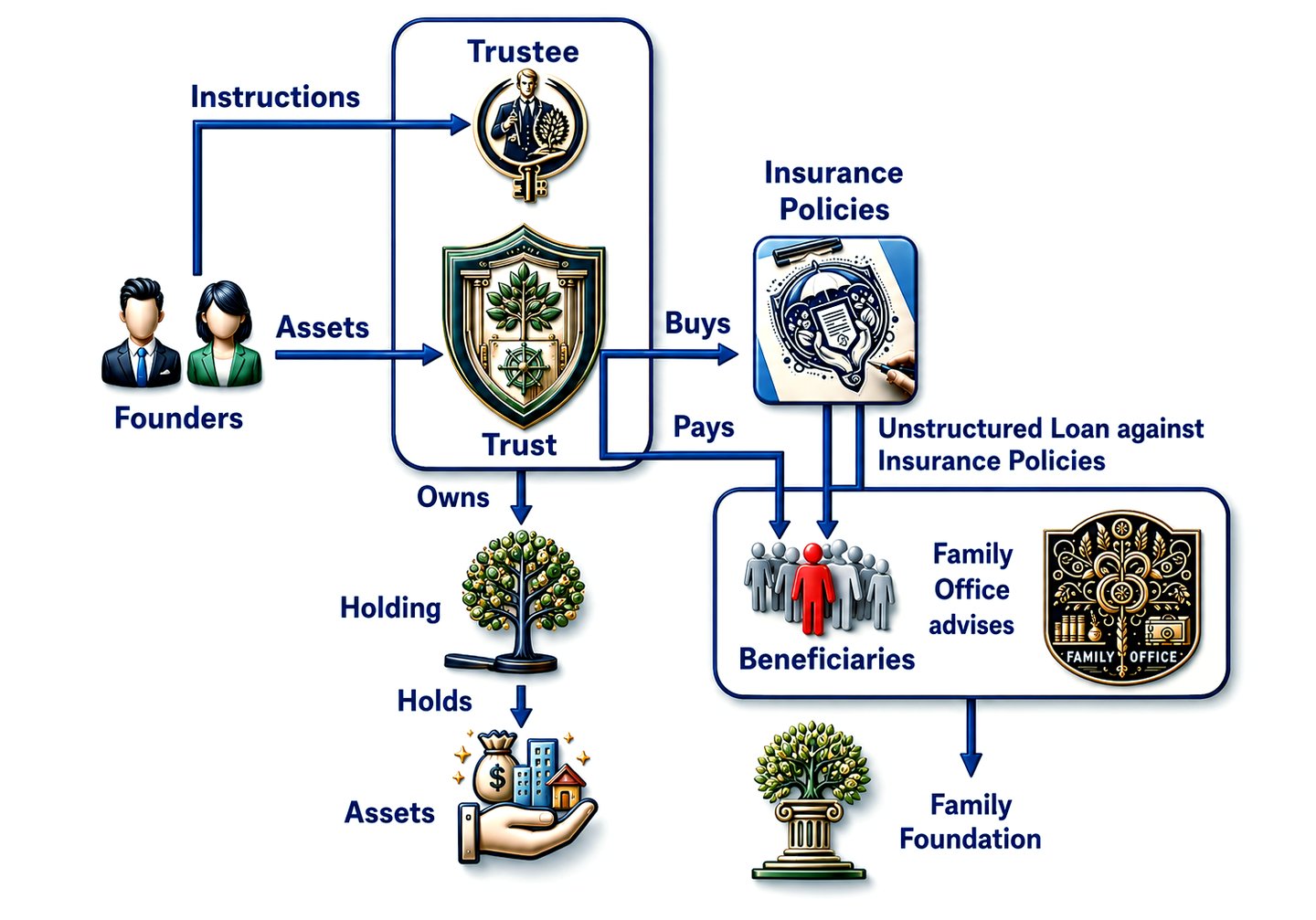
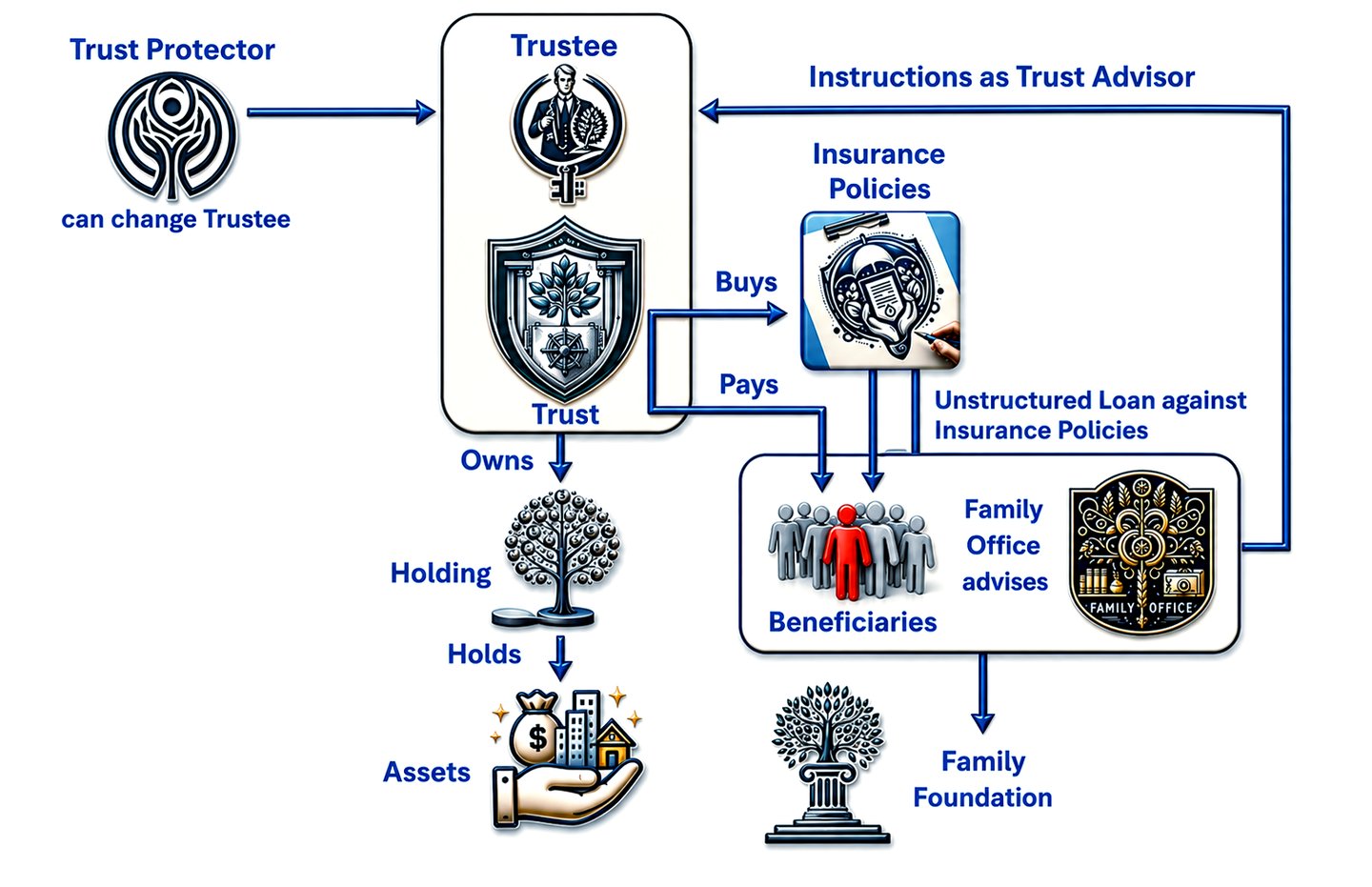

Trusts
Our High Net Worth Individuals (HNWIs) often establish trusts in various jurisdictions worldwide to optimise tax efficiency, protect assets, and ensure the smooth transfer of wealth to future generations. The choice of location for establishing a trust depends on several factors, including legal considerations, tax implications, asset protection laws, and privacy concerns.

Holdings
Typical locations for holdings vary depending on factors such as regulatory environment, tax considerations, asset protection laws, and individual preferences. However, several jurisdictions are commonly chosen by High Net Worth Individuals (HNWIs) and corporations for holding assets

Family Offices
Discover the pinnacle of wealth management and bespoke family governance through the strategic lens of a Family Office. Tailored exclusively for High Net Worth Individuals and their families, Family Offices offer an exceptional approach to preserving and augmenting wealth across generations. Dive into a world where personalized investment strategies, estate planning, and philanthropic endeavors converge to create a legacy that transcends time. Embrace the sophistication of custom-tailored financial and lifestyle management solutions designed to meet the unique needs of those at the zenith of financial achievement. Click to explore how a Family Office can redefine your wealth management experience, ensuring that your legacy is not only preserved but flourishes.

Family Foundations
Give philanthropy lasting form with a family foundation. Designed for High Net Worth Individuals and families seeking to channel their wealth into meaningful impact, Family Foundations embody the essence of strategic giving. Enter a world in which your values shape the future, creating lasting change through focused philanthropic endeavors. Discover how establishing a Family Foundation allows you to meticulously craft a legacy of compassion, innovation, and societal progress. Click to explore the unique blend of benefits, including tax efficiency, legacy building, and the profound satisfaction of contributing to a cause greater than oneself. Learn how a Family Foundation can turn your vision of a better world into reality, guiding your journey towards impactful and enduring philanthropy.

Own Insurance or Policy
Insurance companies that you yourself own offer a range of products and services tailored to High Net Worth Individuals (HNWIs) seeking to secure and grow their funds securely. These offerings typically include life insurance, annuities, and other wealth management solutions. Here’s how insurance companies can help HNWIs secure and grow their funds:
Cash Value Life Insurance
Cash value life insurance is a powerful tool in wealth management and estate planning, offering both accessible funds and a substantial death benefit. Beyond traditional coverage, it supports long-term wealth preservation and, when held in a trust, ensures multi-generational benefits. This article examines its key features and role in legacy planning.

Legal Reserves & Insurance
Investing in legal reserves of insurance companies involves allocating capital to mandated reserves that ensure policyholder obligations are met. These investments offer security due to regulatory oversight and can generate returns.

IFB stands as a trusted partner for High and Very High Net Worth Individuals (HNWIs &VHNWI) as well as Ultra High Net Worth Individuals (UHNWI) seeking to optimise their fiscal strategies and preserve intergenerational wealth through the establishment of trusts and holdings.
Our approach extends beyond conventional banking services, encompassing a full suite of wealth management solutions tailored to the unique needs and aspirations of our esteemed clients.
- Complete Financial Assessment: At IFB, we commence our partnership by conducting a meticulous analysis of the client’s financial world. Through in-depth discussions and data-driven assessments, we gain insights into the entirety of the client’s financial portfolio, including assets, liabilities, income streams, and expenditure patterns. This holistic understanding forms the bedrock upon which we craft a bespoke fiscal strategy aligned with the client’s financial objectives, risk tolerance, and long-term aspirations.
- Strategic Tax Planning: Our team of seasoned financial experts, in collaboration with the client’s legal and fiscal advisors, employs sophisticated tax optimization strategies to minimize the tax liabilities associated with the client’s investments, income streams, and estate transfers. Drawing on our extensive knowledge of international tax laws and regulations, we devise structuring solutions that capitalize on favorable tax jurisdictions, maximize available tax deductions, and ensure compliance with relevant tax authorities.
- Tailored Trust Services: IFB’s trust services are designed to meet the intricate wealth preservation and succession planning needs of our HNWI clients. In close coordination with the client’s legal advisors, we assist in the establishment and administration of bespoke trust structures crafted to safeguard assets, facilitate smooth intergenerational wealth transfer, and provide enduring financial security for future generations. Our approach emphasizes flexibility, transparency, and meticulous attention to detail, ensuring that the client’s wishes are honored and their legacy preserved in accordance with their exacting standards.
- Sophisticated Investment Management: Drawing upon our extensive network of investment professionals and access to a diverse array of investment opportunities, IFB offers full investment management services aimed at optimizing returns while prudently managing risk. Our investment strategies are tailored to the client’s risk profile, investment horizon, and financial objectives, with a keen focus on capital preservation, long-term growth, and portfolio diversification. Through active monitoring, rigorous due diligence, and dynamic asset allocation, we strive to deliver superior investment performance and enhance the client’s overall financial well-being.
- Holistic Wealth Management: Recognizing that true wealth transcends financial assets alone, IFB adopts a holistic approach to wealth management that encompasses all facets of the client’s financial life. We collaborate closely with the client’s legal and fiscal advisors to coordinate various aspects of their financial affairs, including real estate holdings, business interests, philanthropic endeavors, and personal legacies. By integrating these elements into a cohesive wealth management strategy, we enable our clients to reach their financial goals with clarity, confidence and peace of mind.
- Collaborative Partnership: At IFB, we understand the importance of collaboration in achieving our clients’ objectives. That’s why we work hand in hand with the client’s trusted legal and fiscal advisors, drawing on their expertise and insight to craft full solutions that address the full spectrum of the client’s financial needs. By promoting an environment of open communication, mutual respect, and shared purpose, we ensure that our clients benefit from a truly integrated and smooth wealth management experience that transcends the boundaries of traditional banking.
In essence, IFB serves as a steadfast ally and advocate for HNWIs seeking to optimise their fiscal strategies and preserve intergenerational wealth through trusts and holdings, etc. Through our commitment to excellence, integrity, and client-centricity, we aim to exceed our clients’ expectations and help them realise their most ambitious financial goals.



Next step
Request an introduction
Tell us in a few lines who you are and what you have in mind. Your enquiry goes directly to the bank and is treated in confidence.
Prefer to talk? Book a 30-minute videoconference.