

ACH Automated Clearing House
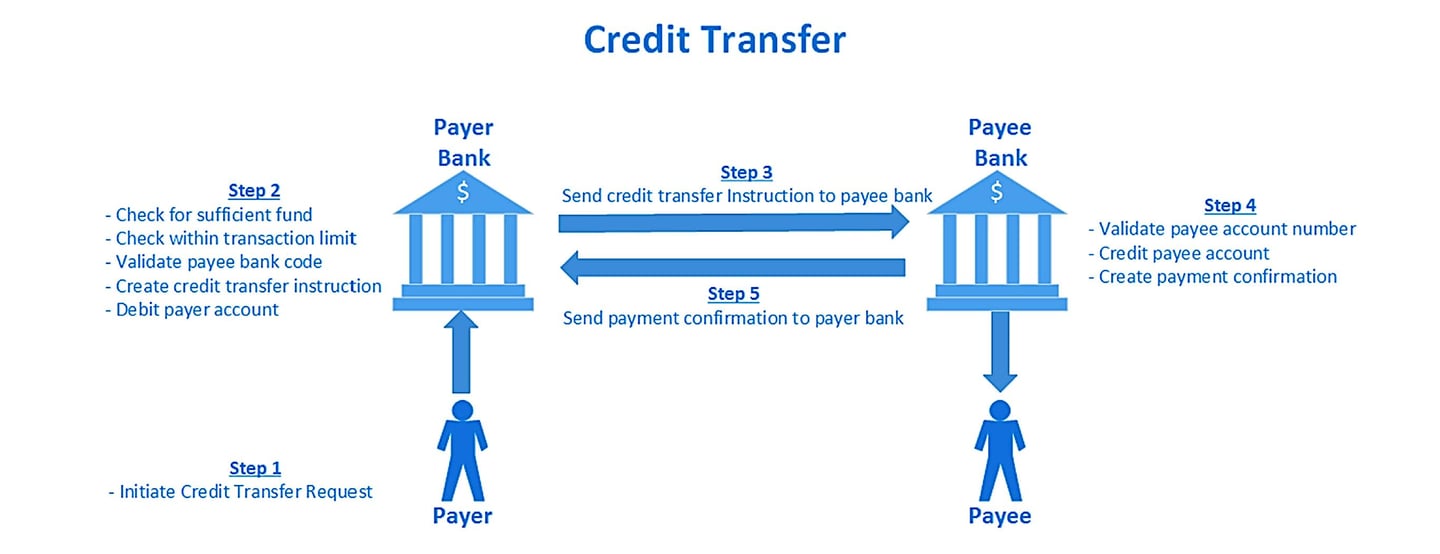
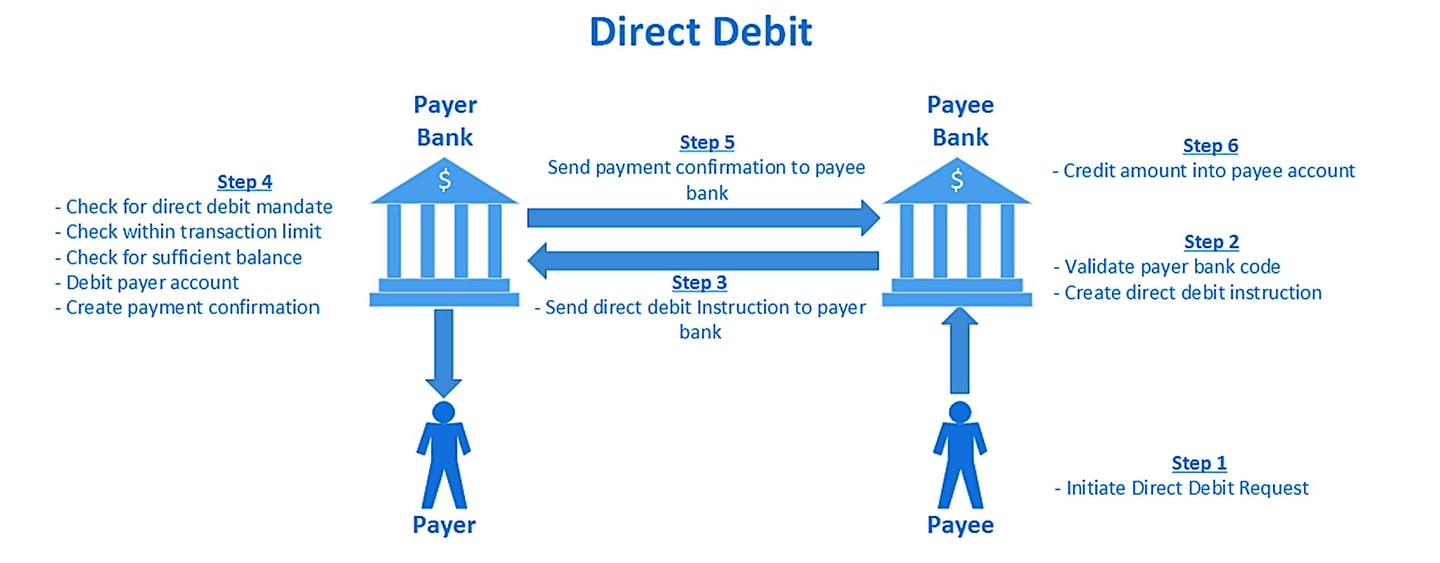
The Automated Clearing House (ACH) supports two distinct modalities of payment instruments: the credit transfer and the direct debit.
Credit Transfer
In ACH transactions, a credit transfer represents a monetary service initiated by the payer’s bank, facilitating the transfer of funds to a payee affiliated with a disparate financial institution. This process, often referred to as an Account-to-Account or A2A transfer, signifies the evolution of clearing houses from their traditional role in paper check facilitation between banks to their contemporary function. This contemporary role encompasses the processing of electronic payment instruments, thus earning the designation “automated” in ACH. Although ACH networks are primed for batch processing, offering a cost advantage over card networks, they operate exclusively during standard business hours. Consequently, due to their batch processing nature, transaction settlement may extend over several days, particularly during weekends and public holidays. While they are adept at managing scheduled batch payments, like payroll and bill settlements, their utility is limited in scenarios demanding real-time payment execution.
Direct Debit
In contrast, a direct debit is a payment service initiated by the payee’s bank to acquire funds from a payer associated with another bank. This mechanism offers an inverse approach to the credit transfer, facilitating the collection of payments.
ACH Clearing Process
The ACH batch payment system functions solely within the confines of a standard working day. There are designated periods within the day for transaction processing: the outward clearing window and the inward clearing window. The outward clearing window provides a temporal space for banks to submit payment instructions from account holders to the ACH for validation and subsequent processing. Conversely, the inward clearing window is utilized by the clearing house to allocate these payment instructions to the recipient banks, thereby enabling the processing of payments to their respective account holders.

Automated Clearing Houses (ACHs)
Automated Clearing Houses (ACHs) are electronic payment systems that process and settle large volumes of credit and debit transactions, typically involving low-value, non-urgent payments. ACHs facilitate the clearing and settlement of transactions between banks and other financial institutions within a specific region or country, providing an efficient, cost-effective alternative to paper-based payment methods, such as checks.
Some of the largest ACHs in Europe include:
- STEP2: Operated by EBA Clearing, STEP2 is a Pan-European ACH that processes SEPA Credit Transfers (SCTs) and SEPA Direct Debits (SDDs) across the Single Euro Payments Area (SEPA). STEP2 is one of the largest ACHs in Europe, connecting banks and financial institutions across the entire SEPA region.
- BACS (Bankers’ Automated Clearing Services): BACS is a UK-based ACH that processes electronic credit transfers and direct debits in British pounds. BACS processes millions of transactions daily, including salary payments, pensions, and government benefits.
- equensWorldline: equensWorldline is a European payment processor that operates an ACH for euro-denominated credit transfers and direct debits within SEPA. It is part of the French Worldline group.
Some of the largest ACHs globally include:
- The Automated Clearing House (ACH) Network in the United States: The ACH Network is a nationwide electronic payment system that processes large volumes of credit and debit transactions in the United States. It is operated by two main ACH operators, The Clearing House (TCH) and the Federal Reserve. Transactions processed through the ACH Network include direct deposits, bill payments, and business-to-business payments.
- BECS (Bulk Electronic Clearing System) in Australia: BECS is an Australian ACH that processes electronic credit transfers and direct debits in Australian dollars. BECS is operated by the Australian Payments Network (AusPayNet), which is the self-regulatory body for the Australian payments industry.
- NEFT (National Electronic Funds Transfer) in India: NEFT is a deferred-net-settlement system for rupee credit transfers, operated by the Reserve Bank of India and running in half-hourly batches around the clock since December 2019.
- Bacs Payment Schemes Limited (Bacs) (UK) is the ACH responsible for various payment types, including direct debit and Bacs Direct Credit.
- Canada: The Canadian Payments Association (CPA), also known as Payments Canada, operates the Canadian ACH system.
- India: National Automated Clearing House (NACH) is managed by the National Payments Corporation of India (NPCI), handling various types of bulk payment transactions.
- Australia: The Australian Payments Network (AusPayNet, formerly APCA) administers the Bulk Electronic Clearing System (BECS).
- Germany: The Deutsche Bundesbank operates the German ACH system, processing a large volume of euro-denominated domestic and commercial payments.
- South Africa: BankservAfrica operates the ACH; net positions settle in the South African Reserve Bank’s SAMOS real-time gross settlement system.
- Japan: The Zengin System, operated by the Japanese Banks’ Payment Clearing Network (Zengin-Net), handles domestic yen credit transfers.
- China: The People’s Bank of China operates the China National Advanced Payment System (CNAPS), which includes ACH functions.
- Brazil: The Central Bank of Brazil operates the Sistema de Transferência de Reservas (STR), Brazil’s RTGS system, and the instant payment system Pix; retail clearing also runs through the systems of CIP (Câmara Interbancária de Pagamentos).
- France: STET operates CORE(FR), the French ACH for SEPA credit transfers, direct debits and cards, with settlement in T2.
- Italy: The Banca d’Italia operates the BI-COMP clearing system, facilitating domestic and SEPA credit transfers and direct debits.
How do Clearing Houses operate?
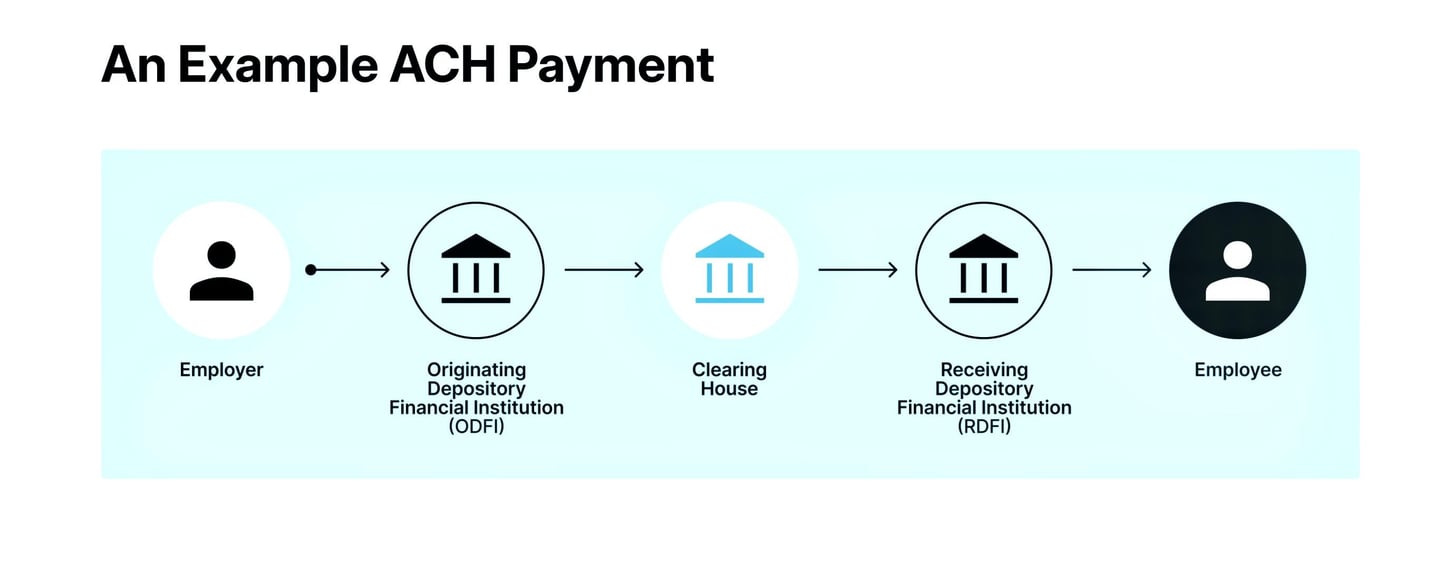
Automated Clearing House (ACH) transactions in the banking sector represent an intricate and sophisticated system designed for the efficient, electronic transfer of funds between distinct bank accounts, primarily within the United States. This system is a cornerstone of modern banking, offering a digital alternative to traditional methods like paper checks or cash transactions.
- Inception of ACH Transaction: The genesis of an ACH transaction occurs when the originator, which could be an individual or a corporate entity, initiates a request for funds transfer. This initiation demands meticulous provision of details like the payee’s bank account and routing numbers, alongside the specific amount to be transferred. Such transactions can be classified into Direct Deposits, Direct Payments via ACH, and other forms.
- Engagement of Originating Depository Financial Institution (ODFI): The originator forwards this request to their banking institution, known as the Originating Depository Financial Institution (ODFI). Here, the ODFI plays a decisive role in collating various ACH requests and batching them for processing. The transactions are categorized based on their nature – credits or debits.
- Processing by ACH Operator: The ODFI transmits these batches to an ACH Operator – either the Federal Reserve or The Clearing House. These central clearing facilities are instrumental in the segregation and appropriate routing of transactions to the destined Receiving Depository Financial Institutions (RDFIs).
- Codes and Classifications: Each transaction within the ACH network is designated with specific codes, delineating the nature and intent of the transfer. Prominent among these is the International ACH Transaction (IAT) code, which is used for ACH payments that involve a financial agency outside the U.S. This code ensures compliance with international anti-money laundering standards. Other prevalent codes include PPD (Prearranged Payment and Deposit Entries) for individual transactions like payroll, CCD (Cash Concentration or Disbursement) for corporate transactions, and CTX (Corporate Trade Exchange) for transactions involving multiple addenda records.
- Action by Receiving Depository Financial Institution (RDFI): The RDFIs receive these transactions and are responsible for the accurate crediting or debiting of recipient accounts, in accordance with the transaction type.
- Settlement and Reconciliation: The settlement of funds, which is the actual transfer of money between ODFI and RDFI, typically occurs on the next business day. This is facilitated through their accounts at the Federal Reserve. Both institutions maintain rigorous records for each transaction, ensuring precise reconciliation and compliance with regulatory standards.
- Notification and Compliance: Post-transaction, both the originator and the recipient are apprised of the activity through bank statements or online banking systems. These transactions are subject to regulatory oversight, necessitating adherence to rules set forth by entities like the National Automated Clearing House Association (NACHA) and federal laws.
In summary, the ACH network’s intricate web of transactions, governed by specific codes and regulatory compliance, offers a reliable, cost-effective, and relatively swift means of conducting electronic fund transfers, albeit with certain inherent limitations like processing time and transaction caps. This system demonstrates the advancements in digital banking, simplifying financial transactions in an increasingly interconnected world.
Differences between ACH and EFT
The difference between ACH and EFT is that EFT (or, electronic funds transfer) is a general term that refers to all types of electronic payments whereas ACH (short for Automated Clearing House) refers to one specific type of electronic payment.
An ACH payment is an electronic debit or credit that is specifically processed by the Automated Clearing House Network. ACH payments are considered an EFT, but not all EFTs are ACH payments.
Some examples of EFTs that are not ACH payments include ATM or credit card transactions, payments made by supplying bank account information and transaction authorization via phone, or transactions made by manually entering payment information into point of sale fields on a checkout page.
Differences between RTP & ACH
The key differences between a Real-Time Payment (RTP) system and an Automated Clearing House (ACH) system lie in their processing speed, transaction settlement, and use cases. Here are the main distinctions:
1. Processing Speed:
RTP System:
- Speed:Transactions are processed and settled almost instantaneously, typically within seconds.
- Availability: Operates 24/7/365, allowing for continuous processing of transactions.
ACH System:
- Speed: Transactions are processed in batches and can take from several hours to a few days to settle.
- Availability: Operates during banking hours, with specific processing windows on business days.
2. Transaction Settlement:
RTP System:
- Settlement: Settles transactions in real-time, meaning the funds are immediately available to the recipient upon completion of the transaction.
- Finality: Transactions are irrevocable once completed.
ACH System:
- Settlement: Uses batch processing, typically settling transactions in multiple batches throughout the day (same-day ACH) or next-day.
- Finality: Transactions can be reversed or canceled during the processing period.
3. Use Cases:
RTP System:
- Usage: Ideal for urgent payments, such as person-to-person (P2P) payments, bill payments, and business-to-business (B2B) transactions requiring immediate confirmation.
- Examples: The Clearing House’s RTP network and FedNow in the US, Faster Payments in the UK, and SEPA Instant Credit Transfer in Europe.
ACH System:
- Usage: Suitable for non-urgent transactions, such as payroll, recurring bill payments, direct deposits, and vendor payments.
- Examples: Direct deposit payroll, utility bill payments, mortgage payments, and recurring subscription services.
4. Cost:
RTP System: Pricing varies; in the euro area, instant payments may not cost more than standard credit transfers (Regulation (EU) 2024/886).
ACH System: Generally lower fees due to batch processing and delayed settlement.
5. Security and Compliance:
RTP System:
- Security: Utilizes advanced encryption and security measures to protect real-time transactions.
- Compliance: Must adhere to stringent regulatory standards due to the instantaneous nature of transactions.
ACH System:
- Security: Also employs strong security protocols but is more focused on protecting batch-processed transactions.
- Compliance: Adheres to regulations set by entities like NACHA (National Automated Clearing House Association) in the US, ensuring secure processing and settlement.



Next step
Request an introduction
Tell us in a few lines who you are and what you have in mind. Your enquiry goes directly to the bank and is treated in confidence.
Prefer to talk? Book a 30-minute videoconference.