Seigniorage
The Hidden Cornerstone of Monetary Power
Executive Summary
Seigniorage, the profit derived from issuing currency, represents one of the oldest and most consequential mechanisms in monetary economics. While often overlooked in contemporary financial discourse, seigniorage remains a critical driver of fiscal policy, monetary dynamics, and wealth distribution. This analysis examines seigniorage from its medieval origins through its modern manifestations, with particular attention to implications for banking operations, monetary policy, and the evolving environment of digital currencies.
For banking professionals, understanding seigniorage is essential not merely as historical context, but as a framework for analyzing central bank behavior, anticipating policy shifts, and managing the transition toward central bank digital currencies (CBDCs). The profit mechanics underlying money creation continue to shape financial markets, asset valuations, and the structural advantages that accrue to institutions positioned closest to monetary issuance.
I. Historical Evolution: From Metal to Fiat
Medieval Origins and the Sovereign’s Privilege
The concept of seigniorage emerged in medieval Europe when monarchs claimed exclusive rights to mint coinage. Citizens would deliver raw precious metals to royal mints, which would transform them into official currency. The sovereign retained a portion of the metal as compensation: the literal meaning of seigniorage, derived from the French term for the lord’s right.
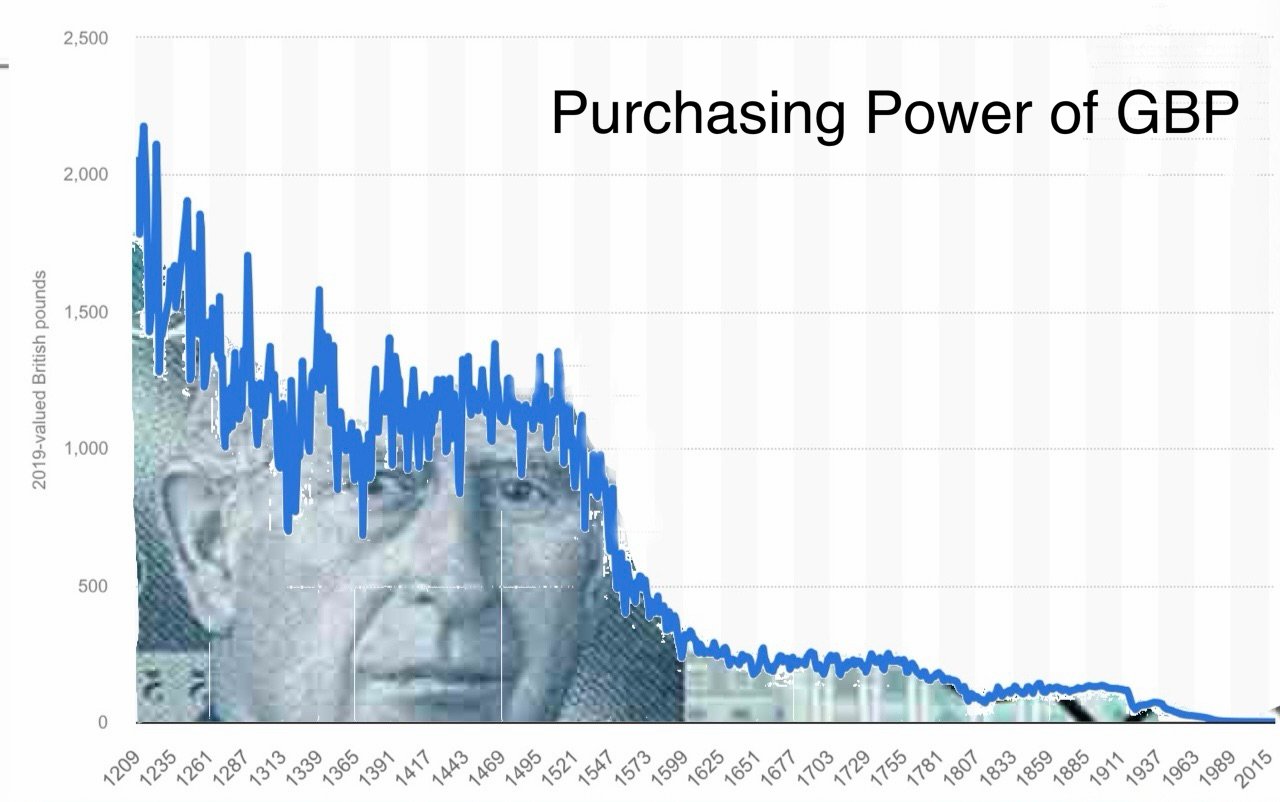
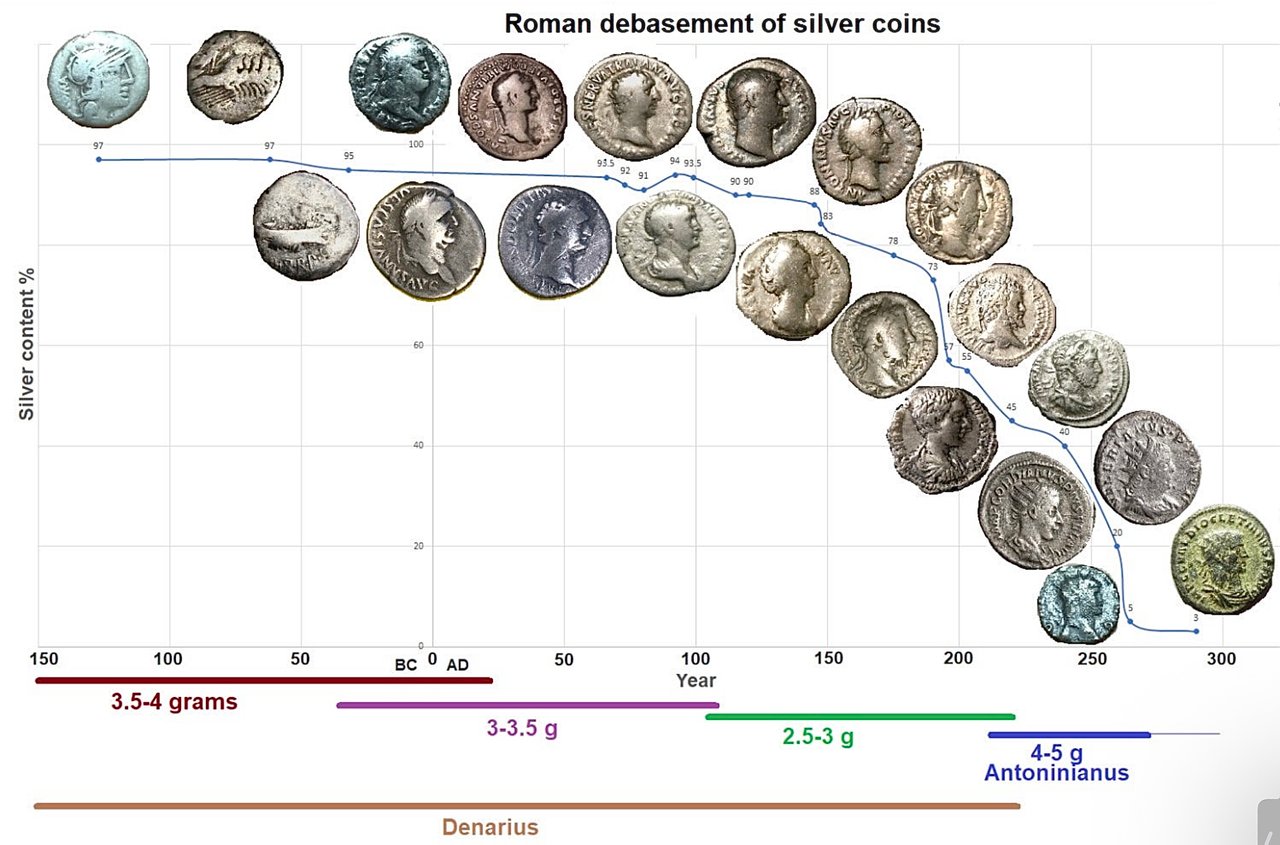
This arrangement represented more than a mere transaction fee. It established a foundational principle: whoever controls money creation captures economic rent from the entire monetary system. The king’s ability to reduce metal content while maintaining face value created what we would now recognize as monetary debasement: effectively an early form of inflation taxation.
The Debasement Cycle
Historical episodes of currency debasement reveal patterns that remain relevant today:
- Philip IV of France (14th century): Repeatedly reduced the silver content of the coinage to finance military campaigns, undermining merchant confidence
- Renaissance city-states: Venice and Florence demonstrated that maintaining coin purity could build monetary hegemony, with the Venetian ducat becoming the reserve currency of its era
- Spanish Empire: Despite massive silver imports from the Americas, persistent debasement contributed to chronic inflation and eventual economic decline
The critical insight: seigniorage profit and currency credibility exist in dynamic tension. Excessive extraction undermines the monetary system itself.
II. Modern Seigniorage: Mechanics and Distribution
Fiat Currency and the Transformation of Seigniorage
The transition from commodity money to fiat currency fundamentally altered seigniorage dynamics. Physical production costs became negligible: in 2025 the variable printing cost of a US$100 note was 11.3 cents (Federal Reserve), leaving almost the entire face value as seigniorage. Multiplied across billions of units, this generates substantial revenue for issuing authorities.
However, modern seigniorage extends far beyond physical currency:
Primary Seigniorage Sources:
- Physical currency issuance: Direct profit from producing notes and coins
- Reserve creation: Profit from interest-bearing assets acquired through monetary expansion
- Quantitative easing operations: Returns on securities purchased with newly created central bank reserves
- Negative real interest rates: Effective transfer of wealth from creditors to debtors when inflation exceeds nominal rates
The Central Bank Balance Sheet as Seigniorage Engine
Contemporary central banks generate seigniorage primarily through asset holdings financed by reserve creation. When a central bank purchases government securities through open market operations, it:
1. Creates new monetary base (bank reserves)
2. Acquires interest-bearing assets
3. Pays minimal or zero interest on reserves
4. Remits net interest income to the treasury
This mechanism allows governments to finance deficits at below-market rates, effectively extracting seigniorage through the spread between asset yields and the cost of monetary base expansion.
Case Study: Federal Reserve (2020-2023)
During the pandemic response, the Federal Reserve’s balance sheet expanded by almost US$5 trillion, from about US$4.2 trillion in February 2020 to almost US$9 trillion in spring 2022. The seigniorage implications were substantial – and reversible:
- Remittances to the U.S. Treasury reached US$107 billion in 2021; once interest rates rose, the Fed’s interest expense on reserves exceeded its income, and since September 2022 it has suspended remittances and recorded a deferred asset
- Low policy rates reduced the government’s debt-service costs while they lasted
- Asset price inflation transferred wealth to holders of financial assets
- Real wage erosion served as implicit taxation on labor income
Commercial Bank Money Creation and Secondary Seigniorage
The fractional reserve banking system creates a form of delegated seigniorage. Commercial banks generate new money through loan origination, creating deposits that function as currency. In the United Kingdom, this “credit money” makes up around 97% of broad money (Bank of England, 2014).
Banks capture seigniorage-like profits through:
- Net interest margins on created deposits
- Fee income on payment services
- First-mover advantages in deploying newly created credit
This arrangement creates a two-tier seigniorage system: central banks profit from base money creation, while commercial banks profit from credit money creation.
III. The Cantillon Effect and Wealth Distribution
Uneven Money Transmission
Richard Cantillon’s 18th-century observation remains disturbingly relevant: newly created money does not enter the economy uniformly. Instead, it follows specific transmission channels, creating systematic advantages for recipients.
Primary Transmission Sequence:
- Central bank operations → Financial institutions receive liquidity first
- Asset markets → Early recipients bid up prices for stocks, bonds, real estate
- Corporate borrowers → Large firms access credit at preferential rates
- Consumer markets → Prices adjust upward before wages respond
- Wage earners → Receive money last, after prices have risen
This sequential distribution means seigniorage profit accrues primarily to asset owners and financial intermediaries, while inflation costs fall disproportionately on wage earners and fixed-income recipients.
Empirical Evidence: Post-2008 Wealth Concentration
Following the 2008 financial crisis and subsequent quantitative easing programs:
- U.S. equity markets increased by over 400% (2009-2021)
Critics see this as a structural feature of seigniorage distribution under fiat monetary systems rather than a policy failure. The closer an entity sits to the monetary spigot, the greater its relative benefit.
IV. Legal Framework and Institutional Structure
Legal Tender Laws and Monetary Monopoly
Seigniorage rights are enshrined in legal tender statutes that grant governments monopoly power over currency issuance. These laws accomplish several objectives:
- Mandate acceptance: Citizens must accept government-issued currency for debt settlement
- Prohibit competition: Restrict or ban alternative monetary systems
- Enable taxation: Require tax payments in official currency
- Facilitate seigniorage extraction: Create captive demand regardless of quality
The legal tender framework transforms seigniorage from economic mechanism to legal right: a crucial distinction that explains governmental resistance to cryptocurrency adoption and decentralized monetary systems.
Central Bank Independence: Illusion or Reality?
Modern central banks claim operational independence from political authority. In practice, however, their seigniorage function creates inevitable fiscal entanglement:
- Central banks finance government deficits through security purchases
- Remittances to treasuries depend on continued monetary expansion
- “Independence” becomes difficult to maintain during fiscal crises
- Political pressure to maintain easy monetary policy intensifies during elections
The pandemic response exposed these tensions. Massive fiscal stimulus required equally massive monetary accommodation, blurring any meaningful distinction between fiscal and monetary policy. Central bank balance sheets effectively became fiscal policy tools, with seigniorage serving as the revenue source.
V. Geopolitical Dimensions: Exorbitant Privilege
Dollar Hegemony and International Seigniorage
The U.S. dollar’s status as global reserve currency generates what French Finance Minister Valéry Giscard d’Estaing called “exorbitant privilege” -the ability to earn international seigniorage. The dollar accounts for about 57% of allocated global foreign exchange reserves (IMF COFER, 2025) and is on one side of 89% of all foreign exchange transactions (BIS Triennial Survey, 2025), while the U.S. produces roughly a quarter of global GDP.
Mechanics of International Seigniorage:
- Foreign investors hold more than US$9 trillion of U.S. Treasury securities (U.S. Treasury TIC data, 2025)
- Production cost: negligible; exchange value: real goods and services
- U.S. can finance trade deficits by issuing currency others must earn
- Structural demand for dollars supports the currency beyond short-term fundamentals
This arrangement allows the United States to export inflation while importing real resources -a modern equivalent of medieval kings debasing coinage while requiring subjects to accept it at face value.
Emerging Challenges to Dollar Dominance
Several developments threaten the dollar’s seigniorage monopoly:
- BRICS+ alternative settlement systems: Efforts to create non-dollar trade mechanisms
- Digital yuan (e-CNY): China’s attempt to internationalize its currency through technology
- Gold revaluation: Central banks accumulating gold as dollar alternative
- Cryptocurrency adoption: Parallel monetary systems beyond government control
If the dollar loses significant reserve currency status, the U.S. would forfeit substantial seigniorage revenue: potentially forcing dramatic fiscal adjustments or accelerated money creation, either of which could trigger confidence collapse.
VI. The Digital Transformation: CBDCs and Programmable Money
Central Bank Digital Currencies: Seigniorage 2.0
CBDCs represent the next evolution of seigniorage: direct digital issuance eliminating intermediaries. Unlike cryptocurrencies, CBDCs centralize rather than decentralize monetary control.
Advantages for Seigniorage Extraction:
- Zero production costs: No physical printing or minting required
- Perfect tracking: Every transaction monitored in real-time
- Programmability: Expiration dates, usage restrictions, targeted distribution
- Disintermediation: Reduced role for commercial banks in money creation
- Enhanced policy transmission: Direct control over monetary distribution
Implementations in Development:
- China (e-CNY): Nationwide pilot; 3.48 billion transactions worth CNY 16.7 trillion by November 2025. Since January 2026, wallet balances at commercial banks are interest-bearing deposits
- European Union (digital euro): Next project phase since October 2025; pilot possible from mid-2027 and first issuance in 2029, if the EU regulation is adopted in 2026
- United Kingdom (digital pound): Design phase; no decision to introduce
- United States: Federal Reserve barred by statute from issuing a CBDC until 31 December 2030 (July 2026)
Implications for Financial Intermediation
CBDC adoption threatens traditional banking models by enabling direct central bank relationships with end users. If individuals can hold central bank deposits directly, commercial bank deposits become less essential, potentially eliminating secondary seigniorage and disrupting fractional reserve banking.
Banks face several strategic challenges:
- Deposit disintermediation: Flight to risk-free central bank deposits during stress
- Reduced lending capacity: Lower deposit base constrains credit creation
- Margin compression: Competition from zero-cost central bank accounts
- Surveillance risk: CBDCs could become tools for financial surveillance and control
VII. Inflation as Implicit Taxation
The Seigniorage-Inflation Connection
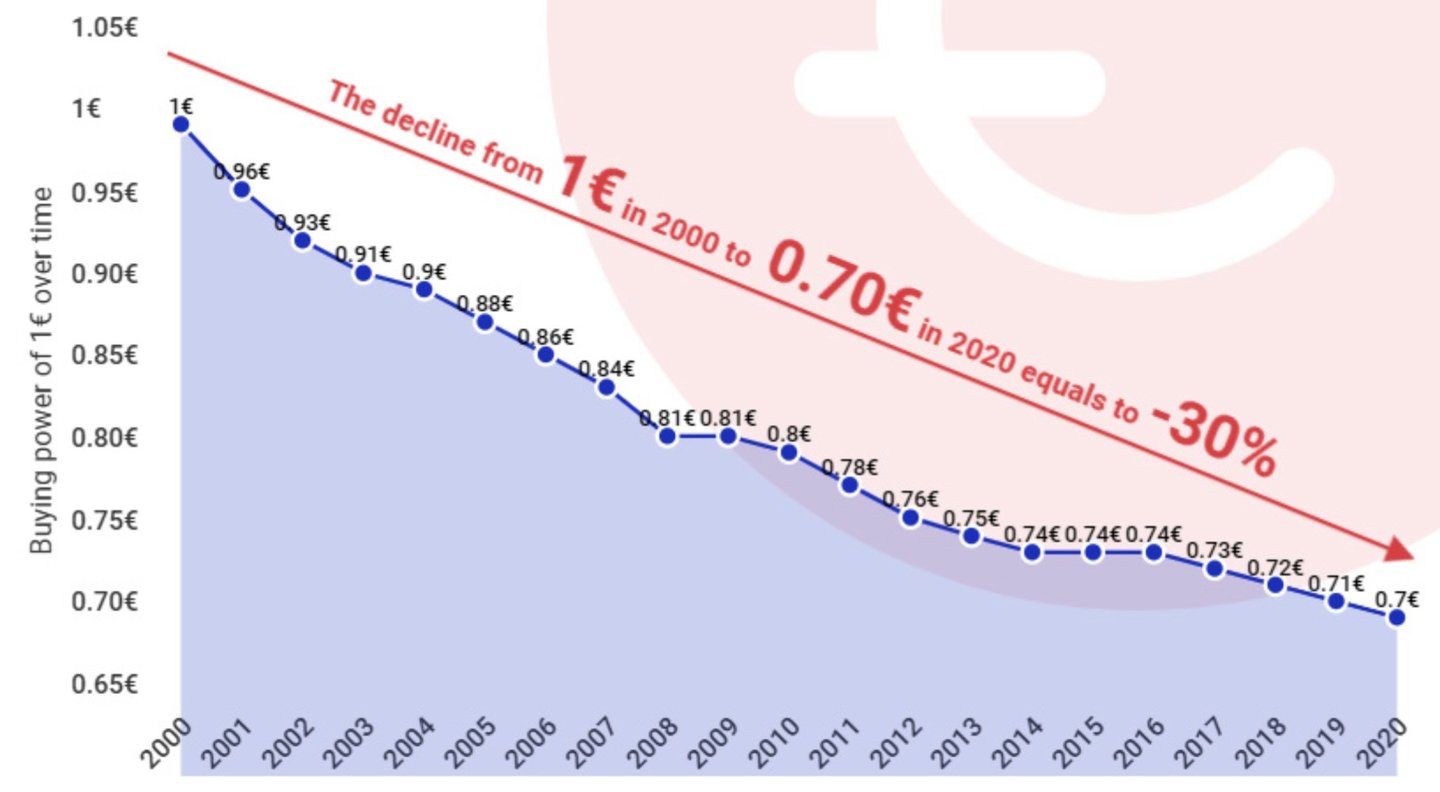
Excessive seigniorage extraction inevitably produces inflation: the mechanism through which money creation costs are distributed across currency holders. Unlike explicit taxation, inflation requires no legislative approval and leaves no visible audit trail.
Mathematical Framework:
If M represents money supply, P represents price level, and V and Q remain constant (simplified), then:
M × V = P × Q
Increasing M (seigniorage) necessarily increases P (inflation), transferring purchasing power from existing money holders to the currency issuer.
Real-World Inflation Extraction:
- 2% annual inflation compounds to 18% purchasing power loss over 10 years
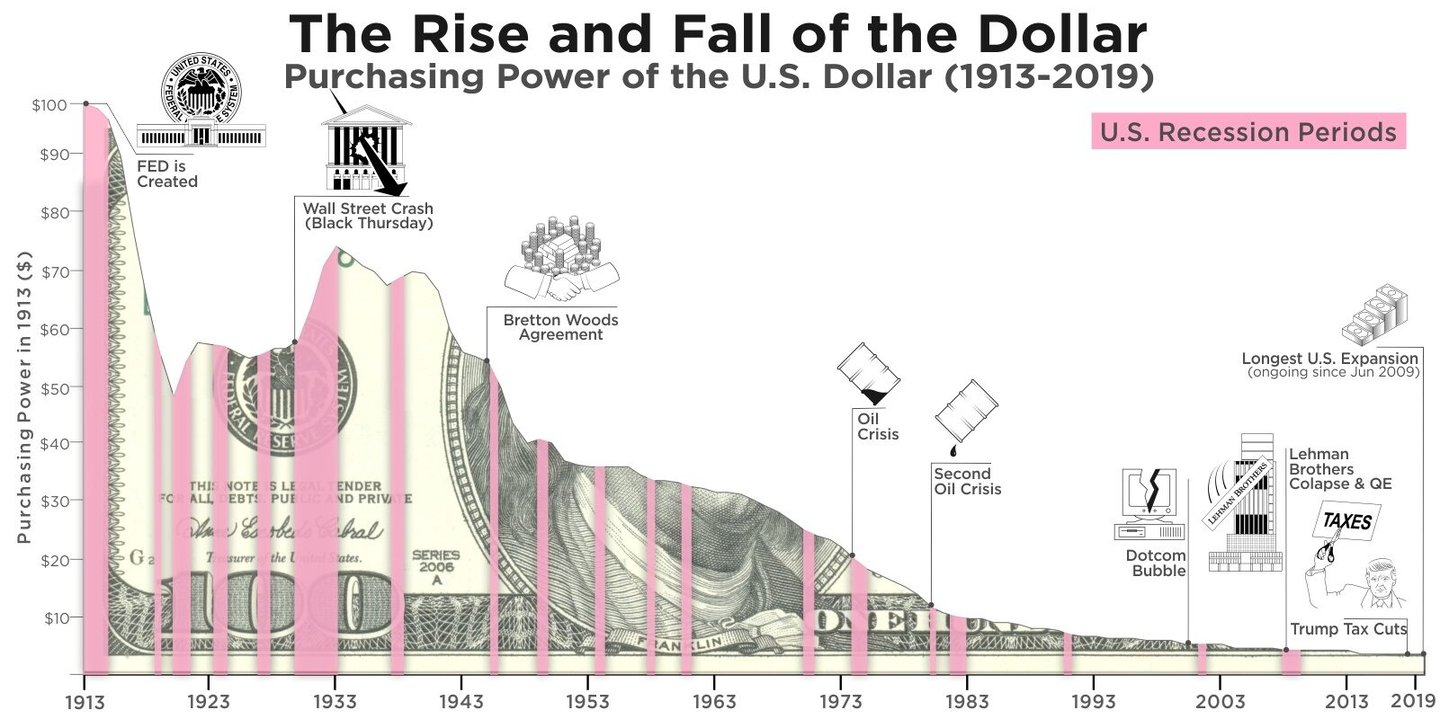
- Since 1971 (Nixon shock), the dollar has lost close to 90% of its purchasing power (U.S. CPI)
- Real return on cash holdings: consistently negative when properly inflation-adjusted
Historical Hyperinflation Case Studies
Extreme seigniorage dependence produces catastrophic outcomes:
Weimar Germany (1921-1923):
- Monthly inflation peaked at 29,500%
- The government financed deficits, burdened by reparations, through the central bank
- Middle class savings obliterated, political radicalization followed
Zimbabwe (2007-2009):
- Peak inflation estimated at 79.6 billion percent monthly
- Government printed to maintain spending amid economic collapse
- Currency abandoned in favor of foreign alternatives
Venezuela (2016-2019):
- Annual inflation reached 130,060% in 2018 (Banco Central de Venezuela)
- Monetary financing of public spending after the collapse of oil revenue
- Massive emigration and humanitarian crisis
These episodes share common elements: fiscal crises, political unwillingness to cut spending, and faith that seigniorage could indefinitely substitute for taxation.
VIII. Cryptocurrencies and the Challenge to Seigniorage
Bitcoin: Anti-Seigniorage Architecture
Bitcoin’s core innovation was eliminating seigniorage entirely through absolute supply scarcity (21 million maximum coins). This design directly challenges government monetary monopolies by offering an alternative that cannot be debased.
Key Differentiators:
- Fixed supply eliminates ongoing seigniorage extraction
- Decentralized issuance prevents privilege capture
- Transparent protocol rules replace discretionary policy
- Censorship resistance limits government control
Governmental Response: Restriction and Co-option
Governments face a dilemma: permit cryptocurrency adoption and forfeit seigniorage, or restrict access and appear authoritarian. Most have pursued middle paths:
- Regulation: Impose KYC/AML requirements reducing anonymity
- Taxation: Classify as property to capture capital gains
- CBDC development: Offer competing digital currencies with government backing
- Selective enforcement: Prosecute certain uses while tolerating others
The outcome of this tension will substantially determine future seigniorage dynamics. If cryptocurrencies achieve significant adoption, government seigniorage revenue will decline, forcing either spending reductions or more aggressive extraction from remaining currency users.
IX. Banking Sector Implications and Strategic Considerations
Positioning for the Seigniorage Transition
Financial institutions must manage several structural shifts:
Near-term (2026–2027):
- Balance sheets normalising: the Fed ended its run-off on 1 December 2025; the ECB continues to let its portfolios mature
- Potential return to expanded QE if recession materializes
- CBDC pilots expanding, creating regulatory uncertainty
- Cryptocurrency regulatory framework crystallizing
Medium-term (2027-2030):
- Possible CBDC launches in major economies
- Deposit competition intensifying between banks and central banks
- Traditional banking model under pressure
- New revenue models required as seigniorage benefits shift
Long-term (2030+):
- Multi-currency digital monetary system possible
- Reduced role for correspondent banking
- Programmable money enabling new financial products
- Potential dollarization of smaller economies via digital platforms
Strategic Recommendations. Our approach as IFB
- Diversify Revenue Streams: Reduce dependence on deposit funding and net interest margin
- Invest in Digital Infrastructure: Prepare for CBDC integration and digital asset custody
- Develop Non-Seigniorage Products: Focus on advice, risk management, and specialized services
- Monitor Regulatory Developments: Engage in CBDC consultations and industry standard-setting
- Stress Test Scenarios: Model implications of various seigniorage regime changes
- Educate Clients: Position as expert on monetary transition implications
Risk Management Framework
Key Risks:
- Disintermediation risk: Deposit flight to CBDCs during financial stress
- Margin compression: Competition from zero-cost central bank accounts
- Regulatory risk: Sudden policy changes regarding digital currencies
- Systemic risk: Confidence crises in fiat currencies triggering monetary regime change
Mitigation Strategies:
- Maintain strong capital buffers above regulatory minima
- Develop correspondent relationships with central banks for CBDC access
- Create digital asset capabilities to serve clients across monetary systems
- Build flexible technology platforms enabling rapid adaptation
X. The Future of Monetary Privilege
Seigniorage represents the foundational privilege of monetary sovereignty: the right to profit from money creation. This privilege has persisted from medieval coin minting through modern fiat currency systems, and will continue in adapted forms through the digital transition.
Several conclusions emerge for banking professionals:
Seigniorage is structural, not incidental. It represents a designed feature of monetary systems, not an accident or aberration. Understanding this mechanism is essential for anticipating central bank behavior and policy direction.
Distribution matters more than magnitude. The Cantillon effect means proximity to money creation determines who benefits. Financial institutions positioned as primary dealers, payment processors, or central bank counterparties capture disproportionate advantages.
The digital transition will not eliminate seigniorage. Instead, CBDCs could concentrate it further while creating new surveillance and control capabilities. Banks must adapt to this reality rather than resist it.
Alternative monetary systems threaten state seigniorage. Cryptocurrency adoption, gold revaluation, or international settlement system changes could force governments toward more aggressive extraction from remaining users or dramatic fiscal adjustments.
Inflation remains the primary cost distribution mechanism. Despite technical sophistication, seigniorage ultimately transfers wealth through inflation: the silent tax that requires no legislative approval.