
The Evolving Concept of Money in a Fiat-Based Financial System
In the dynamic environment of global finance, the fundamental understanding of money and its role as a store of value has undergone significant transformation. While currency, in the form of paper notes and electronic representations, has become the predominant medium of exchange, the distinction between money and currency has become increasingly precise and essential to comprehend.
The Historical Precedent of Money
Historically, precious metals, particularly gold and silver, have been the archetypal forms of money due to their inherent scarcity, durability, and universal acceptance. These commodities were prized not only for their practical utility but also for their ability to maintain their value over time, serving as a reliable store of wealth.
Gold and silver anchored many currencies for centuries; the classical gold standard, which pegged the value of a currency to a fixed amount of gold, dominated from the 1870s to 1914 and provided a tangible anchor for the financial system. This arrangement ensured that the money supply was constrained by the available gold reserves, promoting a degree of stability and discipline in the monetary system.
The Transition to Fiat Currency
The departure from the gold standard, which began in the 20th century and was solidified by the Nixon Shock in 1971, ushered in the era of fiat-based currency. Fiat money, unlike gold-backed currency, derives its value not from a physical commodity but from the faith and trust placed in the issuing authority, typically a central bank or government.
This shift to a pure fiat-based monetary system has had profound implications on the nature of money and its role as a store of value. Without the constraints of a finite physical resource, central banks and governments have gained the ability to expand the money supply more freely, often in response to economic and political pressures.
The Fractional Reserve System and Credit Creation
In the modern financial system, banks hold only a fraction of their deposits as central-bank reserves, and they create new money when they lend, by crediting borrowers with new deposits. Their lending is constrained by capital and liquidity rules and by the policy interest rate rather than by reserves.
This process of credit expansion can lead to the inflation of asset prices, the formation of financial bubbles, and increased vulnerability to economic shocks. The lack of a tangible anchor, such as gold, has made the monetary system more susceptible to the whims of central bank policies and the perceived creditworthiness of governments.
The Dual Role of Money and Currency
Currency, in its quintessential role, functions as a medium of exchange, facilitating transactions by providing a universally accepted instrument for the exchange of goods and services. It embodies an agreed-upon value within a particular economic context, thereby simplifying the process of trade and eliminating the inefficiencies of barter systems. In a fiat currency system, currency derives its value not from physical commodities or tangible resources, but from the trust and credit of the economy that issues it. Unlike commodity-based currencies, such as gold or silver, fiat money is backed by government decree and maintained through monetary policies. Its intrinsic value is essentially null; instead, its worth arises from governmental authority and the collective agreement of its users to accept it as a means of transaction. This system allows greater flexibility in monetary policy, including adjustments in money supply to address economic conditions, but it also depends heavily on the stability and credibility of the issuing government to avoid inflation and preserve value.
While cryptocurrencies offer innovative benefits, such as decentralisation, ease of transfer, and transparency due to the underlying blockchain technology, their role as a reliable store of value is contentious. One of the most critical issues with cryptocurrencies as a store of value is their volatility. Unlike traditional stores of value such as gold or stable fiat currencies, the price of cryptocurrencies can fluctuate wildly due to market sentiment, regulatory news, technological developments, and speculative trading, especially now with the introduction of crypto ETFs. This volatility undermines their ability to hold value over time, making them a risky choice for preserving wealth in the long term. The lack of regulatory oversight in many regions contributes to potential risks including fraud, market manipulation, and other financial crimes, which can lead to sudden and severe losses for investors. The absence of a central governing body or standardisation also means that cryptocurrencies are susceptible to cyber threats and technological failures, further complicating their viability as a secure store of value.
Conversely, money represented by gold exemplifies a commodity-based currency system. Gold has been valued universally for its rarity, durability, and the intrinsic beauty, which have made it a steadfast store of value over millennia. As money, gold provides a hedge against inflation and currency devaluation because its value is not reliant on government policies, Its physical properties limit the ability to expand its supply rapidly, providing a natural check against inflationary practices. However, its price can be influenced by “paper gold” – futures and unallocated accounts – which can expand exposure beyond the physical metal available; physically backed ETFs, by contrast, hold allocated bullion. Using gold as money also presents challenges, such as less flexibility in responding to economic crises and the practical difficulties of gold storage and transportation in daily commercial transactions. The stability of gold as a store of value makes it a favored asset during times of economic uncertainty, reinforcing its role in protecting wealth across generations. Money, as a store of value, serves a critical function by allowing individuals and entities to preserve economic value over time. This property is essential for money to be considered reliable and stable, enabling savers and investors to defer consumption and maintain their purchasing power into the future.
The Risks of Fiat-Based Monetary Systems
The transition to a fiat-based monetary system has introduced new risks and vulnerabilities to the financial system. The ability of central banks and governments to expand the money supply without the constraints of a physical commodity has led to concerns about inflation, currency devaluation, and the potential for financial crises.
Additionally, the reliance on the perceived creditworthiness of issuing authorities has exposed the monetary system to political and institutional risks. The lack of a tangible anchor, such as gold, has made the system more susceptible to the whims of central bank policies and the fiscal decisions of governments.
In short
In the complex environment of modern finance, the distinction between money and currency has become increasingly crucial to understand. While currency plays a vital role in facilitating economic transactions, it is the scarcity of money such as gold and silver that can provide a store of value and a potential hedge against the uncertainties of a fiat-based monetary system.
As the global financial system continues to evolve, the debate over the merits of a gold-backed monetary system versus a fiat-based system is likely to persist. This discussion will undoubtedly have significant implications for the stability and resilience of the financial system, as well as the wealth-preserving capabilities of individuals and institutions.
National Currencies: An Overview
About 180 currencies are legal tender in the member states of the United Nations. Many countries either use the U.S. dollar or peg their currencies to it, showing the influence of the dollar on the global economy.
The majority of countries issue their distinct currencies, such as the Swiss franc in Switzerland or the yen in Japan. However, the euro serves as a notable exception, having been adopted by a significant portion of European Union member states as their official currency.
Some countries use the U.S. dollar as legal tender: Ecuador (since 2000), El Salvador (since 2001) and Panama (alongside the balboa, since 1904). In others, such as Costa Rica, it is widely accepted in practice. Conversely, Spanish silver dollars remained legal tender in the United States until the Coinage Act of 1857, long after the U.S. Mint was established in 1792.
There are branded currencies, such as airline miles, credit card points and retail loyalty points. These currencies are issued by corporations and can only be used to purchase the specific products and services associated with the issuing entity.
Currency Trading and Exchange Rates
The exchange rate signifies the current value of a given currency when converted into another currency. This rate is subject to constant fluctuations due to various economic and political factors.
These fluctuations give rise to the currency trading market. The foreign exchange market, where such transactions take place, ranks among the largest global markets in terms of trading volume. Interbank trades typically occur in large amounts; a “standard lot” is 100,000 units of the base currency, although retail brokers also offer smaller lots. The majority of currency traders are professionals investing on their own behalf or for institutional clients, such as banks and large corporations. The enormous scale and complexity of the currency trading market render it a critical component of the global financial system.

Currency in some form has been in use for at least 3,000 years.
In the picture you see Shells that had been utilised as currency. Cowrie shells started being used as early as 1200 B.C. in China and are among the most widely and longest used currencies in history.
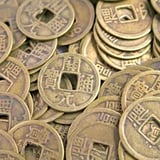
Some of the earliest forms of coins could be the bronze and copper cowrie shell imitations or abstractions the Chinese made back in 1000 B.C.
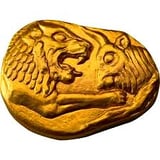
The Lydian stater was the coin of the kingdom of Lydia, introduced before the kingdom fell to the Persian Empire. The earliest staters, struck in electrum (a natural gold–silver alloy), date to the late 7th century BCE, probably under King Alyattes (c. 610–560 BCE).
Numismatic historians widely regard the Lydian stater as among the first coins issued by a state, and as a model for later Greek and Western coinage.
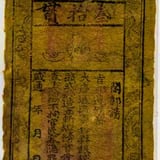
Paper currency first developed in Tang Dynasty China during the 7th century, although true paper money did not appear until the 11th century, during the Song Dynasty. The usage of paper currency later spread throughout the Mongol Empire or Yuan Dynasty China to Europe.
European explorers like Marco Polo introduced the concept in Europe during the 13th century.

In England, the royal Exchequer used tally sticks from the reign of Henry I (1100–1135): sticks of polished hazel wood, notched along one edge to record a sum and then split lengthwise, so that each party kept a matching half as proof against forgery.
Tallies recorded payments to and debts of the Crown and could be presented against tax payments, which allowed them to circulate. The Exchequer stopped issuing them in 1826; the burning of old tallies in 1834 started the fire that destroyed the Palace of Westminster.

The Rai stones, utilized as an abstract form of money on the Micronesian island of Yap, date back several centuries. The stones were quarried on Palau and brought to Yap by canoe. These large, limestone disks, distinguished by a central hole, symbolized wealth and social status. Their value derived from oral traditions of ownership and exchange rather than physical transfer, embodying an early concept of abstract currency where trust and communal agreement established worth.
This system highlights money’s essence as a societal agreement, a principle that resonates with today’s digital and fiat currencies